






Table of Contents
ToggleStucco fireplaces bring old-world charm and textural depth to any room. Whether updating a dated brick surround or designing a new focal point from scratch, stucco offers flexibility, durability, and a tactile finish that pairs well with everything from contemporary minimalism to Mediterranean Revival. The material is forgiving for DIYers, heat-resistant when properly applied, and can be tinted or painted to match any palette. Unlike smooth drywall or tile, stucco creates dimension that catches light and adds character. This guide walks through design styles, finish options, application basics, and upkeep so homeowners can confidently tackle a stucco fireplace makeover.
Key Takeaways
- Stucco fireplace ideas offer a durable, heat-resistant alternative to brick or paint that lasts decades with minimal maintenance and hides surface imperfections.
- Modern minimalist and Mediterranean-inspired stucco fireplace designs accommodate any aesthetic—from smooth Scandinavian finishes to hand-troweled rustic textures—by adjusting aggregate size and application technique.
- Integral pigments, masonry paint, or lime wash provide flexible coloring options for stucco fireplaces, with earth tones and neutrals complementing both contemporary and traditional interiors.
- Successful DIY application requires proper surface prep, cement board installation over drywall, a two-coat system (scratch coat then finish coat), and 7-day curing before sealing or painting.
- Routine maintenance of stucco fireplaces includes monthly dust removal, vinegar-based cleaning for soot stains, and annual inspection for cracks filled with acrylic caulk or stucco patch.
Why Choose Stucco for Your Fireplace?
Stucco is a cement-based plaster that bonds to masonry, drywall, and cement board, making it ideal for fireplace surrounds where heat and moisture are concerns. It’s naturally fire-resistant and won’t crack or peel like paint on brick when exposed to temperature swings.
Durability stands out. A properly applied stucco finish lasts decades with minimal maintenance, resisting chips and wear better than paint or wallpaper. The material also hides imperfections, old mortar lines, patched brick, or uneven cement board, under a uniform textured coat.
Stucco’s versatility in texture and color allows homeowners to shift aesthetics without demolition. A coarse, hand-troweled finish suits rustic or Spanish-style interiors, while a smooth or lightly sanded application complements modern designs. Pigments can be mixed into the final coat or applied as breathable masonry paint afterward.
Cost-effectiveness is another draw. Bagged stucco mix runs $10–$20 per 80-pound bag, covering roughly 25 square feet at ⅜-inch thickness. Compare that to stone veneer at $6–$12 per square foot installed, and stucco becomes an attractive option for budget-conscious renovations.
Modern Minimalist Stucco Fireplace Designs
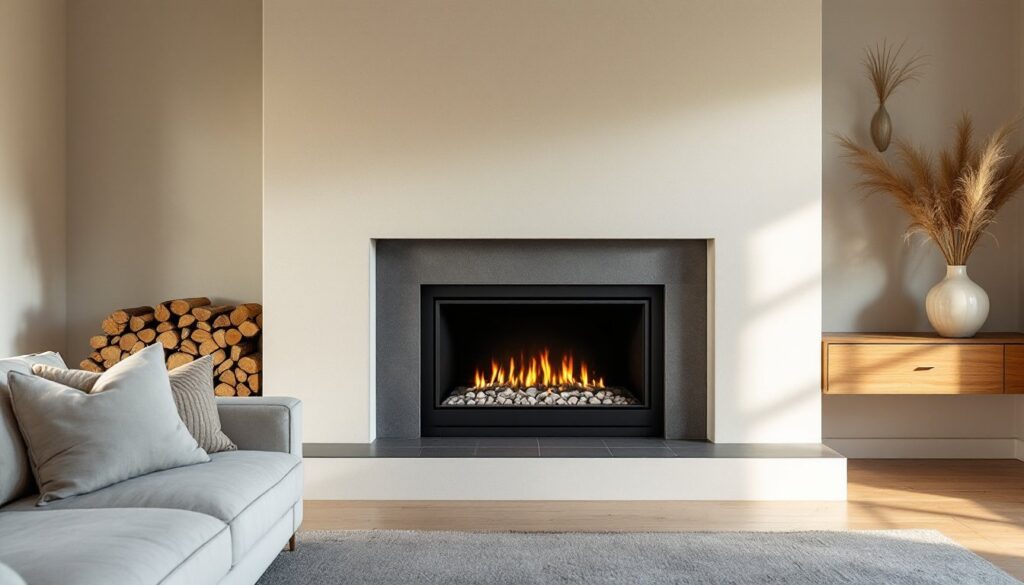
Clean lines and monochromatic palettes define modern stucco fireplaces. A smooth-troweled finish in white, off-white, or pale gray creates a sleek backdrop for linear gas inserts or wall-mounted electric units. Skip the mantel, floating hearths and flush surrounds emphasize horizontal geometry.
For a Scandinavian-inspired look, apply stucco over a full-height fireplace wall extending to the ceiling. Use a fine-aggregate mix (sand particles under ⅛ inch) and finish with a steel trowel, burnishing the surface for a semi-polished effect. Pair with matte black metal accents or recessed niches for firewood storage.
Japanese minimalism favors neutral tones and natural texture. A light skip-trowel or knockdown finish in warm beige or taupe adds subtle movement without busy patterns. Frame the fireplace with clean-edge returns and keep the hearth low, 12 to 18 inches off the floor, to maintain visual simplicity.
Contemporary designs often incorporate asymmetry. Extend the stucco surround to one side only, wrapping around built-in shelving or a media console. This approach, popular in home design shows, creates functional zones while anchoring the fireplace as a sculptural element rather than a centered feature.
Rustic and Mediterranean-Inspired Stucco Fireplaces
Rustic stucco fireplaces lean into hand-applied texture and earthy tones. A heavy trowel finish with visible peaks and valleys mimics centuries-old European plasterwork. Use a coarse sand aggregate (up to ¼ inch) and leave trowel marks deliberate, imperfection is the point.
Arched openings and curved edges define Mediterranean styles. If the existing firebox is square, consider adding a formed arch using metal lath over a plywood template, then applying scratch coat and finish stucco. Arches soften the geometry and pair well with terracotta tile hearths and wrought-iron screens.
Color choices range from warm ochre and terracotta to sunbaked cream. Integral pigments, mixed into the stucco before application, offer the most durable color. Alternatively, apply a lime wash or masonry stain after curing for a more layered, aged appearance. Lime wash penetrates rather than coating the surface, so it won’t peel over time.
Exposed wood beams, stone accents, and carved mantels complement rustic stucco. If adding a mantel, anchor it into wall studs or masonry, never rely on stucco alone for structural support. A 6×6 or 8×8 rough-sawn beam (actual dimensions around 5½×5½ or 7¼×7¼ inches) mounted on heavy-duty brackets provides authentic scale and can support décor or stockings without sagging.
Color and Finish Options for Stucco Fireplaces
Stucco accepts color through three main methods: integral pigment, masonry paint, and stain or lime wash. Integral pigments are added to the final coat during mixing, producing uniform color that won’t chip or fade with abrasion. Most masonry suppliers stock oxide pigments in earth tones, grays, and whites.
Masonry paint offers the widest color range and easiest application. Use elastomeric or breathable acrylic formulas designed for cement substrates, standard latex paint can trap moisture and cause delamination. Coverage typically runs 250–400 square feet per gallon depending on texture depth. Apply two coats for even color, especially over tinted stucco.
Lime wash and mineral stains create translucent, mottled finishes that highlight texture. Lime wash, calcium hydroxide mixed with water, reacts chemically with stucco, bonding without forming a film. It’s ideal for authentic Mediterranean or farmhouse aesthetics but requires reapplication every few years as it gradually weathers.
Texture choices shape the final look as much as color. Smooth finishes require multiple passes with a steel trowel and fine-grit sanding. Knockdown or skip-trowel textures are created by lightly flattening raised peaks with a trowel held at a low angle. Heavy lace or Spanish textures involve flicking or splattering stucco onto the surface, then leaving it as-is or lightly pressing with a trowel. According to home renovation tutorials, texture depth should match the room’s scale, bold textures suit large, high-ceilinged spaces, while subtle finishes work better in compact rooms.
DIY Stucco Fireplace Makeover: Getting Started
Safety and Prep Come First
Turn off gas to the fireplace if applicable, and ensure adequate ventilation. Wear safety goggles, dust mask or respirator (N95 minimum), and work gloves, stucco is alkaline and irritating to skin and lungs.
Clean the existing surface thoroughly. Remove soot, grease, and loose paint with TSP (trisodium phosphate) or a heavy-duty degreaser. Rinse and let dry completely, stucco won’t bond to dirty or damp substrates.
Materials and Tools
• Cement board or metal lath (if applying over drywall or non-masonry surfaces)
• Scratch coat stucco mix (base coat)
• Finish coat stucco (fine or medium aggregate depending on desired texture)
• Bonding agent or acrylic fortifier (improves adhesion and flexibility)
• Masonry trowel, margin trowel, and hawk (for application)
• 5-gallon bucket and drill with paddle mixer
• Plastic sheeting and painter’s tape (for protecting floors, mantels, and hearths)
If the fireplace surround is drywall, install ½-inch cement board first, screwing it to studs every 8 inches with cement board screws. Tape seams with fiberglass mesh tape. Over brick or block, apply a bonding agent according to manufacturer instructions.
Application Steps
- Mix the scratch coat to a thick, peanut-butter consistency. Apply a ⅜-inch layer with a trowel, pressing firmly to fill voids. Score the surface horizontally with a notched trowel before it sets, this helps the finish coat key in.
- Cure for 48 hours, misting lightly with water if humidity is low. Proper hydration prevents cracking.
- Mix and apply the finish coat at ⅛ to ¼ inch thick. Work in small sections (3×3 feet), shaping texture while the material is workable, stucco sets quickly, usually within 20–30 minutes.
- Cure for 7 days before painting or sealing, misting daily in hot or dry conditions.
Note: Stucco over fireplaces requires Type S mortar or cement-based stucco, not acrylic “stucco patch” products sold for exterior crack repair. Those aren’t rated for heat exposure.
For guidance on planning larger home renovation projects, including budgeting and timeline considerations, consult resources that break down costs by region and material grade.
Maintenance and Care Tips for Stucco Fireplaces
Stucco fireplaces are low-maintenance but not maintenance-free. Dust and soot buildup diminish appearance and can become permanent if left too long. Vacuum textured surfaces monthly with a soft brush attachment, and wipe smooth finishes with a damp microfiber cloth.
For soot stains, mix 1 part white vinegar to 3 parts water and gently scrub with a soft-bristle brush. Avoid abrasive pads, they’ll scratch the finish. Stubborn stains may require a pH-neutral masonry cleaner: test in an inconspicuous area first.
Inspect annually for cracks, especially around the firebox opening where heat stress is highest. Hairline cracks under ⅛ inch can be filled with acrylic or elastomeric caulk tinted to match. Wider cracks need a proper stucco patch: chisel out loose material, dampen the area, and fill with finish-coat stucco, feathering edges to blend.
Resealing isn’t typically necessary for interior stucco, but painted finishes may need touch-ups every 5–7 years depending on use. Lime-washed surfaces can be refreshed with a new coat as the original layer weathers, successive applications build a rich, layered patina.
Avoid hanging heavy décor directly on stucco. Use masonry anchors or toggle bolts that penetrate through to studs or masonry, not surface-mount adhesive hooks. Stucco is strong but can crumble under concentrated weight, especially at thinner sections.
Conclusion
Stucco transforms fireplaces from dated focal points into textured design anchors. The material accommodates minimalist whites, rustic earth tones, and everything in between, all with heat resistance and longevity that other finishes can’t match. Application demands patience and proper prep, but the skills are within reach for most DIYers willing to work methodically. With thoughtful color, texture, and maintenance, a stucco fireplace becomes a lasting statement piece.