

Table of Contents
ToggleConverting a single room to serve both overnight guests and daily work demands isn’t just clever, it’s practical. Many homeowners face the reality of limited square footage, and dedicating an entire room to occasional visitors feels wasteful when remote work has become the norm. A well-planned guest bedroom office combo delivers full functionality without compromise. The key lies in intentional furniture choices, smart layout decisions, and storage solutions that keep both purposes organized. This guide walks through proven strategies to create a dual-purpose room that works as hard as you do.
Key Takeaways
- Small guest bedroom office combo ideas prioritize physical zoning through furniture placement and visual dividers like bookshelves or curtains to ensure both work productivity and guest comfort.
- Murphy beds or wall-mounted fold-down desks maximize floor space in dual-purpose rooms, with quality units ranging from $1,500–$4,000, though DIY kits offer budget-friendly alternatives starting at $800–$1,200.
- Choose multi-functional furniture like writing desks, daybeds with trundles, or storage ottomans that blend seamlessly with bedroom décor while providing practical workspace during work hours.
- Strategic storage solutions—including closed cabinets for office supplies, under-bed rolling drawers for guest linens, and labeled closet organization—prevent clutter and keep both functions organized and accessible.
- Separate lighting zones (task lamps at the desk and ambient lighting near the bed) and area rugs reinforce spatial boundaries without requiring construction or structural changes.
Why a Guest Bedroom Office Combo Makes Sense
The math is simple: most guest rooms sit empty 90% of the year, while home offices see daily use. Combining these functions transforms underutilized space into a productive asset.
Real estate costs continue climbing, and every square foot counts. A 10×12 room that serves double duty effectively adds value to your home without expanding your footprint. Homebuyers increasingly prioritize flexible spaces that adapt to changing needs, whether that’s remote work today or a nursery tomorrow.
From a building perspective, no structural changes are typically required. Unlike converting a garage or finishing a basement, transforming a bedroom into a combo space rarely involves permits, electrical upgrades, or HVAC modifications. The existing electrical outlets, lighting, and climate control are already in place.
The challenge isn’t whether it’s possible, it’s how to execute it without sacrificing comfort for guests or productivity during work hours. Both functions demand consideration, and half-measures leave you with a mediocre guest room and a frustrating office.
Layout Strategies for Dual-Purpose Rooms
Zoning Your Space for Work and Rest
Physical separation matters, even in tight quarters. The brain associates specific zones with specific activities, and blurring those boundaries hurts both sleep quality for guests and focus during work.
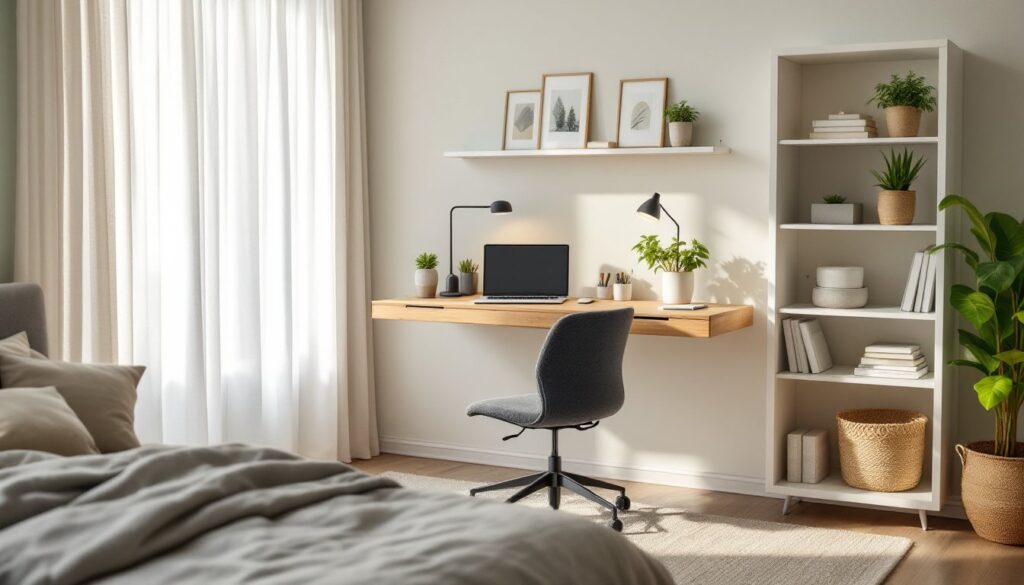
Start by mapping the room’s natural divisions. Place the desk against or near the door whenever possible, this positions work functions closest to the entry and creates psychological distance from the sleeping area. The bed should occupy the quietest corner, ideally opposite the workspace.
Use a bookshelf, folding screen, or curtain to create a visual divider between zones. A 5-6 foot tall bookshelf works particularly well because it provides storage while blocking sightlines. Open shelving keeps the room from feeling cramped while maintaining separation.
Lighting reinforces zoning. Install a task lamp at the desk (aim for 50-75 foot-candles for computer work) and separate ambient lighting near the bed. Dimmer switches let guests adjust lighting without affecting the workspace. Consider a plug-in pendant or wall-mounted swing-arm lamp near the bed to avoid nightstand clutter.
Area rugs define boundaries without construction. A 5×7 or 6×9 rug under the desk anchors the office zone, while a runner beside the bed softens the sleeping area. This works especially well on hardwood or laminate floors.
Avoid placing the desk where you’ll see it from the bed. Guests shouldn’t fall asleep staring at your monitor and paperwork, it’s neither restful nor welcoming.
Murphy Beds and Wall-Mounted Solutions
Murphy beds (also called wall beds) are the gold standard for maximizing floor space in a combo room. These beds fold vertically into a cabinet or wall recess, transforming a bedroom into a full office in seconds.
Modern Murphy beds bear little resemblance to old Hollywood slapstick props. Today’s designs use piston lift mechanisms or spring systems rated for thousands of cycles. Expect to pay $1,500-$4,000 for a quality queen-size unit, depending on finish and features. Installation typically requires mounting to wall studs with lag bolts, drywall anchors alone won’t support the weight (a queen mattress plus frame can exceed 200 pounds).
If you’re handy, DIY Murphy bed kits are available starting around $800-$1,200. These include the lift mechanism, frame, and hardware, but you’ll build and finish the cabinet surround yourself. Plan on a full weekend for assembly and installation. Critical: confirm your ceiling height, standard Murphy beds need at least 8 feet of clearance, though horizontal (sideways-folding) models work in rooms with lower ceilings.
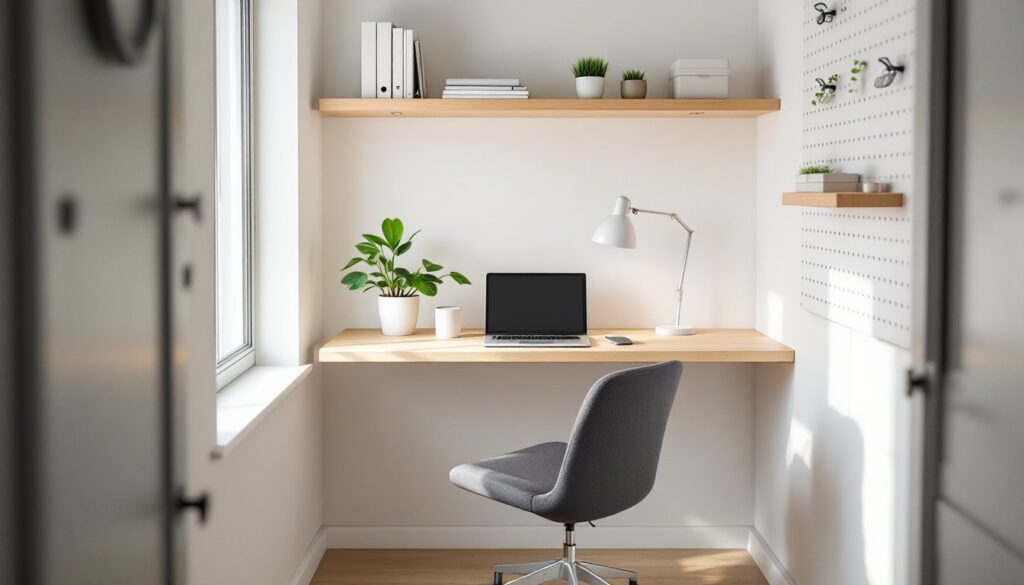
Wall-mounted desks offer similar space-saving benefits. A fold-down desk (also called a secretary desk or wall-mounted drop-leaf desk) folds up when not in use, leaving floor space completely clear. Most support 30-50 pounds when deployed, sufficient for a laptop and paperwork, but not a desktop tower and dual monitors.
For combination solutions, some Murphy beds integrate a desk on the front panel. When the bed folds up, the desk face remains accessible. These are clever but check the desk depth, many only offer 12-14 inches of work surface, which feels cramped for daily use.
One often-overlooked consideration: mattress storage. Murphy beds keep the mattress inside the cabinet, where it doesn’t breathe as well as a traditional bed. Opt for a memory foam or latex mattress rather than innerspring, they handle compression better and resist moisture buildup. Air the mattress out monthly by leaving it down for several hours.
Furniture That Does Double Duty
Desk Options That Blend with Guest Room Decor
The desk is the most visible compromise in a combo room, it needs to function as serious workspace but not scream “office” when guests arrive.
A writing desk or console table (42-50 inches wide) provides adequate workspace while maintaining bedroom aesthetics. Look for models with at least one drawer for pens, chargers, and small supplies. Many families exploring compact desk solutions find that narrower profiles (20-24 inches deep) fit better in multipurpose rooms without overwhelming the space.
Secretary desks with hutches hide work clutter behind closed doors. When guests arrive, simply close the cabinet and the workspace disappears. Vintage or reproduction secretary desks suit traditional decor, while modern wall-mounted versions work in contemporary settings.
For those needing more robust workspace, an L-shaped desk in a corner maximizes surface area while keeping the footprint manageable. Position the desk return along the wall to maintain an open path to the bed. Pair it with attractive storage, built-in shelving or cabinets finished to match trim work blend into the room rather than dominating it.
Avoid bulky office chairs that announce “workspace” too loudly. Instead, choose a side chair or armchair upholstered to match the room’s decor. It won’t offer the ergonomic support of a mesh task chair, but for part-time office use, many find the trade-off worthwhile. If you need lumbar support, look for dining chairs with contoured backs, they bridge the gap between style and function.
Bench seating with storage under the desk provides a landing spot for guests to set luggage while hiding office supplies. A 48-inch bench fits under most desks and offers surprising storage capacity.
Daybed designs deserve mention. A daybed with a trundle functions as a sofa during work hours, converts to a twin bed for solo guests, and pulls out to sleep two when needed. Pair it with throw pillows in office-appropriate colors and it reads as seating rather than a bed. Position the daybed against the wall opposite your desk, it serves as an informal meeting spot during video calls and guest seating during work hours.
Storage Hacks to Keep Both Functions Organized
Storage makes or breaks a dual-purpose room. Without dedicated systems for both office supplies and guest amenities, the space devolves into chaos.
Start with closed storage for work items. Open shelves full of binders and tech gear don’t welcome overnight guests. A two-door cabinet or bookcase conceals files, equipment, and cables while providing display space on top for decorative items. Measure carefully, standard base cabinets are 24 inches deep, which might overpower a small room. Look for 12-15 inch deep cabinets or wall-mounted options instead.
Under-bed storage is non-negotiable. Rolling drawers or flat storage boxes keep guest linens, extra pillows, and seasonal items accessible without consuming closet space. If using a Murphy bed, storage ottomans or a storage bench at the foot of the workspace hold bedding when the bed is stowed.
Closet organization determines functionality. Reserve one-third to one-half of the closet for guest use, empty hanging space and a few bare shelves signal that guests are truly welcome. The remaining space should house office supplies and equipment. Install a closet organizer with adjustable shelves to maximize vertical space. Tension rods create additional hanging zones for cables, tools, or seasonal items.
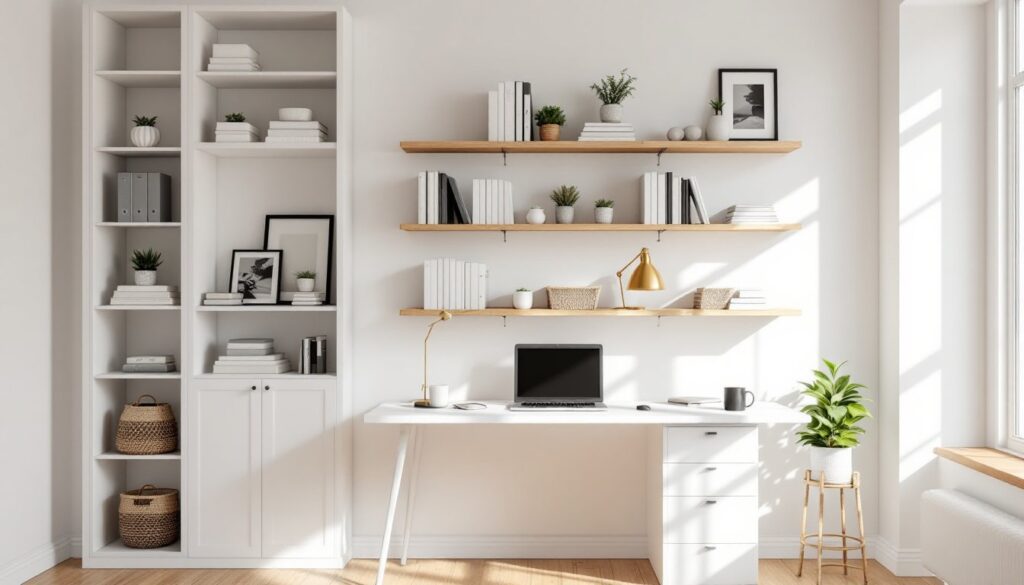
Floating shelves above the desk keep frequently used items within reach without cluttering the work surface. Mount them at least 18-24 inches above the desk to avoid head-bumping. For a cleaner look, many DIYers favor minimalist storage approaches that prioritize function over display.
Dual-purpose furniture with hidden storage earns its keep. Nightstands with drawers, storage ottomans, and bed frames with built-in drawers all contribute. A storage ottoman serves as extra seating during work hours, a footrest, and a place to stash throw blankets.
Label storage clearly, especially shared spaces. Guests shouldn’t open three drawers searching for spare towels. Simple labels on the inside of cabinet doors or drawer fronts guide visitors without announcing storage solutions to casual observers.
Cable management prevents the tangled mess that ruins both aesthetics and function. Use cable raceways or cable sleeves to bundle desk cords along the wall or desk leg. Velcro cable ties keep charging cables neat inside drawers. A surge protector mounted to the underside of the desk hides the power strip while keeping outlets accessible.
Consider a rolling cart for items that serve both functions, a small cart can hold office supplies during the week and move to become a beverage station or luggage rack when guests arrive. Three-tier utility carts are inexpensive ($30-60) and surprisingly versatile.
For inspiration on transforming tight spaces, small space design blogs frequently showcase creative storage solutions tested in real homes. Similarly, DIY home renovation sites document budget-friendly approaches to maximizing storage without major construction. Homeowners tackling room transformation projects often share before-and-after results that reveal practical workarounds for common storage challenges.