

Table of Contents
TogglePoor lighting in a home office isn’t just uncomfortable, it’s a productivity killer. Eye strain, headaches, and fatigue all stem from inadequate or poorly planned illumination. Whether converting a spare bedroom or carving out a corner of the living room, getting the lighting right makes the difference between a workspace that energizes and one that drains. The good news? Effective home office lighting doesn’t require an electrician or a massive budget. With a mix of task, ambient, and natural light sources, anyone can create a functional, comfortable environment that supports focus and reduces screen glare.
Key Takeaways
- Home office lighting ideas should layer task, ambient, and natural light to reduce eye strain, boost productivity, and create a professional environment.
- Task lighting with 400-500 lumens at 4000K-5000K color temperature, positioned to the side of your dominant hand, prevents shadows and digital eye strain during focused work.
- Smart bulbs with tunable color temperature can boost morning alertness with cool light (5000K+) and signal the workday’s end with warm tones (2700-3000K) to support healthier sleep patterns.
- Position your desk perpendicular to windows and use sheer curtains or cellular shades to diffuse direct sunlight and prevent glare on screens.
- Choose LED bulbs with Color Rendering Index (CRI) above 90 to ensure colors appear consistent under artificial light, critical for design and detail-focused work.
Why Proper Lighting Matters in Your Home Office
Lighting directly affects circadian rhythm, mood, and visual acuity. Poor illumination forces the eyes to work harder, leading to digital eye strain, symptoms include dryness, blurred vision, and difficulty focusing after long screen sessions.
Adequate lighting also impacts color perception and contrast, critical when reviewing documents, design work, or detailed spreadsheets. Insufficient light causes squinting and poor posture as users lean closer to monitors. Over time, this contributes to neck and shoulder tension.
Beyond health, lighting sets the tone for professionalism. A well-lit background improves video call quality, while dim or harsh lighting creates unflattering shadows. For home offices doubling as creative studios or client-facing spaces, lighting becomes part of the room’s functionality and aesthetic. Investing in a thoughtful lighting plan pays dividends in comfort, efficiency, and long-term wellbeing.
Layered Lighting: The Foundation of Great Home Office Design
Effective home office lighting relies on three layers: task lighting for focused work, ambient lighting for overall illumination, and accent lighting for depth and style. Relying on a single overhead fixture creates harsh shadows and uneven coverage. Layering gives control over brightness and mood throughout the day.
Task Lighting Solutions for Focused Work
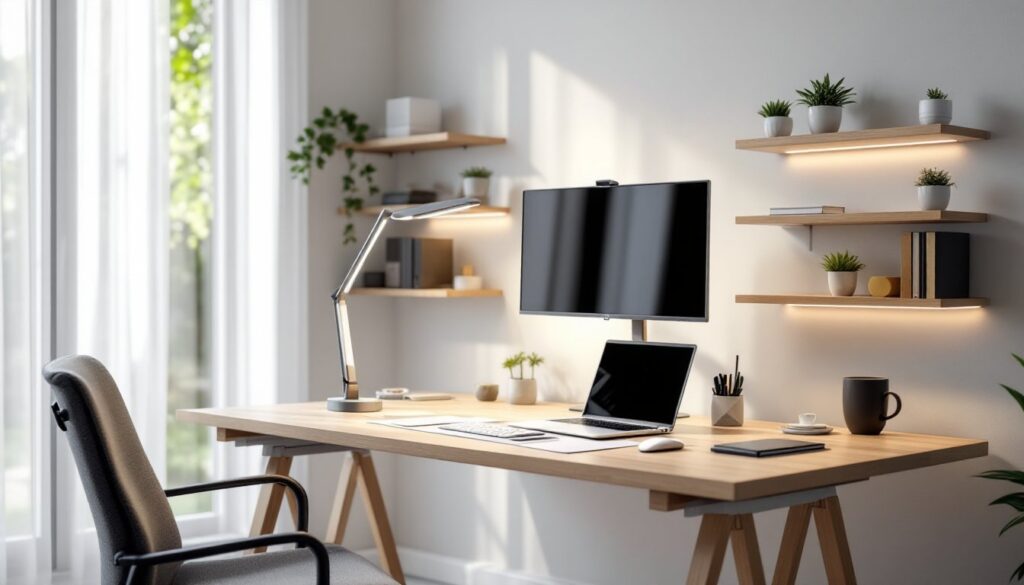
Task lighting targets specific work surfaces, the desk, keyboard, or documents. Adjustable desk lamps with articulating arms are the workhorse here. Look for lamps with at least 400-500 lumens output and a color temperature between 4000K-5000K (neutral white) for sustained focus without harshness.
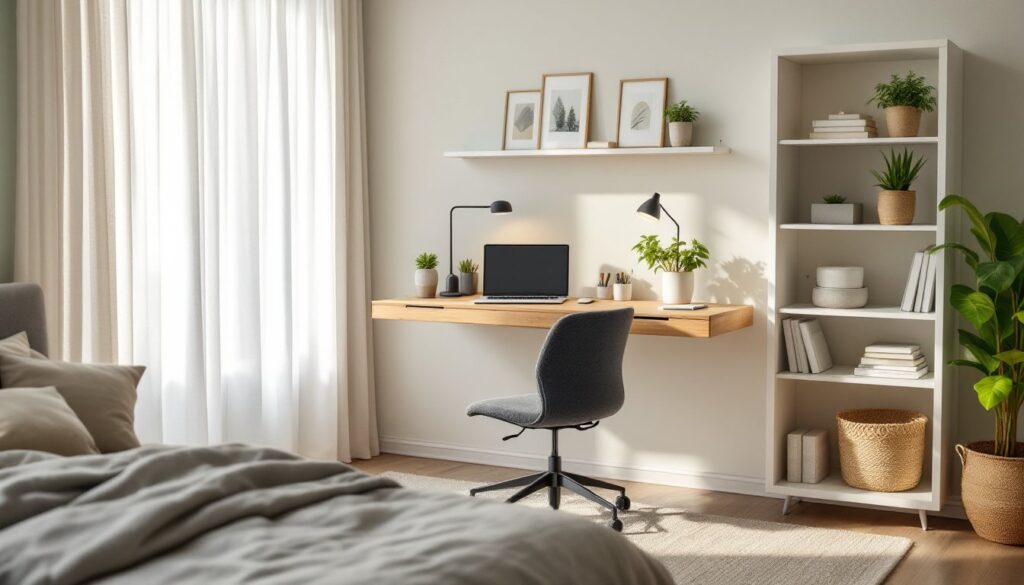
LED desk lamps offer energy efficiency and longevity (rated for 25,000+ hours). Models with dimming functions and adjustable color temperature provide flexibility as daylight shifts. Position the lamp to the side opposite the dominant hand to avoid casting shadows while writing or using a mouse.
For dual-monitor setups or wide desks, consider a monitor light bar that clamps to the top of the screen. These eliminate glare by directing light downward onto the desk surface without reflecting off the monitor. They’re space-efficient and reduce the need for additional desk real estate.
Undercabinet LED strips mounted beneath overhead shelving provide even, shadow-free task lighting. Use warm white (3000K) strips if the office has a cozy aesthetic, or daylight (5000K-6500K) for clinical precision work. Most strips are plug-and-play with adhesive backing, requiring no hardwiring.
Ambient and Accent Lighting to Set the Mood
Ambient lighting fills the room with general illumination. Recessed ceiling lights, flush-mount fixtures, or torchiere floor lamps serve this role. Aim for 50-75 foot-candles (roughly 5,000-7,500 lumens for a 100-150 sq ft office) of ambient light to prevent eye strain from contrast between bright screens and dark surroundings.
Dimmable fixtures are worth the modest upcharge. They allow adjustment based on time of day or task, brighter for morning administrative work, softer for afternoon creative sessions or video calls.
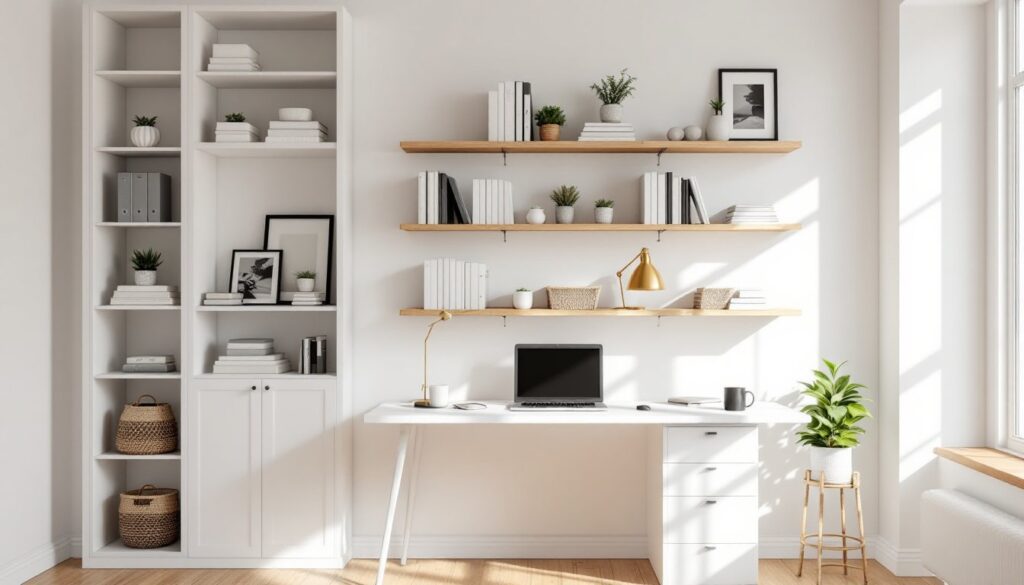
Accent lighting adds visual interest and reduces the sterile feel of purely functional spaces. Wall sconces, picture lights, or LED strip lighting behind shelving or along crown molding create depth. When planning a custom home office, built-in accent lighting can highlight architectural details or collections without cluttering surfaces.
Avoid placing accent lights where they’ll cause glare on monitors. Indirect lighting, aimed at walls or ceilings to bounce light back, works well in smaller offices where direct fixtures might feel overwhelming.
Natural Light Optimization Strategies
Natural light is the gold standard for home offices. Exposure to daylight regulates circadian rhythms, improving sleep quality and daytime alertness. It also provides superior color rendering compared to artificial sources.
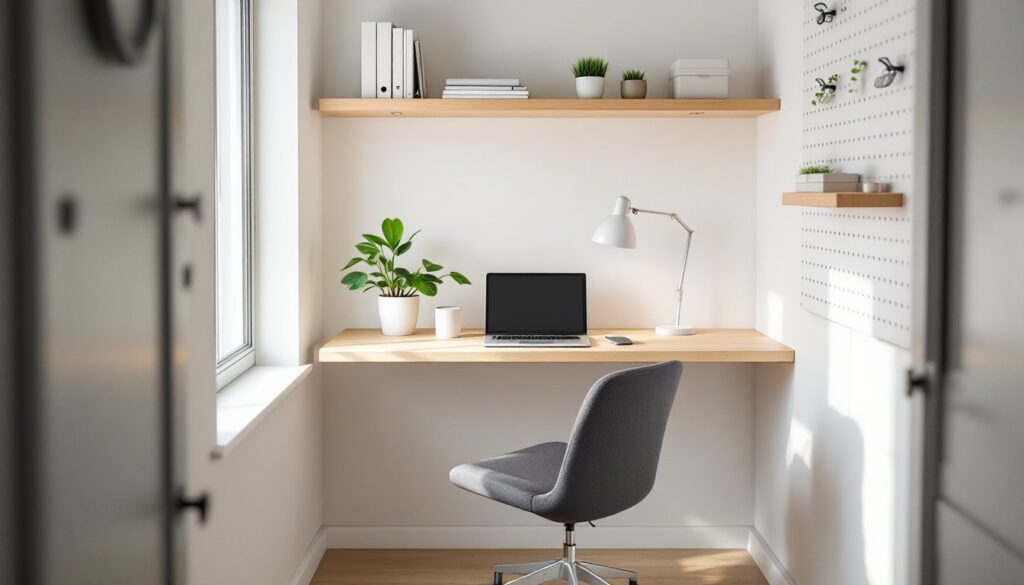
Position the desk perpendicular to windows rather than facing or backing them. Facing a window causes glare on screens and forces the eyes to constantly adjust between bright outdoor light and dimmer indoor surfaces. Backing a window creates a backlit silhouette on video calls and makes it harder to see documents.
If window placement is fixed, use sheer curtains, cellular shades, or adjustable blinds to diffuse direct sunlight. South-facing windows (in the Northern Hemisphere) receive the most intense light: these benefit from solar shades rated to block 5-10% of light transmission while preserving views.
For offices with limited or no windows, consider a light therapy lamp (10,000 lux) placed at desk height for 20-30 minutes during morning hours. These aren’t replacements for task lighting but can mitigate some effects of working in interior spaces. Some users report improved mood and focus, particularly during winter months with reduced daylight.
Skylight tubes or sun tunnels are low-cost alternatives to traditional skylights in rooms where running electrical for new fixtures isn’t feasible. They channel daylight through reflective tubing from the roof to the ceiling, providing natural illumination without heat gain or UV exposure. Installation typically takes a day and doesn’t require structural modifications beyond cutting ceiling and roof openings.
Smart Lighting and Color Temperature Tips
Smart bulbs and fixtures integrate with home automation systems (Alexa, Google Home, Apple HomeKit) to adjust brightness, color temperature, and scheduling. Philips Hue, LIFX, and Wyze offer reliable options across price points. For home offices, programmable schedules are the standout feature, automatically shift from energizing cool light (5000K+) in the morning to warmer tones (2700-3000K) in the late afternoon to signal the workday’s end.
Color temperature profoundly affects productivity and comfort. Cool white (4000-5000K) mimics midday sunlight and enhances alertness, making it ideal for analytical tasks, coding, or detailed design work. Warm white (2700-3000K) reduces blue light exposure and feels more relaxing, better suited for reading, brainstorming, or winding down.
Many desk lamps for home office setups now include tunable white LEDs that let users adjust color temperature throughout the day. This flexibility prevents the sterile, clinical feel of constant cool lighting while maintaining focus when needed.
Smart dimmers are another practical upgrade. Hardwired dimmers compatible with LED loads (look for models rated for 0-10V or ELV) prevent flickering and buzzing common with older incandescent dimmers. Plug-in smart plugs with dimming capability work for floor lamps and don’t require any wiring knowledge.
According to research highlighted by Digital Trends, circadian lighting systems that automatically adjust color temperature based on time of day can improve sleep onset by 15-20 minutes. For those working late or irregular hours, this feature helps maintain healthier sleep patterns.
One often-overlooked factor: Color Rendering Index (CRI). Bulbs with CRI above 90 render colors more accurately, critical for design work, video production, or any task requiring color precision. Most budget LEDs sit around 80 CRI: stepping up to 90+ costs marginally more but makes a noticeable difference in visual comfort. When selecting wall colors for your home office, high-CRI lighting ensures the chosen shade looks consistent under artificial and natural light.
Conclusion
Great home office lighting isn’t about a single fixture, it’s about layering task, ambient, and natural light to support how the space gets used. Adjustable task lamps, smart bulbs with tunable color temperature, and thoughtful window treatments all contribute to a workspace that feels comfortable and functional. Start with the basics: eliminate glare, add task lighting where it’s needed, and control natural light. The result is a home office that works as hard as the person sitting in it.