

Table of Contents
ToggleConverting a spare room into a combined home office and guest bedroom solves a problem most homeowners face: not enough square footage for single-purpose rooms. With remote work now a permanent fixture and occasional guests still on the calendar, dedicating a room to just one function wastes valuable real estate. The challenge isn’t whether a dual-purpose room can work, it’s how to design one that genuinely serves both needs without feeling cramped or chaotic. This guide walks through furniture selection, layout strategies, storage solutions, and design techniques that make a combo room functional year-round, whether someone’s sleeping over or crunching spreadsheets.
Key Takeaways
- Home office guest room combinations maximize square footage by eliminating single-purpose spaces, making them valuable assets for homes under 2,000 square feet.
- Murphy beds are the gold standard for multipurpose rooms, requiring a 90″ H × 64″ W × 19″ D space and starting around $2,500 for quality units that fold vertically into cabinets.
- Strategic furniture selection—such as wall-mounted fold-down desks, storage dressers, and ergonomic chairs that hide away—is essential to prevent the room from feeling cramped during transitions.
- Layout success depends on precise measurements and intentional placement: position desks opposite beds in smaller rooms or in L-shaped arrangements for larger spaces, with minimum 36″ walkways for circulation.
- Visual separation without walls is achieved through accent wall paint, area rugs that anchor each zone, layered lighting with dimmers, and open shelving units that act as flexible dividers.
- Dedicated storage solutions—closet organization systems, closed cabinets for office supplies, under-bed rolling bins, and wall-mounted shelves—prevent clutter and keep both functions organized year-round.
Why a Home Office Guest Room Combo Makes Perfect Sense
Single-purpose rooms are a luxury most homes can’t afford. The average guest bedroom sits empty 300+ days a year, while home offices now see daily use for millions of remote workers. Combining these functions maximizes square footage without requiring an addition or major renovation.
From a practical standpoint, both rooms share compatible requirements: they need good lighting, climate control, and relative quiet. Neither generates much mess or requires plumbing. The furniture footprints don’t inherently conflict, a desk occupies wall space, while a bed (especially a fold-away model) can share floor area during work hours.
Real estate value also factors in. Appraisers and buyers recognize flexible spaces as an asset, particularly in homes under 2,000 square feet where every room must pull double duty. A well-executed combo room signals smart space planning, not compromise.
The key is intentional design. Throwing a daybed in the corner of an office or cramming a laptop desk beside a queen bed creates dysfunction. Success requires treating both uses as equal priorities from the start.
Essential Furniture Choices for a Multipurpose Room
Furniture selection makes or breaks a dual-purpose room. Standard pieces eat up square footage fast, so prioritize items that serve both functions or collapse when not in use.
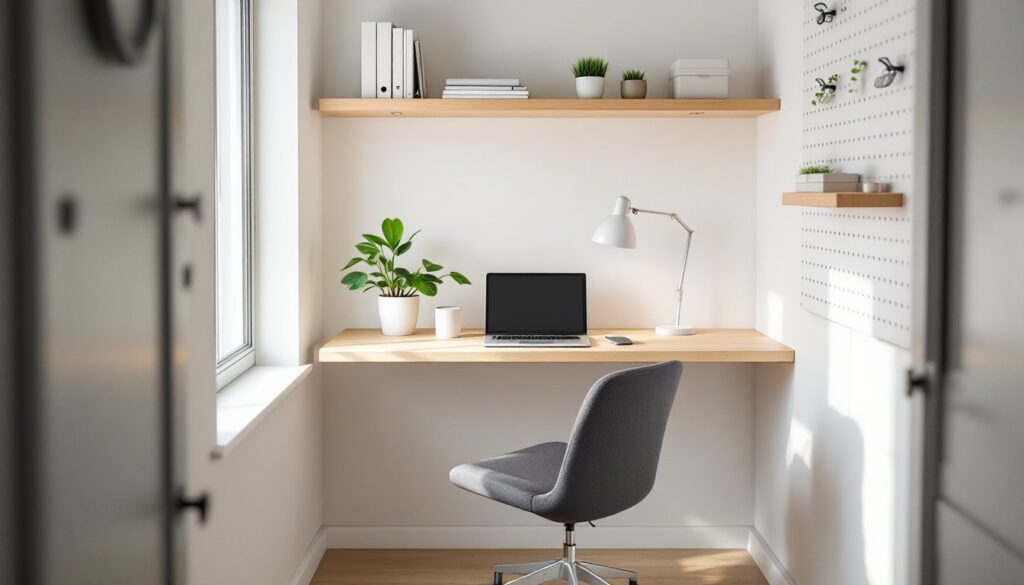
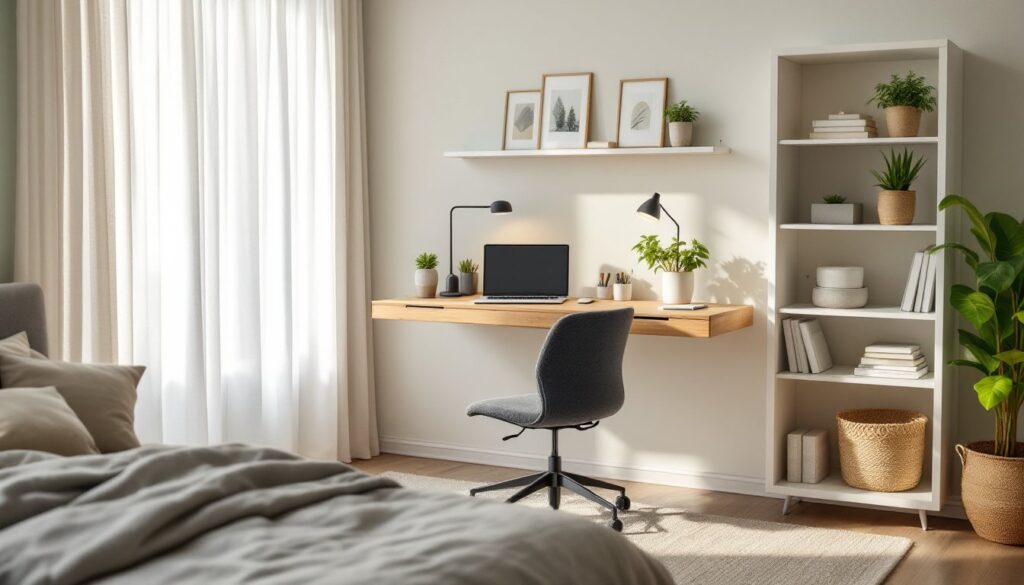
Start with the desk. A wall-mounted fold-down desk (36″ wide minimum for comfortable work surface) disappears when guests arrive, though this only works if the room has a stud wall suitable for mounting. Alternatively, a console table desk (48″ x 18″) provides a slim profile that doesn’t dominate the room visually. Avoid bulky executive desks with side returns, they’re space hogs.
For seating, choose an ergonomic office chair with wheels that can roll into the closet when the room transitions to guest mode. If budget allows, a sleeper chair (typically 35″ wide) gives guests extra seating and you a backup sleeping spot, though quality matters, cheap mechanisms fail quickly.
Storage furniture should multitask. A dresser with a clear top surface holds guest clothing in some drawers while office supplies occupy others. A bookcase with both open shelving and cabinet storage (36″ or 48″ wide) accommodates work files and guest linens in the same footprint.
Lighting deserves careful thought. A desk lamp with adjustable arm (minimum 400 lumens for task work) supplements overhead lighting during work hours without requiring additional floor space. Add a bedside reading lamp on a small side table for guests.
Murphy Beds and Wall Beds: The Space-Saving Secret
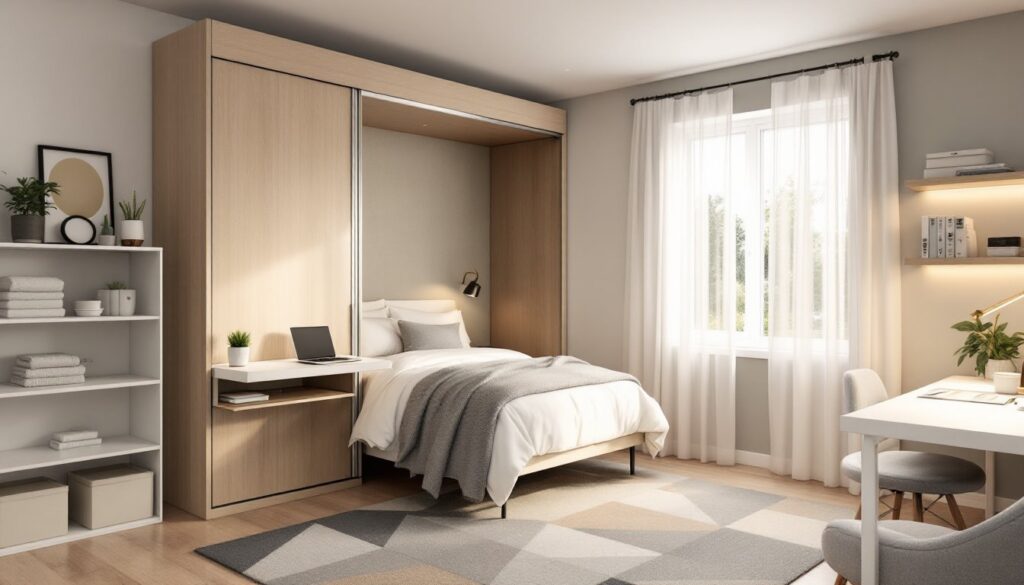
Murphy beds (also called wall beds) are the gold standard for combo rooms, folding vertically into a cabinet when not in use. Modern mechanisms use piston lifts or spring systems that one person can operate, the old clunky counterweight models are mostly obsolete.
Key specs: a queen Murphy bed requires a 90″ H × 64″ W × 19″ D cabinet when closed. That 19″ depth eats less floor space than most dressers. Installation requires securing to wall studs with lag bolts (typically 5/16″ × 3″), so drywall anchors won’t cut it. If the room lacks studs in the right location, sistering additional blocking between studs during installation provides necessary structure.
Quality Murphy beds from manufacturers like Resource Furniture or Lori Wall Beds start around $2,500 for a basic queen, up to $6,000+ for units with integrated desks or shelving. Budget DIY kits exist ($1,200-$1,800), but assembly requires intermediate carpentry skills and precise leveling, a bed that’s not plumb won’t close smoothly.
Alternatives include daybed-with-trundle setups (guest sleeps on daybed, trundle pulls out for couples) or futons, though honest assessment: most futons are uncomfortable for both sitting and sleeping. A quality daybed with a real mattress serves better than a mediocre futon. Implementing ideas found in small desk solutions can complement Murphy bed installations by maximizing remaining wall space.
Clever Layout Strategies to Maximize Your Square Footage
Room layout determines whether dual functions coexist or compete. Start by measuring the room precisely, nominal dimensions matter less than actual clearances after baseboards and door swings.
For rooms 10′ × 10′ or smaller, place the desk against the wall opposite the bed. This creates a natural visual separation and keeps work surfaces away from sleeping areas. If using a Murphy bed, position the desk on an adjacent wall so both can be accessed simultaneously when the bed is up.
In 10′ × 12′ or larger rooms, an L-shaped arrangement works well: bed along the long wall, desk perpendicular on a short wall. This leaves a central circulation zone (minimum 36″ walkway between furniture per IRC accessibility guidelines, though 42″ feels more comfortable).
Avoid placing desks directly under windows unless glare won’t be an issue. North-facing windows provide even light without direct sun, but southern exposures often require blackout shades during work hours. Designers at Apartment Therapy regularly feature layouts that optimize natural light for dual-function spaces.
Door swing direction affects placement. If the door opens into the room and hits the bed or desk, consider installing a swing-clear hinge (adds 2″ of clearance) or reversing the door swing entirely (requires moving the strike plate and patching/repainting the existing jamb mortises).
Electrical outlets present another challenge. Desks need power and data access, but standard residential rooms only have outlets every 12′ per NEC code. Running new circuits requires either fishing wire through walls (intermediate electrical skill) or using flat extension cords designed to run under carpet edges. Power strips with surge protection (minimum 1,000 joules) are non-negotiable for computer equipment. Applying strategies from custom home office layouts helps optimize electrical planning.
Storage Solutions That Keep Both Functions Organized
Insufficient storage kills the dual-purpose concept. Both work materials and guest supplies need dedicated homes, or the room devolves into clutter.
Closet organization is critical. Install a closet system with adjustable shelving (wire shelving from ClosetMaid or similar starts around $120 for 6′ sections). Dedicate the upper third for office archives and lesser-used items, the middle third for hanging guest clothes (leave 5-10 empty hangers at minimum), and the lower third for shoes and folded linens.
For office supplies, use closed storage rather than open shelving. Guests don’t want to stare at printer paper and file folders. A cabinet with doors (either standalone or built-in) keeps work materials accessible but out of sight. Built-in solutions following principles from built-in cabinet designs offer seamless integration.
Under-bed storage works only if using a platform bed or bed frame with clearance. Rolling storage bins (minimum 6″ clearance required for standard bins) hold guest linens, extra pillows, and seasonal items. Vacuum-sealed bags compress bedding to half its volume but require re-fluffing before use.
Desk storage should include at least one file drawer for active projects (legal or letter size, depending on your documents) and smaller drawers for supplies. Wall-mounted floating shelves (typically 1.5″ × 8″ or 1.5″ × 10″ boards with hidden brackets) add storage without floor space, but must anchor into studs with #8 wood screws minimum 2.5″ long.
A bedside caddy or wall-mounted organizer gives guests a spot for phones, glasses, and water bottles without requiring a nightstand. This matters in tight rooms where furniture must stay minimal. Resources on Homedit showcase creative storage approaches for multipurpose spaces.
Design Tips for Creating Visual Separation Without Walls
Physical walls aren’t an option in most combo rooms, but visual separation prevents the space from feeling schizophrenic.
Paint or wallpaper creates zones without construction. A single accent wall behind the bed (use removable peel-and-stick wallpaper if renting, around $30-$60 per 20.5″ × 18′ roll) signals the sleep zone. Keep the desk area in a coordinating but distinct neutral. Avoid going too bold, guests and work calls both benefit from calming backgrounds.
Area rugs define spaces literally. A 5′ × 7′ or 6′ × 9′ rug under the desk and chair (with all four desk legs on the rug) anchors the work zone. A separate runner alongside the bed or a smaller rug at the foot adds warmth without requiring wall-to-wall carpet. Use rug pads underneath (cut to fit) to prevent slipping on hardwood or laminate.
Lighting layers further separate functions. Install a dimmer switch on overhead lighting (single-pole dimmer installation takes 15 minutes with basic electrical knowledge, shut off the breaker first). Task lighting at the desk stays bright (4000K-5000K color temperature for focus), while bedside lamps use warmer bulbs (2700K-3000K) for relaxation.
Open shelving units (not solid bookcases) act as partial room dividers without blocking light. A 72″H × 36″W shelf unit placed perpendicular to a wall creates separation while maintaining sightlines. Secure tall furniture to wall studs with furniture straps or L-brackets, anything over 60″ tall poses a tip-over risk, per CPSC guidelines.
Curtains or folding screens offer flexible division. A ceiling-mounted curtain track (installed into ceiling joists with appropriate hardware) lets a fabric panel slide across to hide the office during guest stays. Alternatively, a three-panel folding screen (typical height 70″-72″) provides portability without installation. Concepts from modern office aesthetics can inspire cohesive visual themes.
Safety note: When running any new electrical for lighting or outlets, follow NEC guidelines or hire a licensed electrician. Improper wiring creates fire hazards, and many jurisdictions require permits for new circuits. Incorporating principles from decorating strategies helps maintain professional aesthetics while ensuring practicality.
Conclusion
A successful home office guest room delivers on both promises: productive workspace during the week, welcoming accommodation when company arrives. The difference between a functional combo room and a cramped compromise comes down to intentional furniture choices, strategic layout, adequate storage, and visual design that respects both uses. Start with the Murphy bed or daybed decision, plan the layout around actual dimensions and door swings, then layer in storage and design elements that define separate zones. Ideas from Homify can provide additional inspiration as homeowners refine their approach. The result is a hardworking room that genuinely serves two purposes without sacrificing either one.