


Table of Contents
ToggleA dedicated workspace makes all the difference when working from home. But cramped rooms, awkward corners, and limited floor space can turn desk shopping into a frustrating game of compromise. Built-in desks solve these problems by transforming wasted square footage into permanent, purpose-built workstations that match the room’s dimensions and the homeowner’s workflow. Unlike freestanding furniture that leaves gaps and wobbles on uneven floors, a well-designed built-in desk integrates seamlessly with walls, closets, and existing trim, delivering custom function without the custom price tag of hiring a cabinet shop.
Key Takeaways
- Built-in desk ideas maximize unused space like corners and alcoves while providing stable, permanent workstations that freestanding furniture cannot achieve.
- Corner and wall-to-wall built-in desks are ideal for small or shared home offices, with corner designs requiring at least 36 inches of clearance behind the chair and continuous top surface for a seamless look.
- Floating desks create a minimalist aesthetic while saving floor space, but require robust structural support using a 2×6 or 2×8 ledger board secured to at least three wall studs with 3-inch fasteners.
- Integrated storage solutions including base cabinets, adjustable shelving, and drawer units keep supplies organized and reduce desktop clutter in built-in desk setups.
- Successful DIY built-in desk installation depends on accurate measurements, proper stud location, secure fastening to wall framing, and professional electrical help for routing power and data cables.
- Built-in desks increase home value and allow precise height customization for ergonomics, but renters must obtain landlord approval and homeowners should disclose permanent modifications during property sales.
Why Choose a Built-In Desk for Your Home Office
Built-in desks offer advantages that go beyond aesthetics. They maximize every inch of available space by fitting flush against walls and into alcoves that standard desks can’t accommodate. This approach works especially well in homes with challenging layouts, under stairways, in former closets, or along narrow hallways converted to work zones.
Permanent installation also means stability. There’s no wobble from uneven legs or shift when leaning on the surface. The desk becomes part of the room’s structure, anchored to studs with proper blocking for support. For homeowners planning to stay put, this built-in approach can increase property value by demonstrating thoughtful use of space.
Another practical benefit: cable management. Drilling through a built-in desk to route power and data cables keeps cords hidden and reduces desktop clutter. Freestanding desks rarely offer this level of integration. Built-ins also allow for precise height customization, important for ergonomics when standard desk heights (typically 29-30 inches) don’t suit the user’s chair or body proportions.
Corner Built-In Desk Designs That Maximize Space
Corners are underused real estate in most rooms. A built-in corner desk transforms this dead zone into a productive L-shaped workspace without sacrificing floor area in the center of the room.
Construction typically involves securing a ¾-inch plywood or solid wood top to wall cleats (1×3 or 2×4 lumber screwed into studs) on two adjacent walls. The outer corner can be supported by a cabinet base, a single leg, or a diagonal brace, depending on the desk’s depth and intended load. For a clean look, run the top continuously around the corner rather than joining two separate pieces, this requires a miter cut at 45 degrees or a rounded corner cut with a router.
Corner desks work particularly well in small home offices where an L shaped desk layout provides ample surface area for dual monitors, reference materials, and task lighting without blocking pathways. When planning the layout, leave at least 36 inches of clearance behind the chair for comfortable movement.
One challenge with corner desks: avoid trapping yourself in the angle. If the desk wraps tightly around both walls, reaching items on the back edges becomes awkward. Consider leaving one side open or installing pull-out shelves in the corner zone for better access.
Wall-to-Wall Built-In Desks for Shared Workspaces
When multiple people share a home office, a wall-to-wall built-in desk eliminates the territorial awkwardness of individual furniture pieces. This design spans an entire wall, creating a continuous work surface that accommodates two or more users with defined zones.
Start by installing a ledger board, a 2×4 or 2×6 secured horizontally into wall studs at the desired desk height (typically 28-30 inches from the floor). This ledger supports the back edge of the desk top. The front edge rests on a base cabinet run, a series of filing drawers, or a continuous row of 2×2 legs spaced every 24-32 inches for open storage underneath.
For the work surface itself, ¾-inch maple plywood with an edge-banded front provides a durable, budget-friendly option. Alternatively, 25mm laminate countertop material (the type used in kitchens) offers stain resistance and a finished appearance without additional sealing. If spanning more than 48 inches without intermediate support, add a mid-span support cleat or increase the top thickness to 1 inch to prevent sagging under monitor weight and daily use.
Shared desks benefit from integrated dividers or privacy screens. Simple ½-inch plywood panels mounted vertically between workstations provide visual separation without requiring full walls. Plan electrical outlets every 36-48 inches along the wall to give each user independent access to power, this often requires hiring a licensed electrician unless existing outlets align perfectly.
Built-In Desk with Storage Solutions
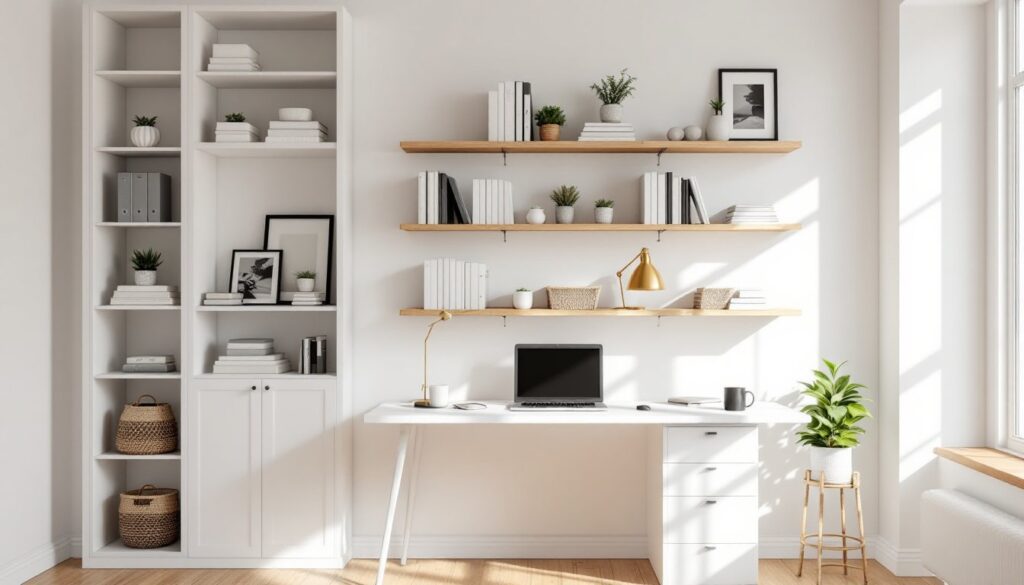
A desk without storage quickly becomes a clutter magnet. Integrating cabinets, shelves, and drawers into the built-in design keeps supplies organized and surfaces clear.
Base cabinets installed beneath the desk provide enclosed storage for files, equipment, and personal items. Stock kitchen cabinets (typically 24 inches deep) work well for this purpose and cost less than custom cabinetry. For a built-in look, face-frame the cabinets with matching trim and paint or stain them to blend with the room’s baseboards and door casings.
Overhead shelving takes advantage of vertical space. Install adjustable shelving standards (like those from custom office cabinet systems) into studs above the desk to accommodate books, binders, and decorative items. Keep frequently accessed items on lower shelves, anything above 72 inches becomes difficult to reach without a step stool.
Drawer units integrated into the desk base should include at least one file drawer (minimum 12 inches deep to accommodate hanging folders) and shallow drawers (3-4 inches deep) for pens, charging cables, and small tools. Ball-bearing slides rated for 75-100 pounds ensure smooth operation even when fully loaded.
For modern home office aesthetics, consider open cubbies instead of traditional cabinet doors. Box shelves built from ½-inch plywood and divided with vertical partitions create individualized storage spaces for baskets, bins, or decorative objects. These cubbies can be integrated into the desk pedestal or installed as a hutch above the work surface.
Floating Built-In Desks for Modern Minimalist Offices
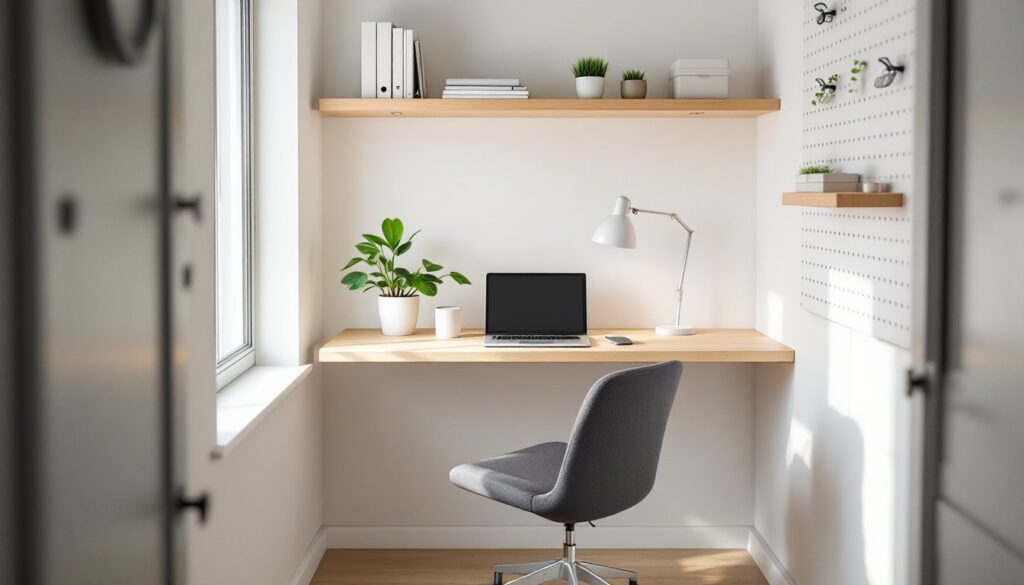
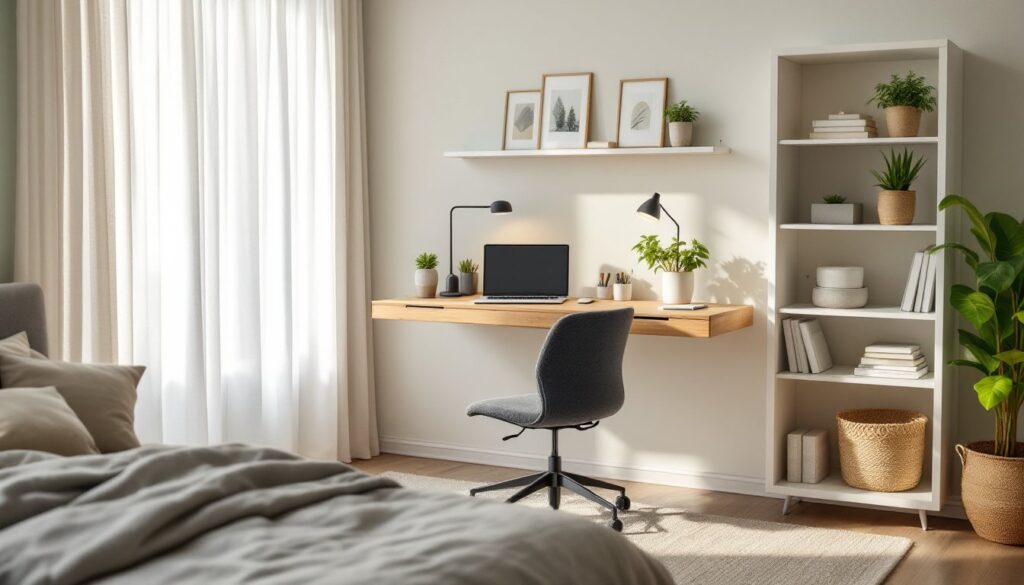
Floating desks, wall-mounted work surfaces with no visible legs or supports, create a clean, contemporary look while maximizing floor space underneath for seating flexibility or storage bins.
The key to a successful floating desk is robust structural support. The desk top cantilevers from the wall, so all weight transfers to the mounting cleat. Use a 2×6 or 2×8 ledger board secured through drywall into at least three wall studs with 3-inch lag screws or structural screws. For typical desk depths of 24-30 inches, this cleat should run the full width of the desk.
The desk top attaches to the ledger from underneath using pocket screws or angle brackets. For a truly invisible mount, rabbet the back edge of the desk top to fit over the front face of the cleat, then secure with screws driven down through the top into the cleat.
Load capacity matters. A properly installed floating desk can support 100-150 pounds, adequate for monitors, keyboards, and office supplies. But, don’t use a floating desk as a pull-up bar, the leverage on the fasteners increases dramatically when weight shifts toward the front edge.
For deeper desk spans or heavier equipment, add concealed support brackets. Steel floating desk brackets rated for shelving applications bolt into studs and tuck under the desk top, invisible from normal viewing angles. Paint them to match the wall for even more discretion.
Floating desks pair naturally with minimalist office design principles, no bulky pedestals or base cabinets to disrupt clean lines. Just remember that without drawers, additional storage solutions (wall-mounted organizers, rolling carts, nearby closets) become necessary.
DIY Built-In Desk Installation Tips and Considerations
Building a desk into a wall involves basic carpentry, but attention to detail separates a professional-looking result from a wobbly amateur project. Start with accurate measurements and a detailed plan.
Locating Studs and Planning Attachment Points
Use a stud finder to locate wall framing. Mark stud centers with painter’s tape, this makes positioning ledger boards and mounting hardware straightforward. Most walls have studs spaced 16 inches on center, though older homes may use 24-inch spacing. If a critical support point falls between studs, add blocking: cut through the drywall, install a horizontal 2×4 between studs, patch the drywall, then proceed with mounting.
Cutting and Finishing the Desk Top
For straight cuts in plywood, a circular saw with a straightedge guide produces clean results. Support the material on sawhorses and set the blade depth about ¼ inch deeper than the material thickness to avoid binding. A jigsaw handles curved cuts and cutouts for cable grommets.
Edge-band the exposed plywood edges with iron-on veneer tape or solid wood trim. Sand all surfaces with 120-grit sandpaper, then apply primer and paint or a clear polyurethane finish (two coats minimum). For desks with wood surfaces, consider water-based polyurethane in a satin finish, it dries quickly and resists yellowing compared to oil-based products.
Safety and Code Considerations
Always wear safety glasses when cutting lumber or driving fasteners overhead. A dust mask is essential when sanding, MDF and plywood produce fine particulate that irritates lungs.
If routing new electrical outlets or moving existing ones, hire a licensed electrician or check local requirements for homeowner electrical work. Most jurisdictions require permits for new circuits. Running low-voltage data cables (Ethernet, coaxial) doesn’t typically require permits but should follow neat, protected pathways.
Built-in furniture is usually considered a permanent improvement. If the desk attaches to walls with more than simple brackets, it may need to be disclosed in future home sales. For renters, get landlord approval before cutting into walls or making structural modifications.
Tools and Materials Checklist
Tools:
- Stud finder
- Circular saw or miter saw
- Drill/driver with bits
- Level (24-inch or longer)
- Clamps
- Measuring tape
- Safety glasses and hearing protection
Materials:
- ¾-inch plywood or solid wood for desk top
- 2×4 or 2×6 lumber for ledger and supports
- 3-inch wood screws or lag screws
- Wood glue
- Edge banding or trim
- Primer and finish
For small workspace installations, pre-finished shelving boards from home centers can substitute for custom-cut plywood if dimensions align. These boards come in standard widths (12, 16, 24 inches) and eliminate finishing steps.
Professional Help vs. DIY
Carpentry skills and comfort with power tools determine feasibility. Installing a simple floating shelf desk is a weekend project for most DIYers. Full wall-to-wall installations with integrated cabinetry may justify hiring a carpenter or cabinet installer, especially if the design includes built-in storage systems with drawer hardware and custom joinery.
Structural concerns, like attaching heavy desks to steel studs in commercial buildings or working in homes with plaster-and-lath walls, often benefit from professional assessment. When in doubt, consult a contractor before cutting into walls.
Conclusion
Built-in desks turn awkward spaces into functional work zones and provide long-term durability that freestanding furniture can’t match. Whether working in a corner, spanning a full wall, or floating a minimalist surface, the right design maximizes available space and supports productive daily use. With basic carpentry tools, accurate measurements, and proper structural support, homeowners can create custom workspace solutions that fit their specific needs and last for years.