

Table of Contents
ToggleCarving out workspace in a bedroom isn’t a compromise, it’s a strategic move for homeowners short on square footage or those who prefer keeping work close to their personal retreat. Whether it’s a spare bedroom doubling as a guest room or a primary bedroom with an underused corner, the right setup transforms dead space into a functional office without sacrificing the room’s restful character. The key lies in smart furniture placement, visual boundaries, and storage that keeps work clutter from invading sleep zones. This guide walks through proven strategies to make the combination work.
Key Takeaways
- A strategic bedroom office setup uses existing space without costly renovations, making it ideal for remote workers and homeowners with limited square footage.
- Position your desk in a corner opposite the bed and near natural light to maintain visual separation and reduce eye strain while minimizing work-sleep interference.
- Wall-mounted, folding, or console-style desks save floor space in bedrooms under 120 square feet and can be concealed when not in use.
- Create distinct work and rest zones using room dividers, accent walls, area rugs, or open shelving to help your brain switch between productivity and relaxation modes.
- Implement vertical storage solutions and cable management systems to keep office clutter hidden at day’s end, protecting your bedroom’s restful character.
- Layer task lighting, ambient lighting, and natural light with dimmable or smart bulbs to support focused work during the day and healthy sleep cycles at night.
Why a Bedroom Office Makes Sense for Today’s Homeowners
Remote work isn’t going anywhere, and many homes lack a dedicated study or den. Converting part of a bedroom into an office uses existing space without the cost or hassle of building an addition or finishing a basement. Bedrooms typically sit away from high-traffic areas like kitchens and living rooms, offering better noise control during video calls or focused work.
There’s also a practical angle for those working non-traditional hours. Having a desk steps from the bed lets night-shift workers or early risers slip into work mode without disturbing the rest of the household. Parents with young kids can supervise assignments or complete their own work while keeping an eye on naptime.
The setup does require discipline. Without clear separation between work and rest, sleep quality can suffer and workdays can bleed into evenings. That’s why intentional layout and design choices, not just plopping a laptop on a nightstand, make or break this arrangement.
Choosing the Right Location Within Your Bedroom
Not every corner of a bedroom suits office work. Start by identifying zones that won’t interfere with the bed’s primary function or block natural pathways. A spot near a window offers daylight, critical for productivity and reducing eye strain, but avoid positioning a desk where afternoon sun creates screen glare or overheats the workspace.
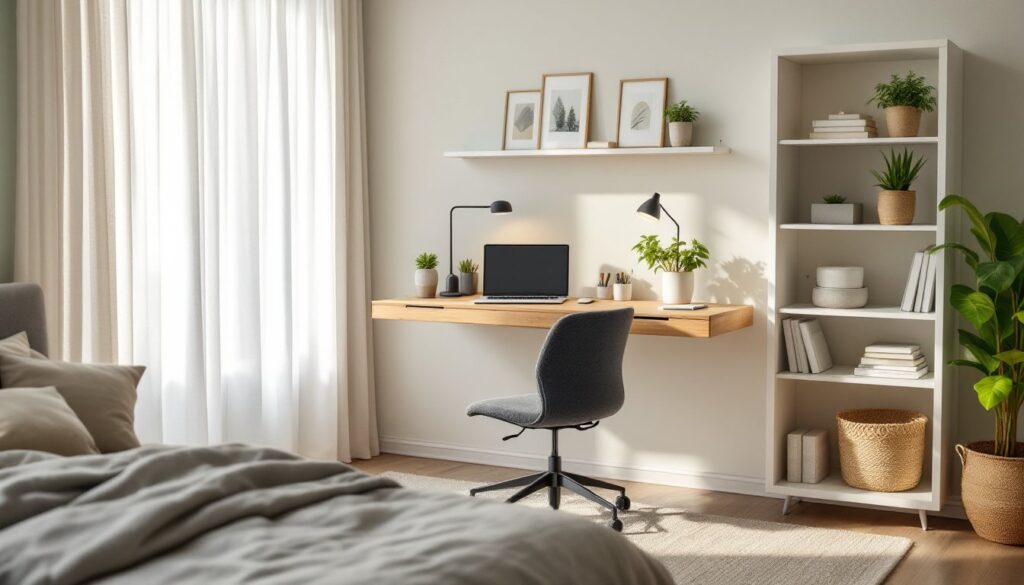
Corners opposite the bed work well because they keep work visually separated from sleep. If the bedroom has a closet alcove or nook, even better: these recessed spaces naturally define boundaries. Measure the available floor area before shopping for furniture. A standard desk is 48 to 60 inches wide and 24 to 30 inches deep, plus you’ll need clearance for a chair to roll back (at least 36 inches from the desk edge to the nearest wall or furniture).
Avoid placing the desk directly in front of the bed where it’s the first thing visible upon waking. That visual cue can trigger work stress before feet hit the floor. Homeowners working with small desks for home use often find success tucking compact workstations into underused niches, which keeps the setup unobtrusive. Bedrooms with awkward layouts, like sloped ceilings or offset windows, may benefit from custom storage and workspace solutions tailored to the room’s quirks.
Space-Saving Desk Solutions for Small Bedrooms
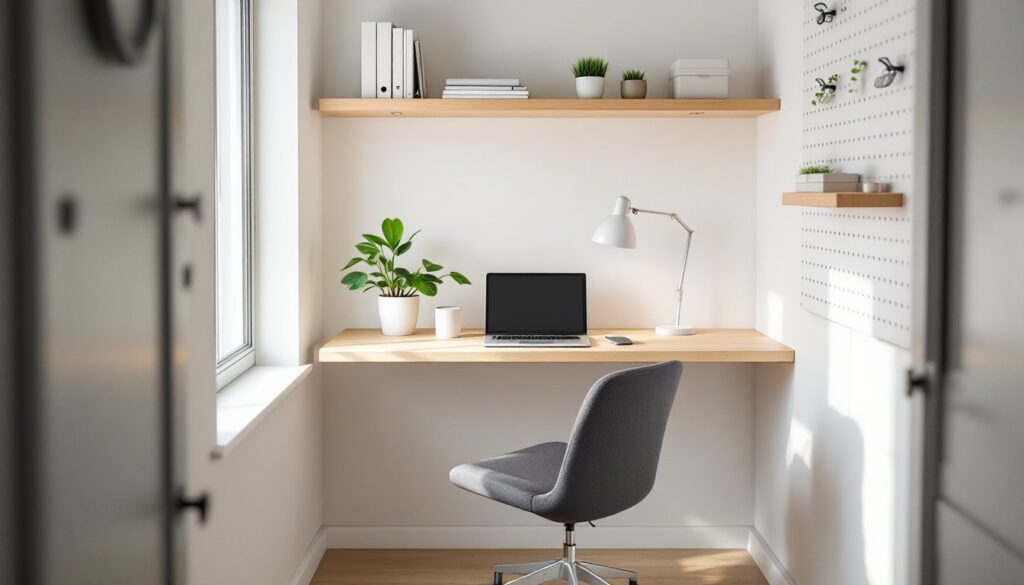
Standard desks eat up floor space. For bedrooms under 120 square feet, wall-mounted or folding options preserve room to move. A floating desk, a simple shelf bracket supporting a slab of plywood or butcher block, provides a work surface that folds up or stays slim against the wall. Mount it at 29 to 30 inches from the floor (standard desk height) using heavy-duty shelf brackets rated for the load. Secure brackets into wall studs, not just drywall, especially if the desk will support a monitor or laptop plus accessories.
Another option: a drop-leaf or fold-down desk that closes flush when not in use. IKEA’s NORBERG and similar models hinge at the wall and lock into place with a leg bracket. These work well in narrow spaces but won’t support heavy equipment, think laptop and notebook, not a full desktop tower and dual monitors.
Secretary desks and armoires hide office gear behind closed doors. When work ends, shut the doors and the room reverts to a bedroom. Look for models with interior cable management or drill a small hole in the back panel to route cords.
For rooms with a bit more space, a console table (typically 30 to 36 inches wide and 12 to 18 inches deep) can double as a desk. It’s narrower than traditional desks, leaving more floor space, and doesn’t scream “office.” Pair it with a slim rolling chair or a compact stool that tucks underneath. Creative repurposing of items like bedroom office nooks built with modular shelving demonstrates how DIYers adapt budget-friendly furniture into functional workstations.
Creating Visual Separation Between Work and Sleep Zones
Physical and visual boundaries help the brain switch modes between work and rest. Even in a single room, strategic dividers create the illusion of separate spaces. A folding screen or room divider placed behind or beside the desk blocks the work zone from view when in bed. Look for options at least 72 inches tall to provide effective screening: shorter dividers won’t hide desk clutter from a typical mattress height.
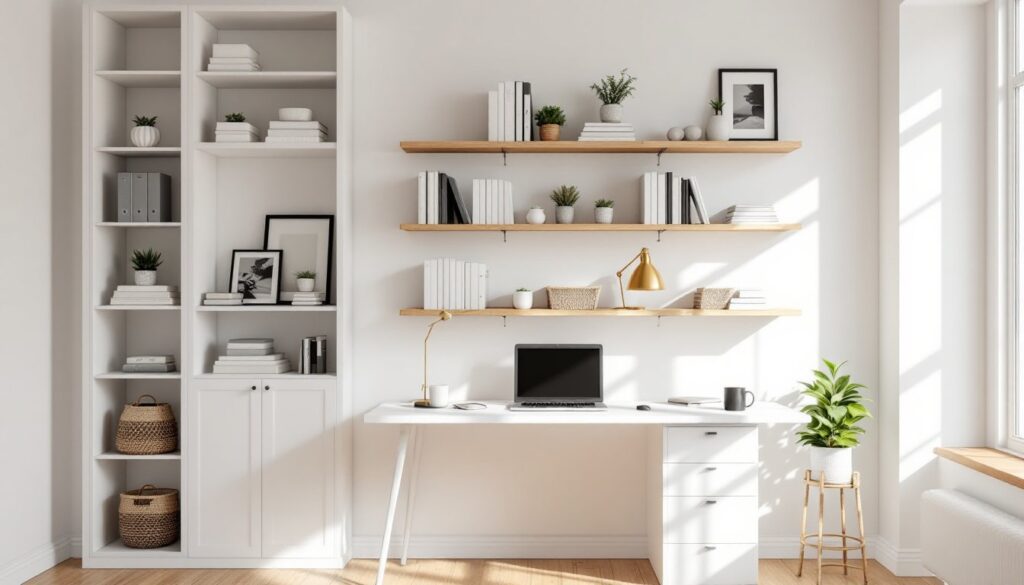
Bookcases and open shelving units also function as partitions. A 5-shelf bookcase (standard 72 inches high by 36 inches wide) positioned perpendicular to the wall creates a natural boundary without closing off the room. Fill lower shelves with work supplies and upper shelves with books or decor to tie the piece into the bedroom aesthetic.
Paint or wallpaper can define zones without taking up floor space. A single accent wall behind the desk, especially in a color that contrasts with the rest of the room, signals a shift in function. Choosing calming hues for focus can reinforce productivity while still feeling bedroom-appropriate. Avoid stark white or industrial grays that feel too “office-like.”
Area rugs anchor the workspace and create a tactile boundary. A small 5×7-foot rug under the desk and chair differentiates the office zone from the carpeted or hardwood bedroom floor. Designers exploring apartment-scale solutions often layer rugs to define spaces in open-plan or multipurpose rooms.
Storage Ideas That Keep Your Bedroom Office Clutter-Free
Clutter is the enemy of both productivity and restful sleep. A bedroom office needs storage that hides work materials at day’s end. Start with vertical storage: wall-mounted shelves, pegboards, or floating cubbies keep supplies off the desk and floor. Install shelves at least 12 inches deep to hold binders, file boxes, or small bins. If drilling into walls isn’t an option (rental restrictions, for example), tension-rod shelving systems or freestanding ladder shelves work without permanent hardware.
Drawer units that slide under the desk or beside it stow papers, cables, and office supplies. A 2- or 3-drawer rolling file cabinet fits beneath most desks and provides lockable storage if needed. Choose models with casters so they’re easy to move for cleaning or reconfiguring the space.
For bedrooms with existing closets, carve out a section for office storage. A hanging file organizer or a small set of stackable bins on a closet shelf keeps work items contained. Homeowners with walk-in closets sometimes install a small desk inside the closet itself, fully enclosing the office. Close the closet door, and the workspace vanishes. Built-in cabinetry offers the most polished look: dedicated office storage systems can be customized to fit closet dimensions or bedroom alcoves.
Cable management is non-negotiable. Use adhesive cable clips, a cable tray mounted under the desk, or a cable sleeve to bundle cords. Loose cables trailing across the floor aren’t just an eyesore, they’re a tripping hazard, especially in a room you navigate in the dark.
Lighting Strategies for Productivity and Relaxation
A bedroom office needs two lighting modes: bright task lighting for work and softer ambient lighting for winding down. Relying solely on overhead fixtures creates harsh shadows and doesn’t provide adequate light at desk level. Add a desk lamp with adjustable brightness and color temperature. LED lamps rated at 500 to 1000 lumens and offering 3000K to 5000K color temperature range from warm white to daylight, letting users tune the light to the task.
Position the lamp to the side opposite your dominant hand to avoid casting shadows while writing or typing. Swing-arm or clamp-on lamps save desk space and direct light precisely where needed. For bedrooms with limited outlets, look for lamps with built-in USB ports to charge devices without adding a power strip.
If the desk sits near a window, take advantage of natural light but add sheer curtains or blinds to control glare. Direct sunlight on a monitor washes out the screen and causes eye strain. Light-filtering roller shades or vertical blinds let users adjust light levels throughout the day.
For evening or early-morning work, avoid bright overhead lights that signal “wake up” to the brain when you’re trying to maintain sleep-friendly conditions. Instead, use the desk lamp as the primary light source and add a dimmable floor lamp or wall sconce in another part of the room for ambient lighting. Smart bulbs with scheduling features let users program lighting transitions that support circadian rhythms, brighter, cooler light during work hours and warmer, dimmer light as bedtime approaches.
Even with refined workspace aesthetics, poor lighting will undercut both productivity and sleep quality. Layering task, ambient, and natural light gives flexibility for different times of day. Integrating ideas from proven office nook designs shows how small adjustments in lighting placement dramatically improve functionality in tight quarters.
Conclusion
Merging an office into a bedroom requires more than wedging a desk into a corner. Success hinges on deliberate placement, smart furniture choices, and visual cues that let the brain shift gears between work and rest. With the right setup, a bedroom office becomes a productive workspace that doesn’t compromise the room’s primary function, or your sleep.