


Table of Contents
ToggleAttic bedrooms with slanted ceilings often get dismissed as awkward or limiting, but that’s a missed opportunity. These angular spaces offer character, coziness, and architectural interest that standard box rooms can’t match. The challenge isn’t the ceiling, it’s approaching the design with the right strategies. From furniture placement to built-ins, lighting tricks to style choices, a sloped ceiling can become the defining feature that makes a bedroom memorable. Here’s how to work with the angles, not against them.
Key Takeaways
- Slanted ceiling bedrooms create natural spatial zones and vertical expansion when designed strategically, turning architectural limitations into design advantages.
- Position your bed along the lowest wall and reserve the tallest sections for tall furniture like dressers and wardrobes to maximize both comfort and usable space.
- Paint slanted ceilings the same color as walls or one shade lighter to blur boundaries and make the room feel larger and more cohesive.
- Layer multiple light sources like wall sconces, table lamps, and LED strips instead of central ceiling fixtures to eliminate uneven shadows in angled spaces.
- Built-in storage solutions—including drawers, floating shelves, and knee wall cabinets—transform dead space under slopes into highly functional storage without custom cabinetry.
- Match your slanted ceiling design style to either modern minimalist (monochrome, clean lines) or cozy cottage aesthetics (wood planks, warm colors, layered textures) for cohesive, inviting spaces.
Why Slanted Ceilings Are a Design Advantage (Not a Challenge)
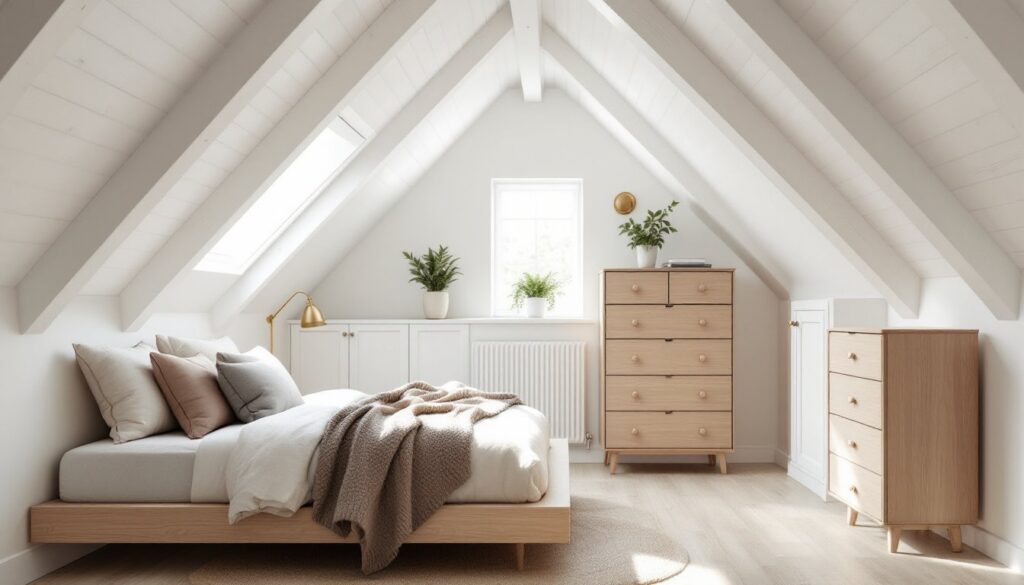
A slanted ceiling creates natural zones within a single room. The tallest section can accommodate a wardrobe or dresser, while lower areas become intimate nooks perfect for reading corners or window seats. This built-in spatial hierarchy adds dimension without installing a single divider.
The angled plane also draws the eye upward, making the room feel more expansive vertically even if square footage is tight. Exposed beams, common in attic conversions, add texture and a sense of craftsmanship that flat drywall ceilings lack. If the framing is visible, consider leaving it exposed rather than boxing it in. Just confirm the framing meets current fire codes if you’re renovating: some jurisdictions require fire-rated drywall in sleeping spaces.
Another advantage: fewer decisions about upper wall decor. The ceiling itself becomes the focal point, freeing up cognitive load and budget. Paint it a bold color, clad it in reclaimed wood, or leave it white to reflect light, each choice has impact without competing accessories.
Smart Furniture Placement for Sloped Ceiling Bedrooms
Start by measuring ceiling height at multiple points. Standard residential ceilings sit at 8 feet, but sloped rooms may drop to 5 feet or lower along one wall. Map these measurements on graph paper (¼-inch scale works well) before buying furniture.
Place the bed along the lowest wall. Lying down requires minimal clearance, so a 4-foot ceiling height works fine over a mattress. This frees up the tallest section for dressers, closets, or open floor space. Positioning the headboard under the slope also creates a snug, enclosed feeling that many find restful.
For dual sloped ceilings (A-frame style), center the bed under the peak. This balances the room visually and leaves usable standing height on both sides. If the bed must go elsewhere, use low-profile furniture in constricted zones: platform beds (12–14 inches high), Japanese-style futons, or even a floor mattress on a simple frame.
Tall dressers, wardrobes, and bookcases belong against the high wall or gable end. If built-in storage isn’t an option, measure furniture height against your ceiling map before purchasing. A 6-foot armoire won’t fit under a 5-foot slope, no matter how much you want it to.
Consider modular or custom pieces for transitional zones. A dresser that’s 36 inches tall can tuck under a 4-foot slope if you leave 12 inches of clearance. Avoid pushing furniture flush to angled walls: leave 2–3 inches of breathing room so the piece doesn’t look wedged in. Many designers on platforms like Homify showcase creative furniture layouts for unconventional spaces like these.
Color and Lighting Strategies to Maximize Space
Paint the ceiling the same color as the walls, or go one shade lighter. This blurs the boundary between vertical and angled planes, making the room feel larger and more cohesive. High-contrast ceilings (dark ceiling, light walls) can look dramatic but often shrink the perceived volume, fine if you want a cozy den, less ideal for a cramped attic.
If the room has dormers, paint their interiors a crisp white or soft neutral to bounce light into the space. Dormers create natural alcoves: treat them as mini-rooms within the room. A small desk, built-in bench, or plant shelf fits perfectly here.
For lighting, skip central ceiling fixtures if the peak is off-center, they’ll cast uneven shadows. Instead, layer multiple light sources: wall sconces on the high wall (mounted 60–66 inches from the floor), table lamps on nightstands, and LED strip lighting along exposed beams or tucked into eaves. This creates even illumination without hotspots.
Recessed can lights work only if you have adequate ceiling depth (typically 6+ inches of clearance above the drywall for IC-rated housings). In shallow roof assemblies, use surface-mount fixtures or track lighting instead. Consult an electrician familiar with NEC Article 410 requirements for sloped ceiling installations, improper clearance around insulation can create fire hazards.
Mirrors are your friend. A large mirror on the high wall or inside a dormer reflects natural light and visually doubles the space. Avoid mirrored ceilings (dated and disorienting): stick to vertical surfaces.
Natural light matters. If possible, add a skylight or enlarge existing windows. Velux and similar manufacturers offer low-profile models designed for sloped roofs. Ensure proper flashing and waterproofing, this is not a DIY job unless you have roofing experience. Budget $800–$2,000 for a professionally installed skylight, including materials and labor, though costs vary widely by region and roof complexity.
Built-In Storage Solutions That Work with Angled Walls
Dead space under sloped ceilings is wasted potential. Built-in drawers or cabinets that follow the roofline transform awkward corners into highly functional storage. Frame the units with 2x4s anchored to wall studs and roof rafters, then face them with plywood or MDF doors. Use full-extension drawer slides rated for the load (typically 75–100 lbs for clothing).
For a simpler approach, install floating shelves along the slope. Use heavy-duty brackets (rated for at least 50 lbs each) and locate wall studs with a stud finder, drywall anchors won’t hold in angled ceilings under load. Keep shelves shallow (6–8 inches deep) to avoid head-bumping.
Knee wall storage is another win. Many attics have short vertical walls (30–48 inches tall) where the roof meets the floor. Build or buy low cabinets that fit this height, or install hinged access panels to reach the unfinished space behind. This area is ideal for off-season clothing, luggage, or holiday decor. Just ensure the cavity is properly insulated and vented per IRC requirements, trapping moisture behind knee walls can lead to mold.
If carpentry isn’t your strength, modular storage systems like Elfa or IKEA PAX can be adapted. Cut shelving components to fit under slopes, or stack smaller units in tiered arrangements. Many creative attic storage solutions show how to maximize every inch without custom cabinetry.
Consider hanging rods at varying heights. A closet rod 4 feet off the floor under a 5-foot ceiling gives 12 inches of clearance, enough for shirts and folded pants on hangers. Use the space below for shoe racks or baskets.
Style-Specific Design Ideas for Slanted Ceiling Bedrooms
Design style influences how you treat sloped ceilings. Here’s how to align architectural quirks with aesthetic goals.
Modern Minimalist Approaches
Clean lines and restraint work beautifully in attic bedrooms. Paint everything, walls, ceiling, trim, in a single matte white or light gray (Sherwin-Williams Alabaster or Benjamin Moore Revere Pewter are go-tos). This monochrome treatment makes the geometry the star.
Use low-profile platform beds with integrated storage drawers. Choose furniture with straight edges and minimal ornamentation: a simple wooden bench, a floating nightstand, a streamlined dresser. Avoid clutter, every item should earn its place.
For lighting, go architectural: black or brass swing-arm sconces, a single sculptural pendant over a reading nook, or edge-lit LED panels recessed into soffits. Keep textiles simple, linen duvet, wool throw, one or two solid-colored pillows. The result feels serene and spacious, even in a compact attic.
Exposed ductwork or beams? Leave them visible but paint them the same color as the ceiling. This industrial-meets-minimal approach adds honesty without chaos. Ensure any exposed HVAC runs are properly sealed and insulated, leaky ducts waste energy and create noise.
Cozy Cottage and Rustic Styles
Slanted ceilings practically beg for cottage charm. Embrace the coziness rather than fighting it. Install painted or stained wood planks on the ceiling, tongue-and-groove pine is affordable and DIY-friendly (around $1.50–$3 per square foot). Acclimate boards indoors for 48 hours before installation to minimize expansion and contraction.
Choose warm, saturated colors: soft blues, sage greens, buttery yellows, or even deep charcoal. Pair with white or cream trim to keep it from feeling heavy. Small spaces on sites like Apartment Therapy often showcase bold color in tight quarters with great success.
Layer textures: a chunky knit throw, linen curtains, a jute rug, quilted bedding. Add vintage or flea-market finds, an old ladder as a blanket rack, a wooden crate nightstand, mismatched brass sconces.
Exposed beams are gold here. If they’re raw lumber, sand them lightly and apply a clear matte sealer or a stain that complements the flooring. If they’re structural (carrying load), never notch or drill into them without an engineer’s approval, local building codes are strict about compromising load-bearing members.
For windows, skip heavy drapes that visually shrink the space. Use simple café curtains or woven wood shades that filter light while maintaining privacy. If the room lacks natural light, add warm-toned Edison bulbs in pendant fixtures or clip lamps for an amber glow that enhances the cozy vibe.