

Table of Contents
ToggleRemote work isn’t going anywhere. With housing costs climbing and square footage at a premium, more homeowners are converting their master bedrooms into hybrid zones that handle both rest and productivity. It’s not about cramming a desk into a corner and calling it done, this kind of dual-use space demands deliberate planning to avoid turning your sleep sanctuary into a stress trap. Done right, a bedroom office combo can function seamlessly, giving each activity its own identity without requiring a gut renovation or an addition.
Key Takeaways
- A master bedroom office combo maximizes limited home space while keeping work and rest areas functionally separate with smart furniture placement and visual dividers.
- Position your desk away from the bed and near natural light sources, with adequate outlet access to avoid trip hazards and screen glare.
- Invest in ergonomic seating ($150–$400 range) and proper task lighting with adjustable brightness to maintain productivity and prevent discomfort during long workdays.
- Use vertical storage solutions, closed cabinets, and vertical shelving to keep work materials organized without cluttering the bedroom’s calming aesthetic.
- Apply soft neutral color palettes with subtle accent colors and layer your lighting to signal a functional shift between work and relaxation zones.
- Assess household routines and schedule compatibility before committing to a bedroom office combo, as partner or family interruptions can disrupt both work focus and sleep quality.
Why a Master Bedroom Office Combo Makes Sense in 2026
The shift to hybrid and fully remote roles has redefined how people use their homes. Spare bedrooms that once held guest beds or accumulated storage clutter are now prime real estate for home offices. But not everyone has a spare room, and even if they do, the master bedroom often offers better natural light, more floor space, and direct access to an en-suite bathroom, a real bonus during long workdays.
Beyond convenience, there’s also the matter of household dynamics. If the living room doubles as a conference call backdrop and the kitchen table is perpetually covered in laptops and papers, carving out dedicated work territory in the master bedroom can restore order to shared spaces. It also creates a psychological boundary: when the workday ends, shutting a door or rotating a monitor away signals a shift to personal time.
That said, this setup isn’t for everyone. If someone shares the bedroom with a partner on a different schedule, noise and light from video calls or keyboard clatter can be disruptive. Families with young kids might find it harder to enforce work boundaries when the bedroom doubles as an office. Assess your household routines before committing to this layout.
Smart Layout Strategies for Bedroom Office Combinations
Zoning Your Space with Furniture and Visual Dividers
The key to a functional bedroom office is creating distinct zones that don’t bleed into each other. Start by identifying areas with natural separation potential: an alcove, a corner opposite the bed, or even a wide stretch of wall near a window.
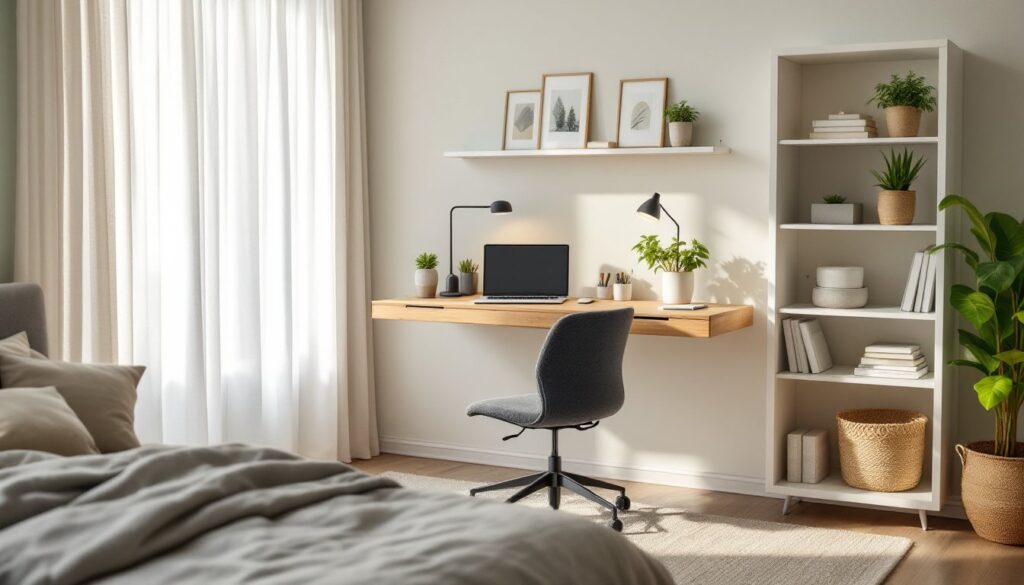
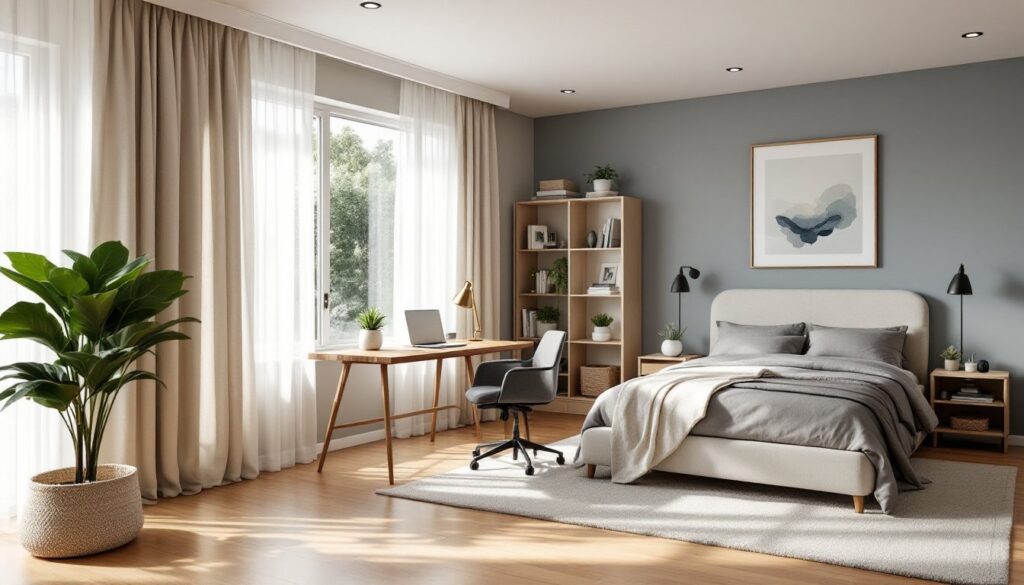
Furniture placement does most of the heavy lifting. Position the desk so it faces away from the bed, this prevents the workspace from visually dominating the sleep area and helps mentally separate work from rest. If square footage allows, use a bookshelf, a folding screen, or a low credenza as a room divider. A five- to six-foot tall open shelving unit works especially well: it breaks sightlines without blocking light or making the room feel cramped.
For tighter spaces, try a curtain track mounted to the ceiling. A lightweight linen or canvas panel can be drawn across the work zone at the end of the day, creating an instant visual cutoff. Avoid heavy blackout fabric unless light control is a priority, breathable materials maintain airflow and don’t weigh down the space. Designers on homify often showcase dual-purpose layouts that rely on modular furniture and smart dividers to achieve clear zoning without permanent construction.
Choosing the Right Location for Your Workspace
Not all corners are created equal. The best spot for a desk depends on lighting, outlet access, and foot traffic patterns within the room.
Natural light is a major factor. A desk positioned perpendicular to a window reduces glare on monitors while still providing daylight. Avoid placing the desk directly in front of a window unless you’re prepared to deal with screen washout and potential overheating from direct sun.
Electrical access matters more than most people realize. Count existing outlets and plan your desk location accordingly. Running extension cords across the room is a trip hazard and looks sloppy. If outlets are sparse, consider hiring an electrician to add a duplex receptacle where you need it, this usually runs $150–$300 depending on the circuit run and local rates. That’s not a DIY job unless someone’s comfortable working inside the home’s electrical panel and pulling cable through walls, which requires knowledge of NEC (National Electrical Code) standards.
Foot traffic is another consideration. If the master bathroom is accessed through the bedroom, don’t block the path with a desk chair or file cabinet. Keep walkways at least 36 inches wide to maintain easy movement, especially in the morning when routines are rushed.
Furniture Selection for a Functional Bedroom Office
Furniture for a bedroom office needs to serve double duty: it has to be functional without feeling overly commercial or sterile. Skip the industrial metal desks and modular cubicle panels, those belong in a corporate setting, not a sleep space.
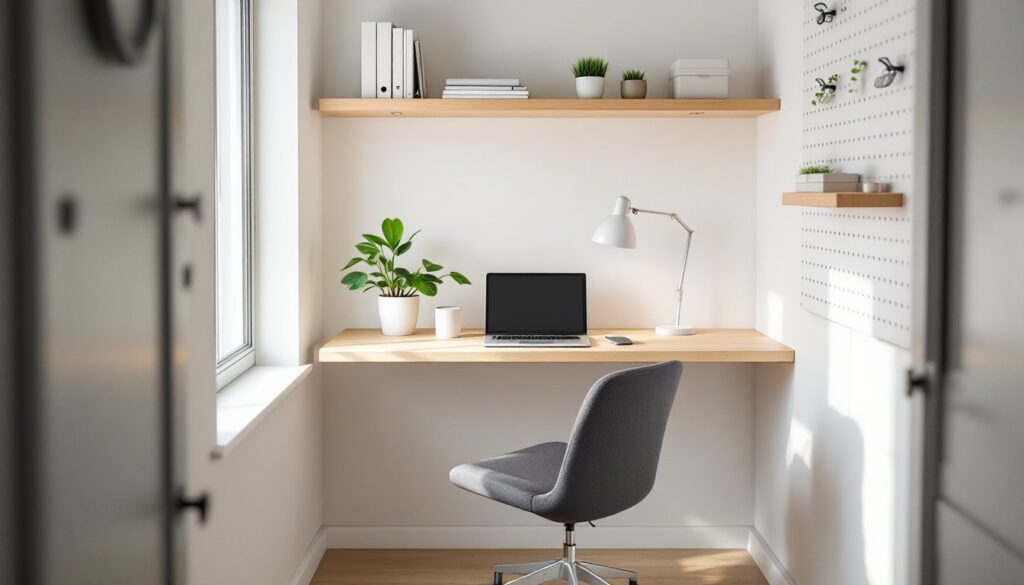
Desk size should match the room’s proportions and the work being done. A compact writing desk measuring 42 to 48 inches wide works for laptop-only setups and light paperwork. If someone needs dual monitors, a keyboard, and reference materials, look for desks in the 60-inch range. Wall-mounted fold-down desks are another option: they collapse flat when not in use, freeing up floor space. Just make sure they’re anchored into wall studs with appropriate lag screws, drywall anchors alone won’t support the cantilever load of a desk surface and equipment.
Chair selection is non-negotiable. A cheap task chair might survive occasional use, but anyone working multiple hours a day needs proper lumbar support and adjustable height. Look for chairs with a pneumatic lift cylinder, adjustable armrests, and a mesh or padded backrest. Expect to spend $150–$400 for something that won’t cause back problems within a month.
Materials and finishes should echo the bedroom’s existing aesthetic. A sleek walnut desk fits a mid-century modern bedroom: a white lacquered desk pairs well with Scandinavian or minimalist home office setups. Avoid particle board furniture if durability is a concern, solid wood or plywood construction holds up better and can be refinished if needed.
If space is extremely tight, consider a small desk with a narrow profile that tucks into a corner or against a sidewall. These often measure 30 inches deep or less, making them ideal for compact bedrooms.
Design Tips to Maintain Relaxation and Productivity
Balancing the competing needs of work and rest in a single room requires deliberate design choices. The goal is to keep the office functional without letting it hijack the bedroom’s calming atmosphere.
Color palette plays a major role. Soft neutrals, grays, taupes, warm whites, work well as a base because they don’t skew too clinical or too cozy. Accent the workspace with a different hue to create subtle differentiation: a sage green desk lamp, a navy task chair, or a corkboard with a bold frame. This signals a shift in function without requiring a full repaint. Homeowners exploring paint color options often find that cooler tones like blue-gray support focus, while warmer shades encourage relaxation.
Lighting layers are critical. Overhead fixtures alone create harsh shadows and uneven illumination. Use a combination of ambient lighting (ceiling-mounted or recessed cans), task lighting (an adjustable desk lamp with a CRI of 90 or higher for true color rendering), and accent lighting (a bedside lamp or wall sconce). Install dimmer switches on overhead fixtures so light levels can be adjusted for different times of day. Dimmers cost $15–$30 and are a straightforward swap if the existing switch box has a neutral wire, older homes without neutrals may need a different dimmer model or a rewire.
Cable management keeps the workspace from looking chaotic. Use velcro cable ties, adhesive clips, or a cable tray mounted under the desk to corral power cords, USB cables, and charger bricks. A visible tangle of wires is a visual stressor and makes the room feel cluttered even when surfaces are clear.
Acoustic control matters if video calls are frequent. Hard surfaces, wood floors, drywall, glass, bounce sound around. Add a rug under the desk area to dampen footsteps and chair movement. A fabric headboard, linen curtains, or upholstered bench can also absorb sound without requiring permanent acoustic panels. If someone shares the bedroom with a partner, a white noise machine or a small desktop fan can mask keyboard noise and low conversation during work hours.
Storage Solutions That Keep Both Spaces Organized
Clutter is the enemy of both productivity and relaxation, so storage has to work overtime in a bedroom office. The trick is keeping work materials accessible without letting them invade nightstands, dressers, or closet space reserved for clothing and linens.
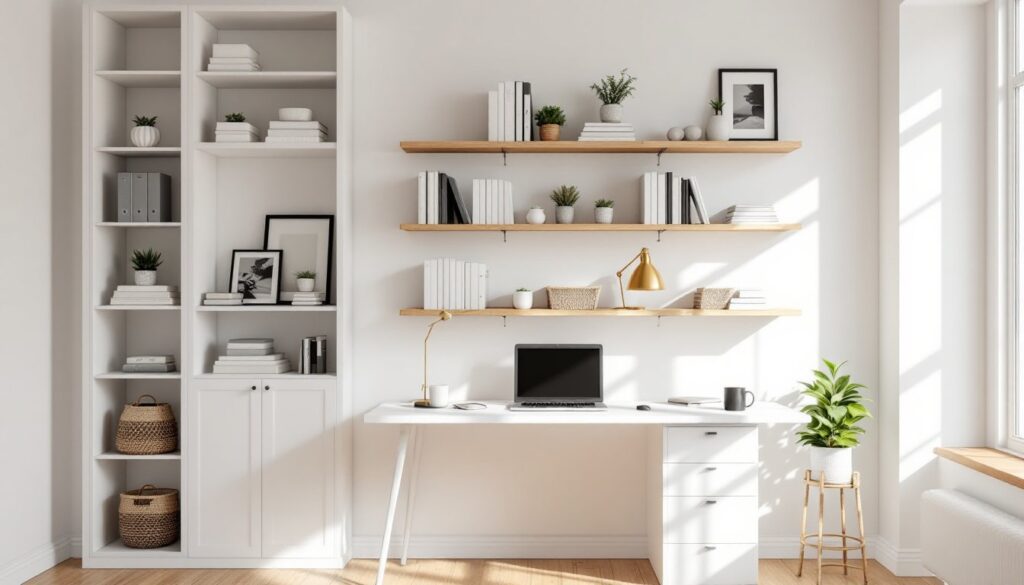
Vertical storage makes the most of limited square footage. A tall bookcase or a set of floating shelves mounted above the desk holds reference books, binders, and office supplies without eating into floor space. When installing floating shelves, locate studs with a stud finder and use appropriate hardware, #8 or #10 wood screws driven into studs, or heavy-duty toggle bolts rated for the shelf’s load if studs aren’t where you need them. Standard drywall anchors are only good for light loads (under 10 pounds) and will fail if overloaded.
For a more polished look, consider built-in office cabinets that run floor-to-ceiling. These can be custom-built by a trim carpenter or assembled from modular systems. Costs vary widely, expect $500–$1,500 for a basic wall unit if going the DIY route with pre-made components, or $2,000–$5,000+ for custom cabinetry depending on materials and labor rates.
Closed storage keeps visual noise down. Filing cabinets, credenzas, or storage cubes with fabric bins hide paperwork, electronics, and miscellaneous gear. Choose pieces that match the bedroom’s furniture style so they don’t scream “office.” A low credenza doubling as a TV stand or display surface blends seamlessly into the room.
Desk organizers prevent small items from migrating across surfaces. Use trays, drawer dividers, or desktop caddies to corral pens, sticky notes, and charging cables. A home office bookcase with adjustable shelves offers flexibility to store everything from textbooks to decorative objects, helping the workspace feel less utilitarian.
Closet integration can free up valuable floor and wall space. If the master bedroom has a walk-in closet, consider converting a section into a mini office nook. Remove a clothing rod, add a countertop desk at standard height (28 to 30 inches), and install shelving or cabinets above. This approach keeps the work zone completely out of sight when closet doors are closed. Just make sure there’s adequate ventilation and lighting, closets aren’t typically designed for extended occupancy. Add a plug-in LED puck light or a small desk lamp, and crack the door if airflow is stuffy.
For those interested in more comprehensive workspace transformations, a custom home office build can integrate specialized storage, ergonomic features, and design elements tailored to specific workflow needs, though that level of customization often involves professional contractors and a larger budget.
Finally, keep a regular declutter schedule. Work papers, receipts, and random office debris accumulate fast. Set aside time weekly to file, toss, or relocate items that don’t belong in the bedroom. The fewer surfaces covered with stuff, the easier it is to mentally switch between work mode and rest mode.