

Table of Contents
ToggleCarving out a functional home office in a small space isn’t about resignation, it’s about precision. Every piece of furniture, every shelf, and every wire matters when square footage is limited. The good news? Compact spaces force efficiency, and efficiency often leads to better work habits. This guide walks through practical, build-it-yourself strategies to transform cramped corners, closets, or shared rooms into productive work zones. No fluff, no mood boards, just actionable design decisions that make small spaces work harder.
Key Takeaways
- Multi-functional furniture like wall-mounted drop-leaf desks and Murphy desks reclaim floor space while supporting productive work in small home office design ideas.
- Vertical storage solutions—floating shelves, pegboards, and custom cabinets—pull clutter off desks and maximize usable space without consuming room footprints.
- Strategic lighting with 500–1000 lumens of task lighting and diffused overhead fixtures reduces eye strain and enhances focus in windowless or dim corners.
- Light, neutral wall colors and semi-gloss finishes reflect light and make small spaces feel larger while creating a calm, cohesive environment.
- Physical dividers like freestanding bookshelves and ceiling-mounted curtain tracks establish psychological boundaries that prevent work from bleeding into shared living areas.
- Organized cable management using raceways, under-desk trays, and grommet holes maintains the clean aesthetic essential to functional small-space offices.
Choose Multi-Functional Furniture That Works Harder
Small-space offices demand furniture that earns its footprint. A standard desk occupies 24–30 inches of depth and 48–60 inches of width, real estate that can’t be wasted on single-purpose pieces.
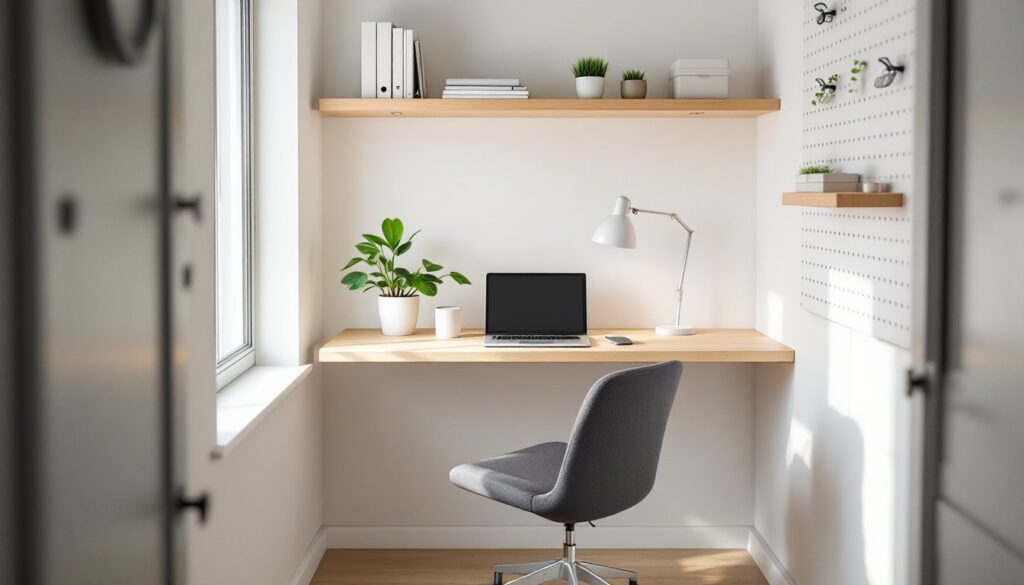
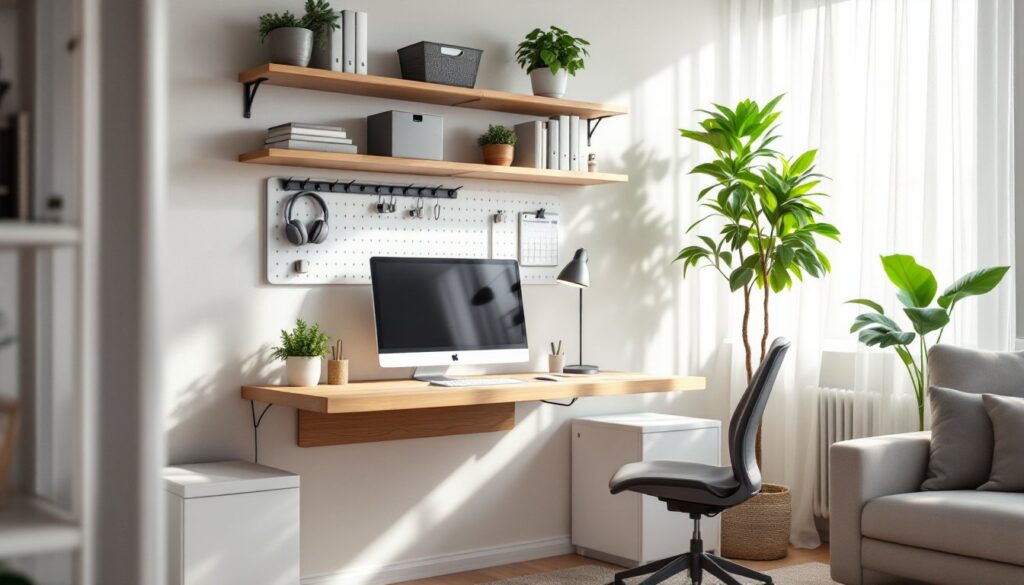
Wall-mounted drop-leaf desks fold flat when not in use, reclaiming floor space in seconds. Look for models with integrated cable pass-throughs and a load rating of at least 50 pounds to support a monitor and laptop. Mount them to wall studs (typically 16 inches on center) using 3-inch wood screws and finishing washers for a clean look.
Murphy desks operate on the same principle but include built-in storage compartments. These units require a solid backing, drywall anchors won’t cut it. If the wall is hollow, install a 3/4-inch plywood backer board between studs before mounting the hardware.
For tight corners, L-shaped desks maximize usable surface area without consuming the center of a room. Pair them with rolling file cabinets that double as auxiliary seating when topped with a cushion.
Foldable task chairs with a slim profile (under 20 inches wide) can tuck under desks or hang on wall hooks. Avoid bulky executive chairs, they overwhelm small rooms and limit movement. Prioritize models with adjustable lumbar support and a weight capacity matching the user’s needs.
Utilize Vertical Space with Smart Storage Solutions
Walls are underutilized real estate in most small offices. Vertical storage pulls clutter off desks and floors while keeping essentials within arm’s reach.
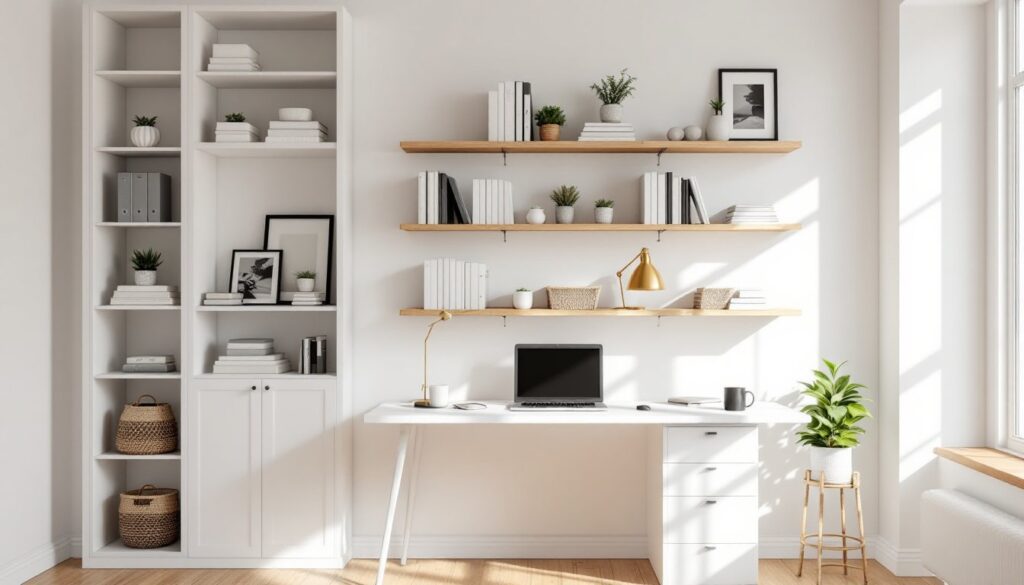
Floating shelves should be at least 3/4-inch thick (not the flimsy 1/2-inch particleboard versions) and mounted into studs or with heavy-duty toggle anchors rated for 50+ pounds each. Space shelves 10–12 inches apart for standard binders and books, 8 inches for paperbacks and supplies.
Install shelves above the desk at eye level or higher, anything lower creates a claustrophobic feel. For a cleaner look, run LED strip lighting along the underside of each shelf using adhesive-backed strips with a color temperature of 4000K (neutral white) to reduce eye strain.
Pegboard walls offer modular storage that adapts as needs change. Use 1/4-inch tempered hardboard pegboard with a 1-inch gap behind it (created with spacer blocks or furring strips) so hooks seat properly. Paint it to match the wall or use a contrasting color to define the work zone. Hooks, baskets, and shelves reconfigure in seconds without new holes.
Custom built-in cabinets maximize vertical storage but require intermediate carpentry skills. If going this route, use 3/4-inch plywood for the cabinet boxes (not MDF, which sags under load) and 1/2-inch plywood for backs. Finish edges with iron-on veneer tape before painting.
For renters or those avoiding permanent installations, tension-mounted floor-to-ceiling poles with adjustable shelves work well. They press between the floor and ceiling joists using spring tension and removable rubber pads.
Create Defined Work Zones in Shared Spaces
When a dedicated room isn’t an option, defining boundaries keeps work from bleeding into living areas, and vice versa.
Room dividers establish physical and psychological separation. Freestanding bookshelves (30–36 inches tall work best) double as storage and partitions without blocking light. Anchor tall units to the wall with L-brackets to prevent tipping, this is especially important in homes with kids or pets.
Curtain tracks mounted to the ceiling allow fabric panels to slide open and closed, hiding the workspace at day’s end. Use ceiling-mounted traverse rods rated for the fabric weight, and anchor them into ceiling joists with appropriate hardware. Blackout or heavy linen fabrics provide better sound dampening than sheers.
In living rooms or bedrooms, a minimalist approach prevents the office zone from visually overwhelming the space. Limit the color palette to two or three tones that complement existing decor. Use matching bins and boxes to conceal supplies, exposed clutter in shared spaces creates friction with other household members.
Acoustic panels mounted on the wall behind the desk reduce echo and improve video call quality in open-plan areas. DIY versions can be built using 2-inch Roxul Safe’n’Sound insulation wrapped in fabric and mounted in simple 1×2 frames. Space them 6–12 inches apart for effective sound absorption.
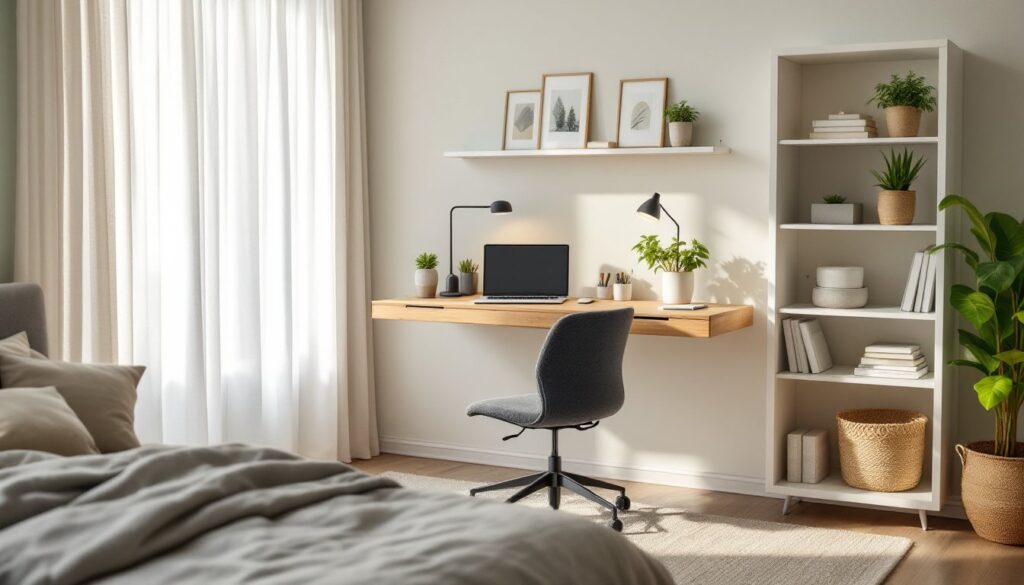
If the office shares a bedroom, position the desk perpendicular to the bed rather than facing it. This creates a mental separation between rest and work, which improves both focus and sleep quality.
Optimize Lighting to Enhance Focus and Mood
Poor lighting causes eye strain, headaches, and reduced productivity, especially in windowless or dim corners.
Task lighting should provide 500–1000 lumens directly over the work surface. Adjustable-arm desk lamps with LED bulbs (4000K–5000K) offer focused light without heat buildup. Clamp-on models save desk space and can be repositioned as needed.
Avoid placing monitors directly in front of windows, glare forces squinting and awkward postures. If the desk must face a window, install adjustable roller shades or sheer curtains to diffuse midday brightness. For monitors perpendicular to windows, glare is less of an issue.
Overhead lighting in small spaces should be bright but diffused. Flush-mount LED fixtures with frosted covers distribute light evenly without harsh shadows. Aim for 3000–4000 lumens for a 10×10-foot space: add another 1000 lumens for each additional 25 square feet.
Many creative professionals favor small desk setups that incorporate both ambient and accent lighting to reduce contrast and eye fatigue. Under-shelf LED strips add indirect lighting that softens the space without glare.
Install dimmer switches on overhead fixtures to adjust brightness throughout the day. Circadian rhythm responds to light intensity, brighter light in the morning boosts alertness, while softer light in late afternoon eases the transition away from work mode.
Safety note: If running new electrical circuits for lighting, consult local building codes. Most jurisdictions require a licensed electrician for anything beyond plug-in fixtures. NEC (National Electrical Code) governs residential wiring, but local amendments vary.
Select a Color Palette That Opens Up Your Space
Color affects perceived room size and mood. Small offices benefit from intentional palette choices that expand rather than close in.
Light, neutral walls, soft whites, pale grays, or warm beiges, reflect more light and make rooms feel larger. Semi-gloss or satin finishes bounce light better than flat paint, but they also highlight wall imperfections. Prep walls properly: fill holes with spackle, sand smooth, and prime before painting.
One gallon of quality paint covers approximately 350–400 square feet with one coat. Plan for two coats in small offices to ensure even color and durability.
Designers on Apartment Therapy often recommend using a single accent wall in a deeper tone to add depth without overwhelming the space. Choose the wall behind the desk, it creates a visual anchor without crowding sightlines.
Monochromatic schemes (varying shades of one color) create cohesion and calm. Blues and greens promote focus: warmer tones like terracotta or muted gold add energy without distraction. Avoid high-contrast patterns on multiple walls, they fragment the space visually.
If the office shares a room, keep the palette consistent with the surrounding area. Abrupt color shifts make small spaces feel even smaller.
Flooring and rugs also influence perceived size. Light wood tones or pale area rugs extend the floor plane. If using an area rug to define the office zone, ensure it extends at least 18–24 inches beyond the desk on all sides where the chair rolls. Use a rug pad to prevent slipping, especially important on hardwood or tile.
Incorporate Clever Tech and Cable Management
Cable chaos kills the clean aesthetic and functionality of a small office. Thoughtful wire management is as important as furniture placement.
Cable raceways (plastic channels that mount to walls or desks) conceal power and data cables. Run them along baseboards or the underside of desks using adhesive backing or small screws. For a cleaner look, paint raceways the same color as the wall before installation.
Under-desk cable trays keep power strips and excess cable coils off the floor. Mesh or wire basket styles allow heat dissipation and easy access. Mount them to the underside of the desk using screws into the desk frame, not just the thin laminate top, which won’t hold weight.
For desks against walls, drill a 1–2 inch grommet hole through the desktop near the back edge. Feed cables through the grommet to keep them hidden and organized. Use a stepped drill bit or hole saw, and seal raw particleboard edges with edge banding or a grommet insert to prevent moisture damage.
Wireless peripherals reduce cable count but require regular charging. Keep a small charging station on a shelf or in a drawer rather than cluttering the desktop.
If the office requires multiple devices (monitor, printer, scanner, router), a surge protector with 6–8 outlets and USB ports consolidates power. Look for models with a joule rating above 1000 for adequate protection. Mount the surge protector to the underside of the desk or inside a cabinet rather than letting it dangle.
Modular storage hacks from IKEA Hackers show creative ways to hide routers and modems inside modified cabinets or behind decorative panels. Ensure any enclosure allows ventilation, electronics need airflow to avoid overheating.
Labeling cables at both ends (power source and device) saves time during troubleshooting. Use a label maker or wrap masking tape around each cable and write with a permanent marker.
Conclusion
Small home offices aren’t a compromise, they’re an opportunity to strip away excess and focus on what actually drives productivity. The strategies above prioritize function, honest material choices, and code-compliant installations. Done right, a 50-square-foot corner can outperform a sprawling spare bedroom cluttered with unused furniture and tangled cables. Measure twice, prep surfaces properly, and don’t skip the wall anchors.