

Table of Contents
ToggleSetting up a functional office in a small apartment isn’t just about squeezing a desk into a corner. It’s about making smart choices with limited square footage, navigating tight layouts, and creating a workspace that doesn’t feel like it’s crashing the party in someone’s living room. Whether working with a studio apartment or a one-bedroom rental, the challenge is real, but so are the solutions. This guide breaks down practical strategies, from choosing the right spot to DIY hacks that won’t expensive or the lease agreement.
Key Takeaways
- Apartment office ideas thrive when location prioritizes natural light, noise control, and electrical access to maximize a small workspace without compromising focus.
- Space-saving furniture like floating desks, corner units, and Murphy desks eliminate clutter while apartment office ideas remain functional and stylish in tight layouts.
- Vertical storage solutions—wall-mounted shelves, pegboards, and rolling carts—preserve limited floor space and keep supplies organized in compact home offices.
- Define separate work and living zones using room dividers, area rugs, dedicated task lighting, and furniture arrangement to prevent work from bleeding into daily life.
- DIY customization projects like door desks, pegboard organizers, and floating shelves create personalized apartment office setups for under $100 while protecting rental deposits.
- Proper lighting with adjustable task lamps (300–500 lumens) and cable management significantly improve both aesthetics and productivity in small apartment offices.
Choosing the Perfect Location for Your Apartment Office
The first move is scouting the right spot. Not every apartment has an obvious office nook, so this takes some strategic thinking.
Natural light matters. Prioritize windows when possible. A workspace near a window reduces eye strain and cuts down on artificial lighting during the day. South-facing windows deliver the most consistent light, though they can overheat in summer, keep that in mind if working with a laptop that already runs hot.
Foot traffic zones are trouble. Avoid placing a desk in the main walkway between the kitchen and bedroom. Constant movement breaks focus and creates ergonomic hazards. Corner placements work well in studios: they keep the workspace contained while preserving open floor area.
Noise levels vary by room. If the apartment shares walls with neighbors, test different spots during typical work hours. An interior wall might buffer sound better than one adjacent to another unit. For renters dealing with street noise, placing the office away from exterior walls can make a measurable difference.
Electrical access is non-negotiable. Count outlets before committing to a location. Most home offices need power for a computer, monitor, phone charger, and task lighting. Running extension cords across walking paths isn’t just ugly, it’s a tripping hazard. If outlet placement is poor, consider creative shelving layouts that position equipment closer to existing electrical sources.
Space-Saving Furniture Solutions for Compact Home Offices
Standard office furniture is built for suburban home offices with 10×10 rooms. Apartment offices need furniture that earns its footprint.
Desks with built-in storage eliminate the need for separate filing cabinets. Look for models with drawers, cubbies, or overhead hutches. A desk footprint of 42–48 inches wide by 24 inches deep offers enough surface area for a laptop and notebook without overwhelming a small room.
Corner desks maximize awkward spaces that don’t serve much purpose otherwise. L-shaped configurations provide dual work surfaces, one for the computer, one for paperwork or a second monitor. Just verify the desk will fit through the apartment door before ordering: many corner units ship in large boxes that won’t navigate tight hallways.
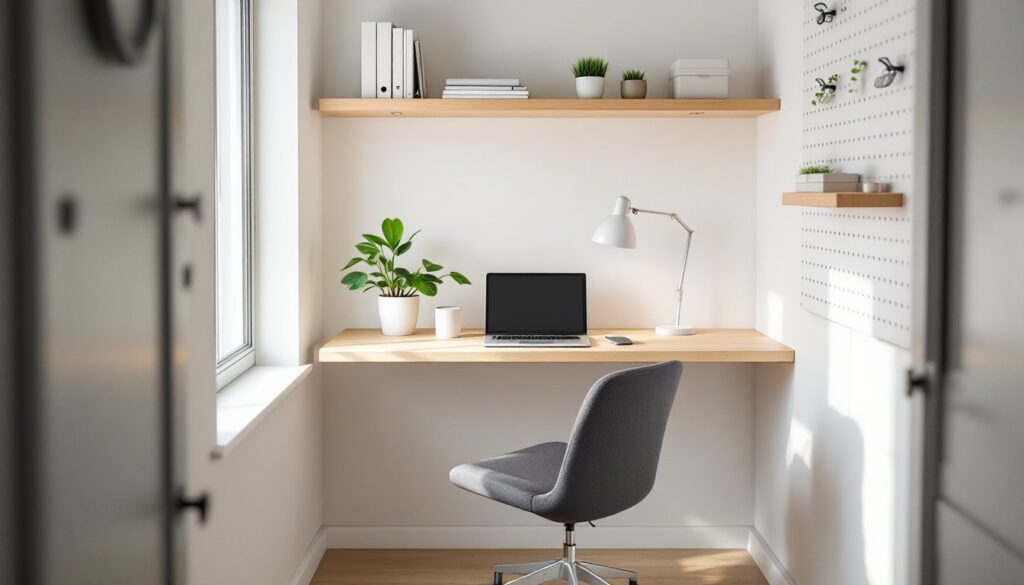
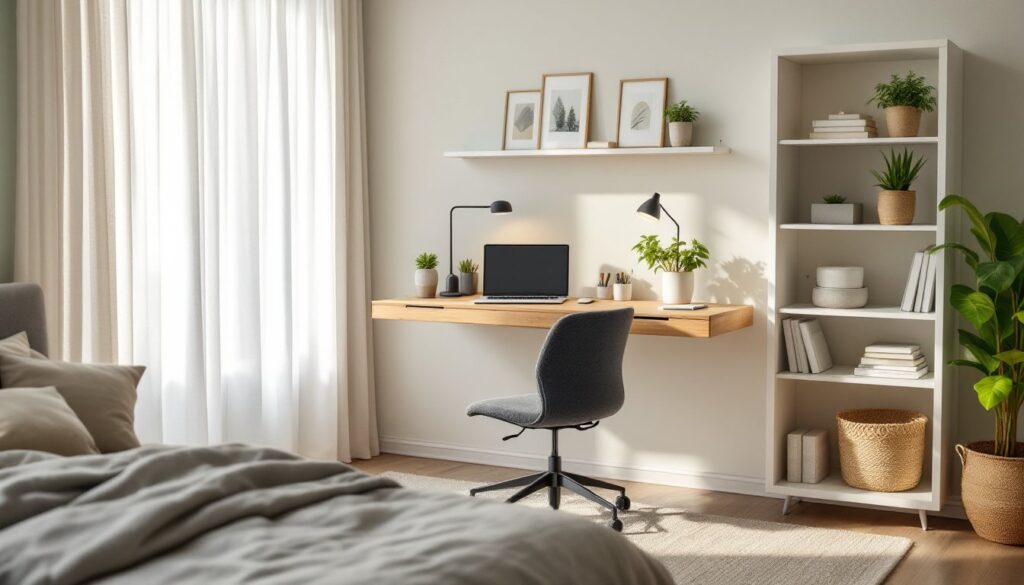
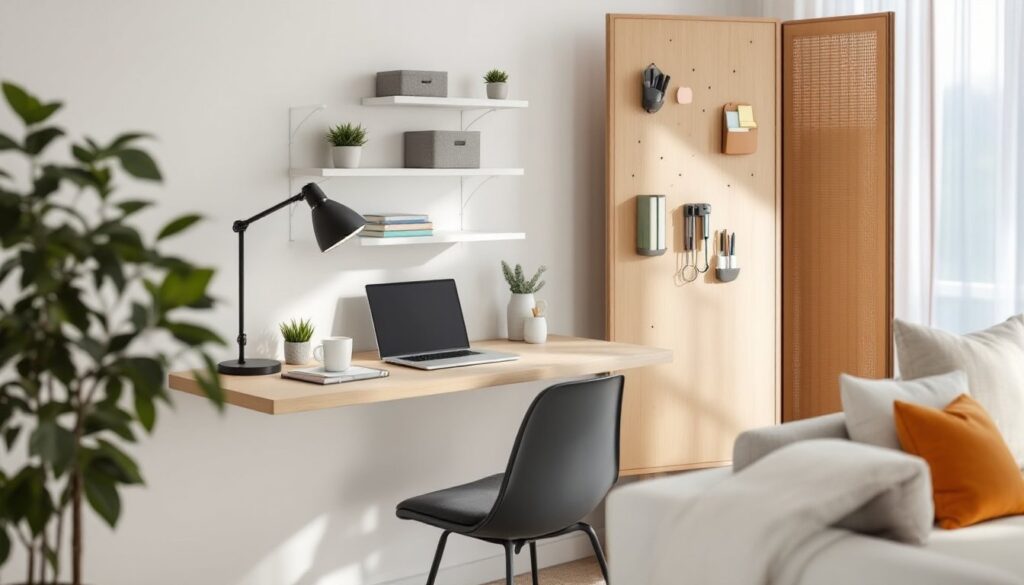
Floating desks attach directly to the wall with brackets or French cleats. They’re ideal for renters because the wall anchors leave smaller holes than a traditional bookcase or shelving unit. Most floating desks support 50–75 pounds, which covers a laptop, monitor, and desk lamp. Always anchor into wall studs (typically spaced 16 inches on center) or use toggle bolts rated for drywall if studs aren’t available at the desired location.
Foldable and Wall-Mounted Desk Options
Murphy desks fold up against the wall when not in use, converting a workspace into open floor area in seconds. Models with integrated storage keep supplies contained even when folded. Installation requires screwing a cabinet unit into studs, so this isn’t a temporary fix, plan for wall patching if moving out.
Drop-leaf tables work as dining or side tables when folded and expand into desks when needed. They’re less polished than dedicated office furniture but cost a fraction of the price. A small desk with a hinged leaf can tuck into a hallway or entryway without blocking traffic.
Wall-mounted folding brackets support a custom desktop cut from plywood or solid-core lumber. A ¾-inch plywood sheet cut to size, sanded, and finished with polyurethane creates a sturdy work surface for under $40 in materials. Pair it with folding brackets rated for at least 150 pounds per pair to ensure stability during typing or leaning.
Smart Storage Ideas to Maximize Vertical Space
Floor space is premium real estate in apartments. The solution is building upward.
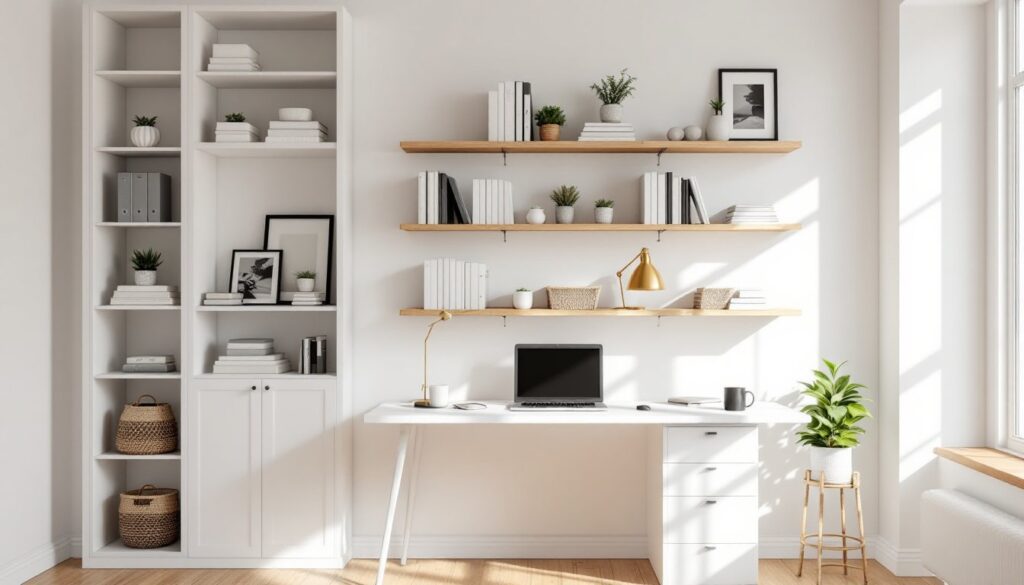
Wall-mounted shelving keeps office supplies, books, and equipment off the desk. Install shelves 12–18 inches apart for standard file boxes, binders, and small bins. Adjustable track shelving systems allow for reconfiguration as storage needs change. Anchor every bracket into a stud or use heavy-duty drywall anchors rated for the expected load.
Pegboard organizers mount above or beside the desk to hold frequently used items, pens, scissors, charging cables, sticky notes. A 24×48-inch pegboard panel costs around $15 at home centers and installs with four screws into studs. Paint it to match the wall color or leave it natural for an industrial look. Add pegboard hooks and bins as needed: they’re reusable and don’t require drilling new holes.
Overhead cabinets borrow from kitchen design principles. Mounting cabinets 18–20 inches above the desk surface provides storage without interfering with monitor placement or sightlines. Many homeowners have success with pre-assembled cabinets from big-box stores, though they’re heavier than shelving, expect to need a helper during installation. Always fasten cabinets into at least two studs for safety.
Rolling carts fit under desks or beside filing zones. Models with narrow profiles (around 12 inches wide) slide into tight spaces. They’re useful for holding a printer, paper reams, or project files that don’t need constant access. According to design trends tracked by Homedit, mobile storage has surged in popularity as remote workers reconfigure spaces frequently.
Baskets and bins on upper shelves corral small items that would otherwise clutter the desk. Label each container clearly, searching through unmarked bins wastes time and defeats the purpose of organized storage.
Creating Zones: Separating Work From Living Areas
Defining boundaries in a studio or one-bedroom apartment prevents work from bleeding into every corner of daily life.
Room dividers create visual and physical separation. Freestanding folding screens cost $50–$150 and require no installation. For a sturdier option, consider a bookcase positioned perpendicular to the wall, it divides the room while adding storage. Choose units at least 5–6 feet tall for effective screening.
Area rugs mark the office zone within a larger room. A 5×7-foot rug under the desk and chair signals a distinct workspace without construction. It also protects flooring from chair casters, essential in rentals where security deposits are on the line.
Curtains on ceiling tracks offer flexible zoning. Install a track along the ceiling (or use tension rods if the landlord prohibits drilling) and hang curtains that slide open or closed. This works especially well for alcoves or bedroom corners. Many renters embrace apartment design strategies that prioritize adaptable layouts over permanent alterations.
Furniture arrangement can imply boundaries without adding barriers. Position the desk facing away from living areas to mentally separate work mode from relaxation. Angle seating or place a sofa with its back toward the office to reinforce the division.
Lighting zones help too. Use a dedicated task light at the desk and avoid overhead lighting that illuminates the entire apartment. When work ends, switching off the desk lamp and turning on ambient living room lighting reinforces the transition out of work mode.
Lighting and Decor Tips for a Functional Yet Stylish Office
Good lighting isn’t optional. Poor illumination causes eye strain, headaches, and mistakes.
Task lighting should deliver 300–500 lumens directly onto the work surface. LED desk lamps with adjustable arms let users direct light exactly where needed. Look for lamps with color temperature controls, 4000K–5000K (cool white) enhances focus during work hours, while 2700K–3000K (warm white) is easier on the eyes for evening tasks.
Ambient lighting fills the room without harsh shadows. If the apartment has overhead fixtures, swap in LED bulbs rated for the socket’s wattage limit. A 60-watt-equivalent LED bulb draws around 9 watts and produces roughly 800 lumens. For apartments without overhead lighting, floor lamps with diffusers work well.
Natural light control matters during video calls and screen work. Sheer curtains or adjustable blinds prevent glare without completely blocking daylight. If the desk faces a window, position the monitor perpendicular to the glass to avoid reflections.
Decor should serve function first. Motivational posters and wall art are fine, but not at the expense of ergonomics or workflow. A corkboard or whiteboard mounted within arm’s reach keeps reminders visible and actionable.
Color choices influence mood. Neutral tones (grays, beiges, soft whites) keep the space calm and adaptable. If painting is allowed, an accent wall behind the desk in a muted blue or green can improve focus without overwhelming the room, just clear it with the landlord first.
Cable management isn’t glamorous, but visible cable clutter kills any design scheme. Use cable clips, sleeves, or under-desk trays to route cords out of sight. For around $10, a basic cable management kit cleans up the visual mess significantly. Insights from modern workspace design at Dwell emphasize that clean lines and minimal clutter improve both aesthetics and concentration.
DIY Projects to Customize Your Apartment Office on a Budget
Custom furniture and built-ins don’t require a contractor’s budget. A few DIY projects can personalize an apartment office without risking the security deposit.
Build a desktop from a solid-core door or plywood. A 30×60-inch solid-core door runs $40–$60 at home centers and makes a stable, spacious desk surface. Sand it smooth, apply two coats of polyurethane or paint, and set it on adjustable-height sawhorses or hairpin legs. Total cost: under $100. Nominal 2×4 lumber (actual dimensions 1.5×3.5 inches) can frame the underside for added rigidity if needed.
Create a pegboard command center. Cut a 2×4-foot pegboard panel, frame it with 1×2 trim (actual ¾×1.5 inches), and paint it to match the decorating style of the room. Mount it with French cleats for easy removal, a cleat is a beveled strip of wood that interlocks with a matching strip on the wall. This method leaves minimal damage and supports substantial weight.
Install floating shelves with hidden brackets. Purchase floating shelf hardware (brackets that insert into routed grooves in the shelf), cut shelves from 1×10 or 1×12 pine boards (actual ¾×9.25 or ¾×11.25 inches), and finish with stain or paint. Pre-drill pilot holes to prevent splitting when driving screws into studs. Each bracket typically supports 40–50 pounds, so plan shelf loads accordingly.
Refinish a secondhand desk. Thrift stores and online marketplaces overflow with dated wood desks. Strip old finish with a chemical stripper (work outdoors or in a well-ventilated area: wear nitrile gloves and safety goggles), sand with 120-grit then 220-grit sandpaper, and apply a fresh stain or paint. A wood desk restored this way costs a fraction of new furniture and can be customized to exact color preferences.
Add LED strip lighting under shelves. Battery-operated or plug-in LED strips provide indirect lighting for around $15–$25. Clean the mounting surface with rubbing alcohol, peel the adhesive backing, and press the strip into place. This adds task lighting without hiring an electrician.
Build a monitor riser from scrap lumber. Cut two pieces of 1×6 lumber to 18–24 inches long for sides, and one piece to match the monitor width for the top. Assemble with wood glue and 1¼-inch finish nails or screws. Sand smooth and finish as desired. This elevates the monitor to eye level, improving ergonomics and freeing up desk space underneath for a keyboard or notebook.
Safety note: Any project involving cutting, sanding, or finishing materials requires appropriate PPE. Wear safety goggles to protect against flying debris, a dust mask or respirator when sanding or using chemical finishes, and hearing protection if using power saws for extended periods. Work in ventilated areas and follow all product instructions for adhesives, paints, and finishes.