
Table of Contents
ToggleCreating a combined TV and fireplace wall turns a functional necessity into the centerpiece of any living room. Instead of fighting the layout battle of where to position two competing focal points, homeowners are embracing designs that merge warmth, entertainment, and aesthetic appeal on a single wall. This approach solves common design dilemmas while maximizing space and creating a cleaner, more intentional look. Whether planning a new build or renovating an existing space, these design strategies deliver both style and practicality.
Key Takeaways
- TV wall ideas with fireplace solve the competing focal point problem by merging entertainment and warmth on a single wall, streamlining furniture arrangement and simplifying electrical and gas line installation.
- Mount your TV 42 to 48 inches from the floor for eye-level viewing, and maintain at least 12 to 18 inches of clearance between the fireplace and TV to prevent heat damage and ensure safe operation.
- Built-in designs using shiplap, cabinetry, or floating shelves create a polished, furniture-quality look while hiding wiring and adding functional storage around your TV and fireplace wall.
- Electric fireplaces are ideal for DIY installation with no venting required, while gas fireplaces deliver higher heat output but need professional installation, permits, and exterior venting—choose based on your project timeline and budget.
- Use stone veneer, large-format tile, or wood paneling as accent materials for your TV wall with fireplace, and layer different finishes around the fireplace with painted shiplap or drywall extending to the TV area for visual depth.
- Plan cable routing through in-wall conduit or recessed outlets before closing walls, and install a dedicated outlet directly behind the TV using a power bridge kit to eliminate visible wires and ensure code compliance.
Why Combine a TV and Fireplace on the Same Wall
Placing a TV and fireplace on the same wall addresses the competing focal point problem that frustrates many living room layouts. Rather than splitting attention between two walls, this configuration creates one cohesive visual anchor.
From a practical standpoint, most families gather around the television for entertainment and the fireplace for ambiance. Combining them on one wall means furniture arrangement becomes straightforward, seating faces one direction, eliminating awkward angles or neck strain. This works especially well in open-concept homes where wall space is limited.
The setup also streamlines electrical and gas line planning during construction or renovation. Running utilities to a single wall reduces installation complexity and cost compared to routing cables and gas lines to opposite ends of a room. For homeowners tackling DIY projects, consolidating infrastructure on one wall simplifies the home wall decor strategy.
Heat considerations: Modern electric and gas fireplaces produce significantly less heat than traditional wood-burning units, making them safer for mounting electronics above or beside them. But, always verify the manufacturer’s clearance requirements, typically 12 to 18 inches minimum between the fireplace opening and TV.
Planning Your TV and Fireplace Wall Layout
Before purchasing materials or cutting into drywall, measure twice and map out the entire wall configuration. Poor planning here leads to ergonomic failures, TVs mounted too high, fireplaces positioned awkwardly, or furniture that doesn’t fit.
Start by identifying the viewing height for the television. Ideally, the center of the screen should sit at eye level when seated, typically 42 to 48 inches from the floor for standard seating. If mounting the TV above a fireplace, this measurement often gets compromised. Consider a pull-down TV mount if the fireplace forces the screen higher than comfortable viewing height.
Fireplace placement depends on whether it’s electric, gas, or a decorative unit. Linear electric fireplaces offer the most flexibility since they don’t require venting. Gas fireplaces need direct vent routing to an exterior wall, which limits placement options. Check local building codes, some jurisdictions require permits for gas line work, and all require licensed professionals for installation.
Measuring and Spacing Considerations
Proper spacing prevents heat damage and creates visual balance. Most manufacturers specify a minimum clearance zone around fireplace openings:
- Above fireplace: 12–18 inches clearance to combustible materials (including TV mounting brackets)
- Side clearance: 6–8 inches from combustibles like built-in cabinetry or wood trim
- Mantel depth: If adding a mantel, keep it 6 inches or less in depth to avoid blocking heat or creating awkward TV mounting angles
For side-by-side configurations, maintain at least 12 inches between the fireplace edge and TV to avoid heat transfer. Use a stud finder to locate framing, both the TV mount and fireplace surround need solid anchoring into studs or blocking, not just drywall. Standard wall studs are spaced 16 inches on center, though older homes may use 24-inch spacing.
Modern Built-In TV and Fireplace Wall Designs
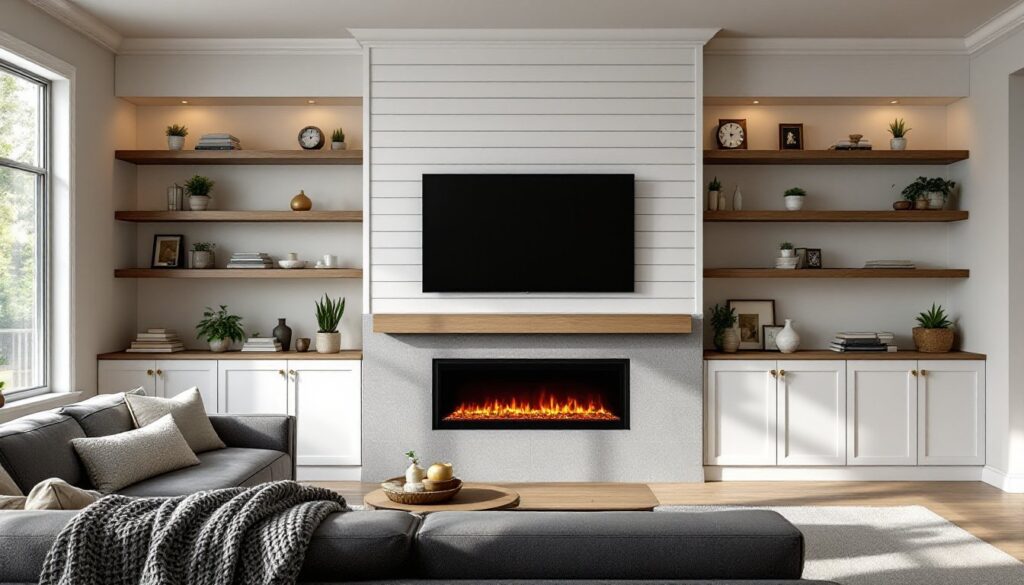
Built-in designs integrate the TV and fireplace into custom millwork or cabinetry, creating a polished, furniture-quality look. This approach hides wiring, adds storage, and allows for symmetrical design that feels intentional rather than afterthought.
Shiplap or vertical board surrounds frame both elements while adding texture. Use 1×6 or 1×8 pine boards for a farmhouse aesthetic, or MDF with a smooth finish for modern spaces. Install boards over furring strips to create a shallow recess for the TV, keeping it flush with the surrounding wall plane.
Floor-to-ceiling cabinetry flanking the fireplace provides display shelves, concealed storage, and visual weight. Build cabinets from 3/4-inch plywood with face frames, or use modular units adapted to fit the space. Paint built-ins in a contrasting color to make the TV wall pop, or match trim color for a cohesive look.
Floating shelves above and below the TV break up the visual mass of a large screen. Keep shelves 8 to 10 inches deep to avoid protruding into the room. Anchor them with heavy-duty brackets rated for the combined weight of shelves plus decor, figure 50 pounds minimum per bracket for safety.
Inspiration for contemporary TV wall designs shows how mixing materials like wood, stone, and metal creates depth. The key is balancing proportions: if the fireplace is wide and linear, consider a larger TV to match the horizontal scale.
Accent Wall Materials and Finishes for TV-Fireplace Combos
The material surrounding the TV and fireplace defines the wall’s character. Choose finishes that handle heat, hide imperfections, and complement the home’s style.
Stone veneer delivers a high-end look without the weight and cost of full-thickness stone. Manufactured stone veneer weighs roughly 10 pounds per square foot compared to 50+ pounds for natural stone. Install over cement board or directly onto studs with a moisture barrier. Lighter stacked stone works well around electric fireplaces that produce minimal heat.
Tile offers endless design flexibility. Large-format porcelain slabs create a sleek, modern backdrop with minimal grout lines. 12×24-inch or 24×48-inch tiles minimize seams and installation time. For traditional spaces, subway tile in a herringbone or vertical stack pattern adds texture. Use heat-resistant thinset mortar near fireplace openings, standard mastic can fail under heat.
Wood paneling warms up contemporary spaces but requires careful installation. Keep wood at least 12 inches away from fireplace openings unless using a zero-clearance unit. Tongue-and-groove 1×6 pine or cedar installs quickly: finish with matte polyurethane to protect against soot and heat discoloration.
Sheetrock with texture remains the most budget-friendly option. A smooth Level 5 finish provides a clean canvas for paint, while skip trowel or knockdown texture hides imperfections. Prime with a stain-blocking primer before painting, heat and soot from fireplaces can cause bleed-through on untreated drywall.
Many successful fireplace and TV wall combinations layer materials: stone or tile around the fireplace with painted shiplap or drywall extending up and around the TV.
Electric vs. Gas Fireplaces for TV Walls
Choosing between electric and gas fireplaces impacts installation complexity, operating costs, and design flexibility.
Electric fireplaces plug into standard 120V outlets and require no venting, making them ideal for DIY installation. Linear models range from 50 to 100 inches wide, creating dramatic horizontal lines beneath wall-mounted TVs. Heat output averages 4,000 to 5,000 BTUs, enough to warm 400 to 500 square feet. Most units feature adjustable flame effects and can operate with or without heat, providing ambiance year-round. Installation involves mounting the unit in a framed opening or hanging it like a picture, no permits required in most jurisdictions.
Gas fireplaces deliver authentic flame appearance and higher heat output, up to 40,000 BTUs for larger models. They require a gas line (natural gas or propane) and venting through an exterior wall or roof. Direct-vent models pull combustion air from outside and exhaust directly out, making them the safest option for enclosed spaces. Installation requires a licensed plumber or HVAC technician and often a permit. Budget $2,000 to $5,000 for a quality gas insert plus professional installation, compared to $500 to $2,000 for electric units.
For TV placement, electric fireplaces generate less heat rise, reducing risk to electronics mounted above. Gas units produce more convective heat, which can affect TV lifespan if clearances aren’t maintained. Some homeowners install heat shields or mantels to deflect rising heat away from the screen.
Safety note: Both types need sufficient clearance from combustibles. Follow manufacturer specs exactly, they’re based on UL testing and required for code compliance. Many stylish TV-over-fireplace setups incorporate mantels or recessed alcoves to manage heat flow.
Cable Management and Installation Tips
Nothing ruins a designer TV wall faster than visible cables. Plan wire routing before closing up walls.
In-wall cable kits meet NEC (National Electrical Code) requirements for hiding low-voltage wiring. These kits include fire-rated tubes that route HDMI, coax, and other cables through walls safely. Do not run standard extension cords or power cables through walls, this violates code and creates fire hazards. Instead, install a recessed outlet directly behind the TV using a power bridge kit or by hiring an electrician to add a new outlet box.
Run cables through conduit during the framing stage if possible. 1-inch PVC or flexible conduit allows future upgrades without opening walls. Mount a low-voltage box behind the TV and another near your components. Pull all cables through the conduit between boxes, leaving 6 to 12 inches of slack at each end for adjustments.
Cable raceways offer a surface-mount solution for finished walls. Paintable channels route wires along the wall and baseboard, concealing them without cutting drywall. They’re not as clean as in-wall routing but work well for renters or quick upgrades.
Fireplace installation may require running a gas line (requires a licensed professional), electrical for electric units, or nothing for ethanol burners. Coordinate all utility rough-ins before installing the fireplace surround or built-ins.
Tools needed: stud finder, level, drill with spade bits or hole saw, fish tape for pulling cables, drywall saw, voltage tester. For mounting the TV, use a tilting or articulating mount if positioning above the fireplace, this allows angling the screen downward for better viewing ergonomics.
PPE: Wear safety glasses when drilling overhead, gloves when handling cut metal studs or sharp drywall edges, and a dust mask when cutting into walls. Always shut off power at the breaker before working near electrical boxes.
Proper planning and clean execution turn a functional TV and fireplace wall into a polished focal point that anchors the entire room. The investment in quality materials and careful installation pays off in both aesthetics and long-term performance.