


Table of Contents
ToggleConverting an underutilized closet into a dedicated office space has become one of the smartest home improvement moves for remote workers and freelancers. With housing costs climbing and spare rooms at a premium, that reach-in closet in the guest bedroom or hallway can deliver surprising functionality without a major renovation. This guide walks through the planning, components, and practical modifications needed to turn a standard closet into a fully functional workspace, complete with electrical considerations, layout strategies, and design tips that maximize every square inch.
Key Takeaways
- Office closet ideas leverage underutilized spaces to create a dedicated workspace that establishes psychological boundaries between work and home life, improving focus and work-life balance for remote workers.
- Floating desks mounted to wall studs with 200+ pound-rated brackets and vertical storage systems maximize functionality in narrow closets, typically 24 to 30 inches deep and 48 to 96 inches wide.
- Proper lighting with LED desk lamps (4000K–5000K color temperature) and task fixtures are essential to reduce eye strain, while a dedicated 15–20 amp electrical circuit prevents breaker trips from multiple devices.
- Strategic design choices—light neutral colors, mirror placement, VESA-compatible monitor arms, and cable management—prevent visual clutter and make tight office closet spaces feel more open and functional.
- Verify local electrical codes and permits before running new circuits or making wall penetrations; consult a licensed electrician if fishing wire through walls or accessing the main panel is required.
Why Convert a Closet Into an Office Space?
A closet conversion offers several advantages over carving out workspace in a shared living area. The physical enclosure creates a psychological boundary between work and home life, critical for focus and work-life balance. When the workday ends, closing the closet doors literally shuts the office away, preventing the always-on mentality that plagues many remote workers.
From a practical standpoint, closets already have defined boundaries and often include overhead lighting. Most reach-in closets measure 24 to 30 inches deep and 48 to 96 inches wide, tight, but sufficient for a compact desk setup. Walk-in closets offer even more flexibility, accommodating L-shaped desks or additional filing systems for paperwork.
Closet offices also add functional square footage without permits or structural modifications in most jurisdictions. You’re repurposing existing space rather than adding or removing walls. That said, if electrical work is required, and it usually is, verify local codes. Some municipalities classify adding new circuits as permit-required work, especially if you’re running power from the panel rather than tapping an existing circuit.
Planning Your Office Closet Layout
Start by measuring the interior dimensions accurately. Record the width, depth, and height at multiple points, closets in older homes aren’t always square. Note the location of existing electrical outlets, light fixtures, and any HVAC vents. Blocking a return air vent can create pressure imbalances: covering a supply register wastes conditioned air and may strain the system.
Sketch a basic floor plan showing desk placement, chair clearance, and door swing. A standard office chair requires about 36 inches of clearance from the desk edge to the back wall when pulled out. If the closet depth is only 24 inches, a wall-mounted fold-down desk or a narrow standing desk (18 to 20 inches deep) becomes necessary.
Consider ergonomics early. Desktop height should allow forearms to rest parallel to the floor when typing, typically 28 to 30 inches for seated work, 38 to 42 inches for standing desks. If installing a custom desktop, use 3/4-inch plywood or hardwood with a finished edge to prevent splintering. A butcher block countertop from a home center, cut to width, works well and supports monitors without sagging.
Don’t forget ventilation. Closet offices can get stuffy, especially with the door closed and electronics generating heat. A small USB-powered fan or leaving the door slightly ajar during work hours helps. If the closet backs onto an exterior wall, cutting in a small louvered vent (with appropriate sealing and pest screening) can improve airflow, though this counts as a wall penetration and may require permitting in some areas.
Essential Components for a Functional Office Closet
Desk and Workspace Solutions
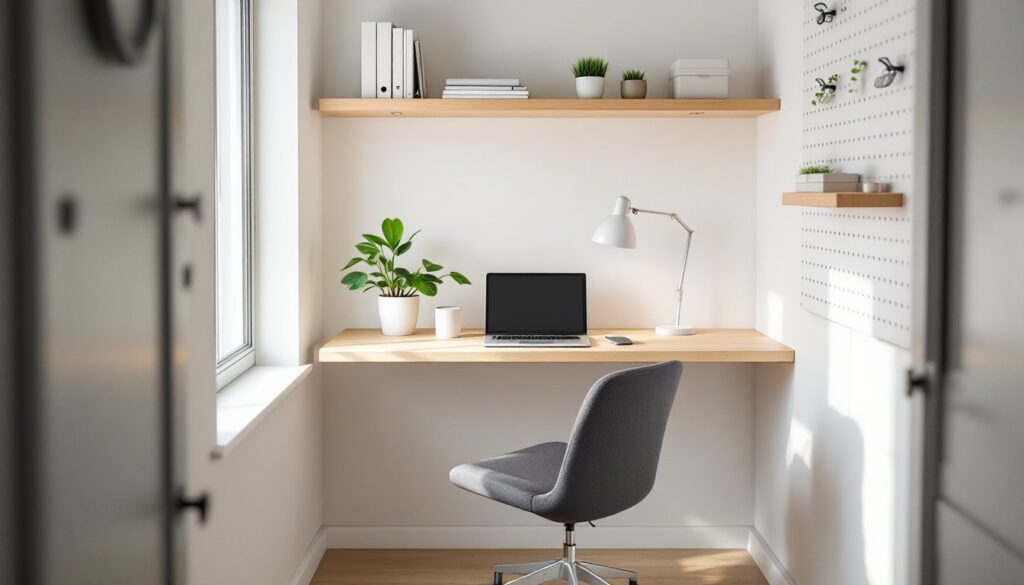
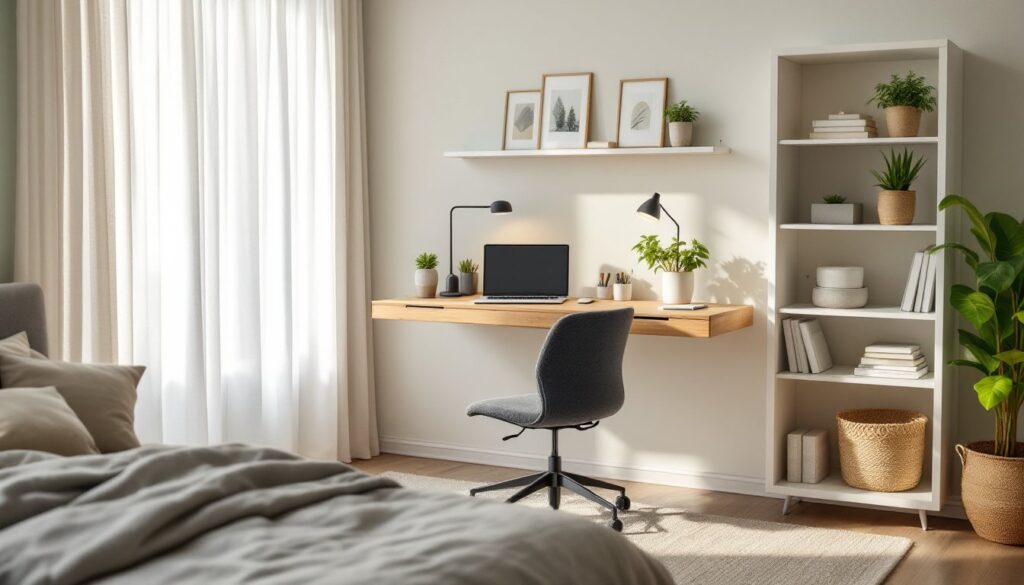
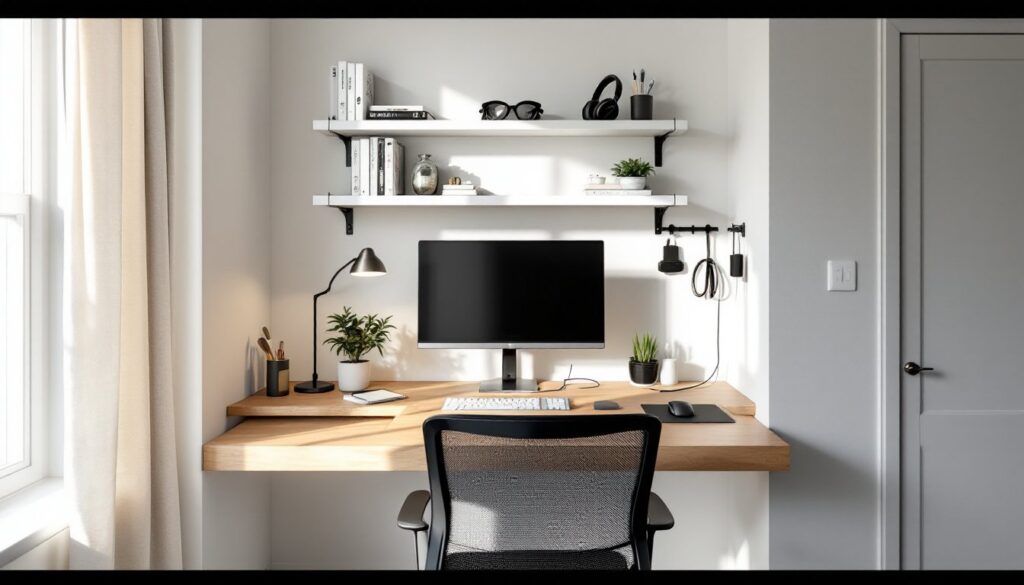
The desk is the anchor of any office closet. For narrow spaces, a floating desk mounted to wall studs with heavy-duty brackets offers stability without legs taking up floor space. Use a stud finder to locate framing, drywall anchors alone won’t support a loaded desk. Brackets rated for at least 200 pounds per pair provide adequate support for a desktop, monitor, and equipment.
Alternatively, a freestanding desk sized to fit the closet width works if the space allows. Look for models 40 to 48 inches wide and 20 to 24 inches deep. IKEA’s countertop-and-leg system is budget-friendly and modular, but verify that leg placement won’t interfere with chair movement. For stability, avoid desks with single-pedestal bases in closets, there’s no room to shift your chair to the side if you need to stretch.
If the closet has bifold doors, consider removing them entirely or replacing them with a barn door or curtain that slides to the side. Bifold doors eat up workspace when open and create an awkward obstacle. A barn door requires a wall-mounted track installed into studs or blocking. If going the curtain route, use a tension rod rated for the fabric weight, cheaper rods sag and eventually fail.
Standing desk converters are another option for closets with limited depth. These sit atop a fixed surface and adjust height via pneumatic or manual mechanisms. They work well if you already have a narrow shelf or ledge at standard desk height.
Storage and Organization Systems
Vertical storage is non-negotiable in a closet office. Install adjustable shelving above the desk for books, binders, and equipment. Shelf standards and brackets (the slotted metal tracks) offer flexibility, you can reposition shelves as needs change. Mount standards into studs for load-bearing capacity: each standard should hit at least two studs or use toggle bolts rated for the expected load if studs aren’t aligned.
Keep frequently used items within arm’s reach. A small pegboard panel mounted to the side wall holds tools, charging cables, and headphones without consuming desk space. Paint it to match the walls or leave it natural for an industrial look.
Drawer units on wheels fit under floating desks and can be rolled out when needed. File cabinets work, but measure carefully, standard lateral file cabinets are 18 inches deep, which eats half the depth of a shallow closet. Vertical file cabinets (15 inches deep) are a better fit.
For cable management, run a power strip with mounting holes along the back edge of the desk or mount it to the underside. Use adhesive cable clips or velcro cable ties to bundle cords and prevent the rat’s nest that develops behind every desk. Avoid zip ties for cables you’ll need to reconfigure, they’re single-use and require cutting.
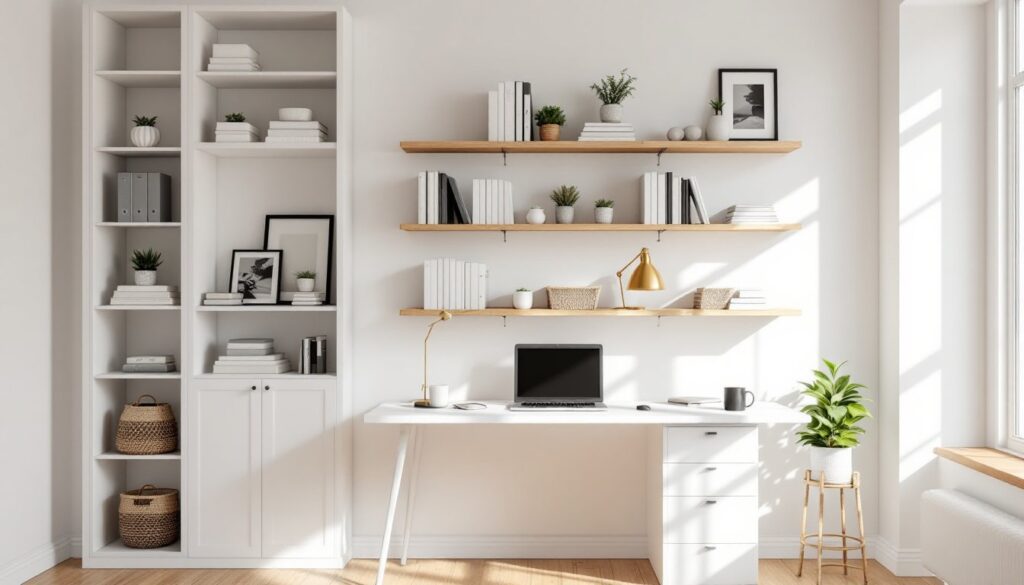
Many homeowners find that incorporating built-in cabinetry creates a polished, cohesive look while maximizing storage density. Custom cabinets are pricey, but prefabricated organizer systems from Closetmaid or Rubbermaid offer a middle ground between DIY shelving and full custom work.
Lighting and Electrical Considerations
Most closets have a single overhead bulb controlled by a wall switch, not enough for a workspace. Task lighting is essential to reduce eye strain during screen work. A LED desk lamp with adjustable brightness provides focused light without generating heat. Look for lamps with color temperature around 4000K to 5000K (neutral to cool white), which reduces fatigue compared to warm (2700K) bulbs.
If overhead lighting is insufficient, add a flush-mount LED fixture or a linear LED strip along the top edge of the closet. Flush-mount fixtures install directly to a standard electrical box and sit close to the ceiling, critical in closets with limited headroom. Linear strips mount with adhesive backing or clips and plug into an outlet, though hardwired versions look cleaner.
Electrical capacity matters. A typical 15-amp circuit can handle about 1,800 watts before tripping the breaker. A desktop computer, two monitors, a desk lamp, and a phone charger total around 400 to 600 watts under normal use, well within capacity. But, if the closet shares a circuit with other rooms (common in older homes), you may experience nuisance trips when other devices are in use.
Running a dedicated 15-amp or 20-amp circuit from the panel to the closet solves this but requires an electrician in most jurisdictions. The National Electrical Code (NEC) requires GFCI protection for outlets in certain locations (bathrooms, kitchens, garages), but standard office closets typically don’t fall under these rules unless they’re in a damp area. Check local amendments.
Install at least two duplex outlets (four plugs total) at desk height to avoid running extension cords across the floor. Mount outlets 18 to 24 inches above the desktop surface. If the closet lacks any outlets, tapping into an adjacent room’s circuit is possible if the existing circuit has capacity and the wire run isn’t excessively long. This is intermediate-level electrical work, if you’re uncomfortable working in a live panel or fishing wire through walls, hire a licensed electrician.
Always use AFCI (arc-fault circuit interrupter) breakers if required by code for bedroom circuits. Many closets are considered part of the bedroom circuit, and AFCI protection has been required by the NEC for bedroom circuits since 2002 (specific requirements vary by adoption year and jurisdiction).
Design Tips to Maximize Small Office Closet Spaces
Color choice affects perceived space. Light neutral tones, whites, soft grays, pale blues, reflect light and make tight quarters feel less claustrophobic. Semi-gloss or satin finishes are easier to wipe down than flat paint, important in a high-touch area like a desk.
Mirrors are a designer trick for small spaces, but use them strategically in a closet office. A mirror directly behind a monitor creates distracting reflections. Instead, mount a narrow mirror on the inside of the door or on a side wall to bounce light without interfering with screen work.
Keep the desktop clear by mounting monitors on VESA-compatible monitor arms. These clamp to the desk edge and free up surface area while allowing easy height and angle adjustments. Verify the arm’s weight rating matches your monitor, ultra-wide or larger displays exceed the capacity of budget arms.
Incorporate a small bookcase or open shelving unit if the closet width allows. According to Real Simple’s organizing strategies, vertical organization reduces visual clutter and keeps essentials accessible.
Textile choices matter in a confined space. A low-pile rug or anti-fatigue mat defines the work zone and makes the space more comfortable underfoot, especially over tile or concrete. Avoid high-pile rugs, office chairs don’t roll well on them, and they trap dust.
Personalize without overcrowding. One or two small plants, a framed print, or a compact desk organizer add character. Going overboard with décor in a 24-square-foot space creates visual chaos. If you need inspiration for balancing function and style, Apartment Therapy features numerous small-space office setups.
Consider acoustics if the closet opens into a shared living area. A fabric-backed corkboard on one wall absorbs sound and doubles as a pin-up surface for notes and reminders. Heavy curtains or a draft stopper along the door bottom reduce noise bleed during video calls.
Finally, plan for cable egress if the closet door will be closed. Drilling a small hole near the baseboard for cables prevents pinching cords in the door, just add a grommet to finish the edge and keep it tidy. If you’re coordinating finishes across multiple rooms, tying in elements from your broader decorating scheme creates visual continuity even in a tucked-away workspace.
For those working with especially tight dimensions, exploring solutions designed for compact desk setups can uncover space-saving options that still deliver full functionality. Whether the aesthetic leans utilitarian or toward a more refined aesthetic, a closet office can meet both practical and design goals without compromise.