

Table of Contents
ToggleA small entryway doesn’t have to mean sacrificing function for square footage. The right chair transforms a cramped foyer into a practical staging zone where homeowners can sit to tie shoes, set down bags, or catch their breath after hauling in groceries. But not every chair belongs in a tight entry, oversized recliners and bulky armchairs will block traffic and make the space feel claustrophobic. Choosing the right profile, dimensions, and features matters. This guide covers compact chair styles, storage solutions, positioning strategies, and budget-friendly DIY options to help homeowners maximize every inch.
Key Takeaways
- Small entryway chair ideas transform cramped foyers into functional spaces where residents can tie shoes, set down bags, and create a practical transition zone between outdoor and indoor areas.
- Compact styles like slipper chairs, backless benches, corner chairs, and folding options deliver comfort and visual interest while respecting tight footprints without blocking traffic flow.
- Storage-integrated chairs with lift-top benches, open cubbies, and drawer bases maximize functionality by concealing shoes, umbrellas, and seasonal items while eliminating floor clutter.
- Strategic chair positioning perpendicular to door swings and along walls creates visual boundaries in open-plan homes while maintaining accessibility and natural light flow.
- Light-colored upholstery, leggy furniture with exposed frames, mirrors, and minimal decor visually expand small entryways and prevent the space from feeling claustrophobic.
- Budget-friendly DIY projects like plank benches ($25–40), upholstered crate benches ($15–30), and painted stool makeovers ($10–20) allow customization without retail furniture costs.
Why Every Small Entryway Needs a Chair
An entryway chair isn’t decorative fluff, it’s a functional anchor that makes daily routines smoother. Without a place to sit, putting on boots becomes a balancing act, especially for older adults or anyone with mobility concerns. Kids wrestling with snow boots need a stable perch instead of hopping around or sitting on the floor.
A chair also defines the space. In open-plan homes where the entry blends into the living area, a small chair signals the transition zone without requiring a full console table or room divider. It creates a psychological boundary that says “this is where outside stuff stays.”
For homes with limited closet space, a chair provides a temporary landing spot for coats, bags, or packages. While it shouldn’t replace proper storage long-term, it handles the daily shuffle better than a pile on the floor. Even a narrow chair measuring 18–24 inches wide can deliver outsized utility when placed strategically.
Best Chair Styles for Compact Entryways
Space-Saving Chair Options That Don’t Sacrifice Style
Not all compact chairs look skeletal or cheap. The following styles deliver comfort and visual interest while respecting tight footprints.
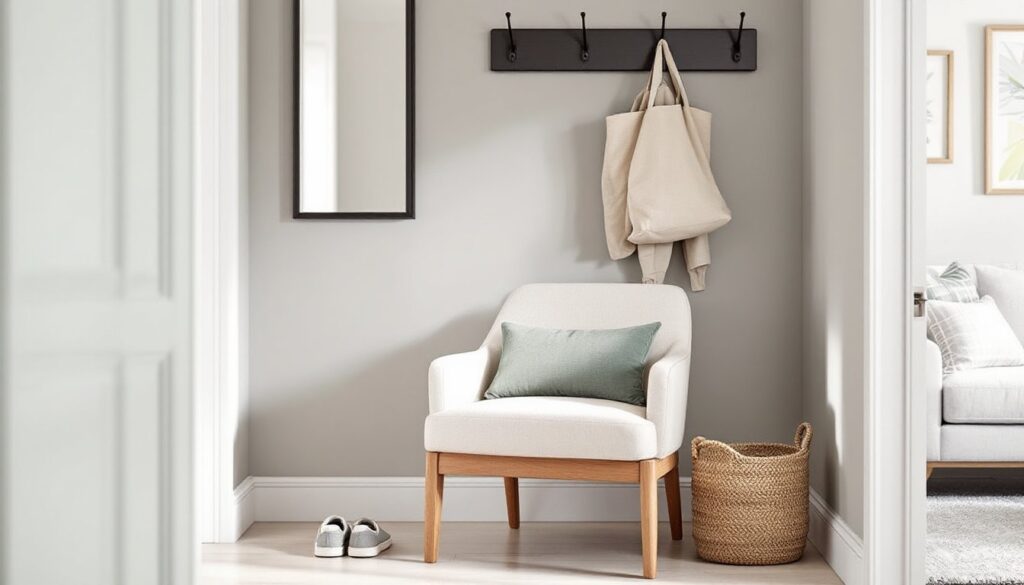
Slipper chairs offer upholstered comfort without arms, shaving 4–6 inches off the width compared to standard accent chairs. Their low profile (seat height typically 14–16 inches) makes them ideal for pulling on shoes without towering over the entry. Look for models with tapered legs to keep sight lines open.
Backless benches work in entries as narrow as 12 inches deep. They slide under wall-mounted hooks or float in front of a window. Upholstered versions add softness: wooden benches feel more rustic and pair well with farmhouse or industrial aesthetics. A bench measuring 36–48 inches long seats two adults or provides sprawl space for one person and a pile of gear.
Corner chairs exploit dead space in L-shaped or angled entries. These typically feature a triangular or quarter-round footprint and tuck into corners that can’t accommodate standard furniture. Pair with a small corner shelving unit to create a mini drop zone.
Folding or stacking chairs disappear when not needed. Metal bistro chairs, wooden slat-back designs, or molded plastic shells store in a closet or hang on wall-mounted hooks. This works especially well in condos or apartments where the entry doubles as a hallway and can’t stay obstructed.
X-base stools with leather or upholstered tops bring a tailored look without bulk. The open frame keeps the floor visible, making the area feel less crowded. Heights around 18–20 inches accommodate most adults comfortably.
Storage-Integrated Chairs for Extra Functionality
When floor space is tight, vertical thinking pays off. Storage benches and lift-top chairs hide clutter while serving as seating.
Lift-top benches with hinged seats conceal shoes, umbrellas, dog leashes, or seasonal accessories. Look for models with slow-close hinges to prevent pinched fingers and keep the lid from slamming. Interior dimensions around 12–14 inches deep and 30–36 inches wide hold several pairs of shoes or a couple of winter hats and gloves.
Benches with open cubbies or lower shelves keep everyday items accessible without requiring lids. This works well for families with kids who won’t reliably close storage lids. Cubbies sized around 10×10 inches accommodate most adult shoes or small baskets for keys and mail.
Drawer-base chairs integrate one or two shallow drawers under the seat. These suit entries where shoes stay in a closet but small items like sunglasses, dog waste bags, or charging cables need a home. Drawers prevent dust accumulation better than open storage and keep the space looking tidy.
Some designs combine hooks, shelves, and a bench into one hall tree unit. These range from 60–72 inches tall and 24–30 inches wide, offering coat hooks at the top, a bench in the middle, and shoe storage below. They’re best for entries with at least 36 inches of clear wall space.
How to Position Your Entryway Chair for Maximum Impact
Placement determines whether a chair enhances flow or creates a bottleneck. Start by measuring the clear walkway, building codes typically require a minimum 36-inch passage for accessibility, though many homes have tighter entries.
Place the chair perpendicular to the door swing if space allows. This keeps it out of the door’s arc while positioning the seat to face into the home. If the entry is too narrow, float the chair along the wall opposite the door or tuck it into an adjacent nook.
Avoid blocking light sources. If the entry has a window or sidelight, keep the chair low-profile or position it to the side so natural light still reaches the space. A chair directly in front of a window can make the entry feel darker and more confined.
In galley-style entries, place the chair at the far end to anchor the space and create a visual endpoint. This draws the eye forward and makes the narrow passage feel purposeful rather than cramped.
For entries that open directly into a living room, angle the chair slightly outward to define the entry zone without completely closing it off. This creates a subtle boundary while maintaining an open, welcoming feel.
Design Tips to Make Your Small Entryway Feel Larger
The right chair choice and styling tricks can visually expand even the tightest foyer.
Light-colored upholstery and finishes reflect more light than dark, heavy fabrics. Whites, creams, light grays, and soft blues make furniture recede visually. If durability is a concern, opt for performance fabrics designed to resist stains and wear, these now come in light shades suitable for high-traffic areas.
Leggy furniture with exposed legs and open bases keeps the floor visible, creating an airier feel. Solid skirts or fully upholstered bases block sight lines and make the chair look heavier. Hairpin legs, tapered wood legs, or metal frames all contribute to a lighter look.
Mirrors amplify both light and perceived space. Hang a mirror above or adjacent to the chair to reflect light from windows or overhead fixtures. A mirror positioned to reflect the entry back toward itself creates depth.
Vertical lines draw the eye upward and make ceilings feel higher. Choose chairs with tall, narrow backs or pair a low bench with vertical wall decor like narrow art panels or a tall, slim mirror.
Keep decor minimal and intentional. A single throw pillow in an accent color adds personality without clutter. Many small-space enthusiasts find inspiration from apartment styling guides that emphasize restraint and multifunctional pieces. Avoid piling multiple pillows, throws, or decorative objects on or around the chair, this overwhelms small spaces.
Budget-Friendly DIY Entryway Chair Projects
Building a simple entryway bench or stool costs a fraction of retail prices and allows customization for exact dimensions.
Basic plank bench: A straightforward project requiring a 1×12 or 2×12 board (actual dimensions 0.75×11.25 or 1.5×11.25 inches) for the seat and four 4×4 posts (actual 3.5×3.5 inches) cut to 16–18 inches for legs. Attach legs with wood glue and 2.5-inch wood screws driven at an angle or use metal corner brackets for easier assembly. Sand all edges smooth (120-grit followed by 220-grit sandpaper) and finish with polyurethane or paint suitable for furniture. Total material cost typically runs $25–40 depending on wood species. Builders looking for free, detailed plans can check resources like Ana White’s woodworking plans for step-by-step instructions and cut lists.
Upholstered crate bench: Repurpose a sturdy wooden crate (wine crates or apple crates work well if structurally sound). Reinforce corners with wood glue and finishing nails if needed. Cut a piece of 3/4-inch plywood to fit the top opening. Layer 1-inch foam and batting, then wrap with fabric, stapling underneath with a staple gun and 3/8-inch staples. Attach the upholstered top to the crate with wood screws from below. Add felt pads or caster wheels to the bottom. This project costs $15–30 and takes about two hours.
Painted stool makeover: Find a basic wooden stool at a thrift store or garage sale. Strip old finish if needed using paint stripper (wear gloves and a respirator, work outdoors or in a well-ventilated area). Sand smooth, apply bonding primer, then two coats of latex or chalk paint. Seal with water-based polyurethane for durability. For detailed painting and refinishing techniques, furniture makeover tutorials offer beginner-friendly guidance on prep work and finish options. Total cost: $10–20 depending on paint and supplies already on hand.
Safety reminder: Always wear eye protection when cutting wood or using power tools. Use a dust mask when sanding. Secure workpieces with clamps before cutting or drilling to prevent slipping.