

Table of Contents
ToggleBuilding a home theater isn’t just about hooking up a projector and calling it done. The difference between a watchable space and a genuine cinematic experience comes down to the details, color choices, acoustics, lighting control, and yes, the decor. Whether converting a basement, spare bedroom, or dedicated media room, the right design decisions make those movie nights feel like the real deal. This guide walks through practical decor strategies that balance aesthetics with functionality, so the space looks as good as the picture on screen.
Key Takeaways
- Dark, matte-finish wall colors and ceilings eliminate light reflection and hotspots, making them essential for optimal picture quality in home theater decor.
- Theater seating should allow 36–42 inches between rows for comfortable legroom, with elevated risers 12–18 inches high per row to ensure clear sightlines for all viewers.
- Strategic lighting—including dimmable LED sconces and bias lighting behind the screen—enhances the viewing experience while avoiding glare and reflections on the display.
- Acoustic panels and fabric wall treatments absorb sound and prevent echo, improving audio quality while adding visual depth to your home theater design.
- Themed decor elements like movie posters, marquee signs, and prop replicas should be positioned on side or rear walls, keeping the screen as the focal point.
- Built-in storage, cable management, and a simple concession area complete the experience while maintaining functionality and visual cleanliness in the space.
Choosing the Right Color Palette for Your Home Theater
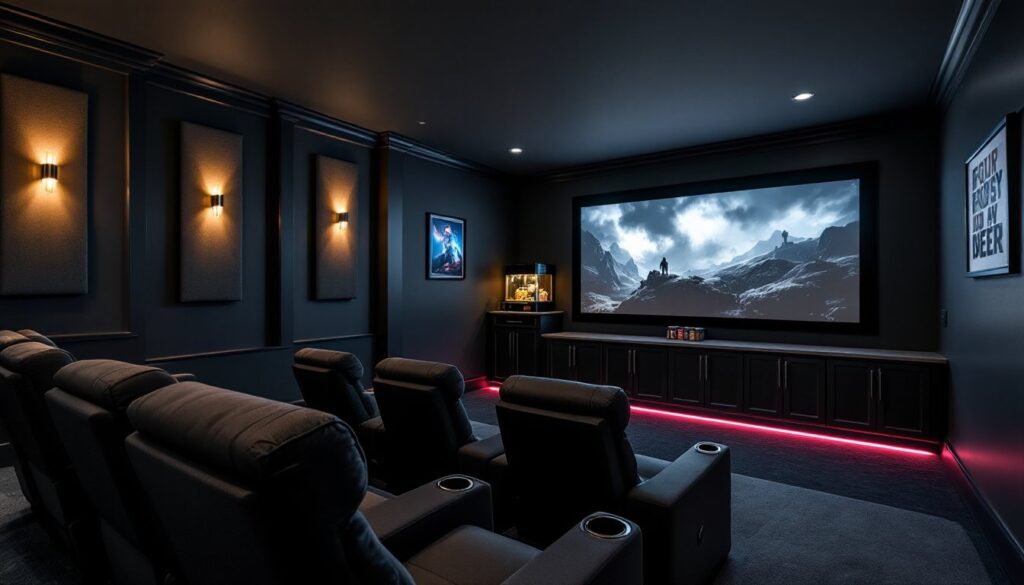
Dark, muted colors are the foundation of any functional home theater. Light walls reflect screen glow, washing out contrast and creating distracting hotspots during playback. Stick with deep grays, charcoal, navy, or true black for walls and ceilings.
Matte or flat finishes are non-negotiable. Gloss and semi-gloss paints bounce light around the room, undermining picture quality. A flat latex or acrylic paint absorbs ambient light and keeps focus on the screen.
Ceiling color matters more than most people realize. Painting the ceiling the same dark shade as the walls eliminates the visual break and makes the room feel more enveloping. If the ceiling height is already tight (under 8 feet), a slightly lighter shade can prevent the space from feeling claustrophobic.
Accent walls work when done right. A wall treatment behind the screen can add depth without competing for attention, think dark wood paneling, fabric-wrapped panels, or textured wallpaper in charcoal tones. Avoid bright accent colors: they pull the eye away from the screen.
For trim and baseboards, either match the wall color or go one shade lighter. High-contrast white trim creates visual noise in a darkened room.
Seating Arrangements That Balance Comfort and Style
Theater recliners are the obvious choice, but not all models are created equal. Look for seats with manual or motorized recline, cupholders, and adequate lumbar support. Rows should be elevated if possible, 12 to 18 inches of riser height per row ensures everyone has a clear sightline over the row in front.
Sectional sofas work in smaller spaces where dedicated theater seating feels too formal. Choose low-profile designs that don’t block the screen from secondary seating. Avoid busy patterns: solid, dark upholstery keeps the focus on the movie.
Spacing is critical. Allow 36 to 42 inches between rows for comfortable legroom and egress. If building risers for multi-row seating, frame them with 2×10 or 2×12 lumber for structural integrity, and add ¾-inch plywood decking before carpeting. Always check local building codes, some jurisdictions require railings on risers above a certain height.
Consider modular seating for flexibility. Some homeowners prefer a mix of recliners and a sofa, or even oversized bean bags for kids. The key is ensuring every seat has a proper view angle, ideally within 30 degrees of center relative to the screen.
Don’t forget side tables or tray tables within arm’s reach. Drinks and snacks are part of the experience, and balancing them on armrests gets old fast.
Lighting Solutions to Create the Perfect Ambiance
Dimmable LED sconces mounted along side walls or behind seating rows provide functional lighting without screen glare. Position them low, 12 to 18 inches off the floor, and aim the light downward or into the wall to avoid direct beams hitting viewers’ eyes.
RGB LED strip lighting behind the screen or under riser steps adds a touch of theater-style flair. Bias lighting, a soft glow behind the screen, can actually improve perceived contrast and reduce eye strain during long viewing sessions. Stick with neutral white or dim red: bright blues and greens are distracting.
Avoid recessed ceiling cans directly above seating. Even on dimmers, they create unwanted reflections on the screen. If overhead lighting is necessary, use can lights with directional baffles aimed toward the back wall or into corners.
Smart switches or lighting controllers are worth the investment. Being able to dim or shut off all lights from a phone or remote keeps viewers from fumbling in the dark. Many modern home theater receivers integrate with smart home systems for automated lighting scenes.
Blackout window treatments are essential if the room has any exterior windows. Cellular shades or roller shades with side channels block nearly 100% of light. Standard curtains leave gaps that let in daylight, deal-breakers for daytime viewing.
For true cinephiles, dedicated home theater setups often incorporate rope lighting or starfield ceiling effects for a custom touch, but these should be used sparingly and only when the screen is off.
Wall Treatments and Acoustic Panels as Design Features
Acoustic panels serve double duty: they control sound reflections and add visual interest. Fabric-wrapped panels in dark colors blend seamlessly into theater walls while taming echo and flutter. Position them at first reflection points, the spots on side walls and ceiling where sound bounces directly from speakers to the listening position.
DIY acoustic panels are straightforward. Cut 2-inch-thick Roxul Safe’n’Sound or Owens Corning 703 rigid fiberglass to size (common dimensions are 24×48 inches), wrap in acoustically transparent fabric (guilford of maine and gom are popular choices), and mount using Z-clips or French cleats. Always wear a dust mask, gloves, and long sleeves when handling fiberglass insulation.
Fabric wall covering is another pro move. Stretching dark acoustic fabric over 1×2 furring strips creates a soft, uniform surface that absorbs sound and hides imperfections. It’s especially useful for covering rough basement walls without full drywall work.
Wood slat panels add texture without compromising acoustics if backed with insulation. They work well as accent features on the rear wall or flanking the screen. Avoid bare drywall, it’s acoustically reflective and visually bland.
For a music studio aesthetic that carries over to theaters, consider diffuser panels on the back wall. These scatter sound to prevent standing waves without over-deadening the room.
Heavy curtains on side or rear walls can double as movable acoustic treatment. Velour or heavyweight velvet drapes absorb mid and high frequencies, and they’re easier to adjust than fixed panels.
Themed Decor Elements That Add Personality
Movie posters are the easiest way to inject personality, but presentation matters. Use poster frames with UV-protective acrylic or glass to prevent fading, and mount them with picture hanging wire, not just nails, vibrations from subwoofers can knock loose hardware over time.
Vintage marquee signs or neon LED signs (“Now Showing,” “Cinema,” custom titles) add authentic theater vibes. Mount them on the entry wall or above the concession area. Modern LED versions pull minimal power and don’t generate the heat of true neon.
Prop replicas from favorite films, lightsabers, movie scripts, miniatures, work as display pieces on floating shelves. Keep them off the front wall to avoid visual clutter near the screen. Side walls or the back wall are better spots.
Some homeowners go full themed room design, replicating art deco theaters, drive-in aesthetics, or specific franchises. These projects require more commitment but deliver a unique experience. Just ensure the theme doesn’t overpower functionality, overly bright decor or reflective materials will compromise picture quality.
Red rope stanchions or a velvet rope at the entrance are playful touches that don’t take up much space. Paired with a simple “Admit One” ticket dispenser (functional or decorative), they set the tone before viewers even sit down.
Avoid clutter. A few well-chosen pieces make more impact than a wall crammed with memorabilia. The screen should remain the star of the show.
Smart Storage and Concession Stand Ideas
Built-in cabinetry along the back or side walls keeps AV equipment, extra cables, and media organized. Use ¾-inch plywood or MDF for shelves, and add soft-close hinges to cabinet doors to minimize noise during playback. Paint or stain cabinets to match the room’s color scheme.
A concession stand or bar area elevates the experience. A simple setup can be as basic as a 36-inch-wide base cabinet topped with a butcher block or laminate counter. Add a mini fridge, microwave, and popcorn machine for full snack service. If plumbing allows, a small sink makes cleanup easier, but it’s not essential.
Stockpile theater-style supplies: popcorn buckets, candy boxes, and soda cups in vintage designs. Store them on open shelves or in clear bins so everything’s visible and grab-and-go.
Floating shelves above or beside the concession area can hold decorative popcorn tins, glassware, or a rotation of favorite candies. Keep them shallow, 6 to 8 inches deep, so items don’t block walkways or sightlines.
Cable management is unglamorous but critical. Use raceways, conduit, or in-wall cable kits to hide HDMI runs, speaker wire, and power cables. Loose cables are visual clutter and trip hazards, especially in a darkened room. When running cable through walls, always follow NEC guidelines for low-voltage wiring or hire a licensed electrician for any line-voltage work.
For smaller spaces, consider multipurpose furniture like ottomans with hidden storage for blankets or remotes. Every square foot counts when building out a dedicated theater.
Conclusion
A well-decorated home theater blends technical performance with intentional design. Dark walls control light, acoustic treatments shape sound, and thoughtful seating keeps viewers comfortable through double features. The decor should support the experience, not compete with it. Start with the functional elements, color, seating, lighting, acoustics, then layer in personality through posters, themed touches, and smart storage. The result is a space that delivers both cinematic immersion and a room worth showing off.