

Table of Contents
ToggleThe fireplace isn’t just for warmth anymore, it’s the focal point of the room. Whether it’s a dated brick surround crying out for a makeover or a bland builder-grade box that needs character, updating a fireplace can shift the entire feel of a living space. The good news? Many fireplace updates are DIY-friendly and don’t require demolition or structural changes. From swapping out materials to adding built-ins, these ideas range from weekend projects to longer renovations that deliver serious visual impact.
Key Takeaways
- Fireplace surround materials like thin veneer stone, shiplap, and metal cladding offer dramatic visual updates without requiring structural changes or professional installation.
- Updated fireplace ideas should prioritize safety by keeping combustible materials at least 6 inches from the firebox opening and using heat-resistant adhesives and finishes rated for fireplace applications.
- Modern mantel designs range from floating solid wood beams to minimalist floor-to-ceiling surrounds, with custom-built options allowing for personalized sizing and style details that match contemporary or farmhouse aesthetics.
- Paint and refinishing—including limewash, German smear, and specialty high-adhesion primers—are the fastest and most cost-effective fireplace updates for brick, tile, and wood surfaces.
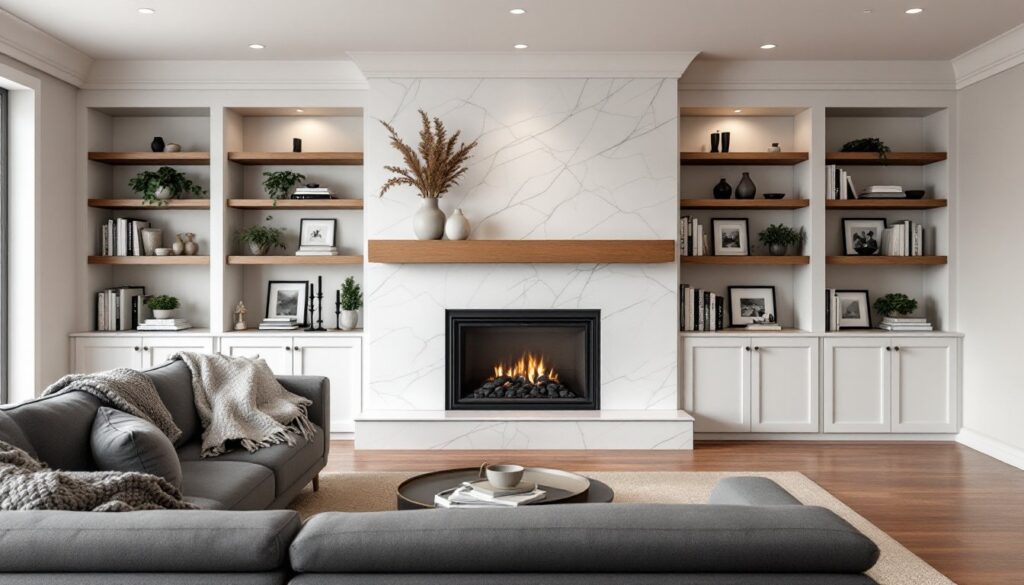
- Built-in storage, shelving, and integrated media consoles transform the fireplace into a cohesive design element while maximizing wall space and creating functional display areas.
- Electric and gas insert upgrades modernize old fireplaces for improved efficiency and ambiance, with electric inserts being DIY-friendly and gas inserts requiring professional installation for venting and gas lines.
Modern Fireplace Surround Materials That Make a Statement
Swapping the surround is one of the most dramatic fireplace updates, and it’s often a manageable DIY project if the existing structure is sound. The key is choosing materials that fit the room’s style and the homeowner’s skill level.
Concrete board and thin veneer stone are popular for a reason: they’re lightweight, easier to handle than full-depth stone, and can be installed over existing brick or drywall with the right adhesive and mortar. Products like stacked ledgestone or large-format panels mimic natural stone without the weight or the need for structural reinforcement. Always check manufacturer load ratings and installation guidelines, some veneers require a scratch coat or metal lath for proper adhesion.
Shiplap and reclaimed wood bring texture and warmth, but they come with a caveat: keep combustible materials at least 6 inches away from the firebox opening (per IRC guidelines, though local codes may be stricter). Use a non-combustible backer board like cement board behind wood surrounds, and confirm clearances with the fireplace manufacturer’s specs. For a safer alternative, consider wood-look porcelain tile or fiber cement panels that mimic the grain without the fire risk.
Metal cladding, blackened steel, brushed brass, or copper sheets, adds an industrial or modern edge. It’s best left to those comfortable with metalworking tools, but pre-fabricated metal surround kits are available and can be screwed directly into wall studs. Just be sure to leave expansion gaps: metal contracts and expands with temperature changes.
Sleek Tile and Stone Options
Large-format porcelain tile (12″×24″ or larger) creates clean lines with minimal grout joints. They’re easier to install than mosaics and give a high-end look, especially in marble or concrete finishes. Use a level and spacers religiously, any lippage shows under fireplace lighting.
Slab stone like marble, quartzite, or granite offers a seamless, book-matched look but typically requires professional fabrication and installation due to weight and precision cutting. Expect to hire out unless equipped with a wet saw and experience handling heavy stone.
Zellige or handmade tile brings color and texture. These aren’t perfectly uniform, which is part of the charm, but layout and grout width matter. A ⅛-inch grout line keeps things tight and modern: wider lines lean traditional. Use heat-resistant thinset rated for fireplace applications, and seal natural stone or porous tile to prevent staining from soot.
Contemporary Mantel Designs for Every Style
A mantel update can be as simple as a paint change or as involved as a full custom build. The approach depends on whether there’s an existing mantel to work with or if one’s being added from scratch.
Floating mantels made from solid wood beams (6×6 or 8×8 rough-sawn or planed) give a chunky, modern farmhouse vibe. They’re typically mounted with steel brackets or rods sunk into wall studs or blocking. For a 60-inch mantel, use at least two ½-inch steel rods embedded 6–8 inches into the wall and drilled into the beam. The mantel should feel bombproof, no one wants a wobbly shelf above the fireplace.
Minimal or no mantel works in sleeker spaces. Instead, run the surround material all the way to the ceiling for a floor-to-ceiling statement. This approach shows up frequently in contemporary home design and suits linear gas fireplaces or minimalist aesthetics.
Custom-built mantels from MDF, poplar, or oak allow for exact sizing and profile details. A basic mantel can be built with a 1×6 or 1×8 shelf, crown molding, and legs or corbels. Use a miter saw for clean angle cuts on trim, and pre-drill screw holes to avoid splits. Paint-grade MDF is affordable and takes primer beautifully: stain-grade hardwood costs more but shows the grain.
For a quick refresh, remove an old mantel, patch the wall, and install a simple live-edge slab on metal brackets. It’s rustic without feeling heavy-handed and takes an afternoon to mount.
Color and Finish Updates to Refresh Your Fireplace
Paint is the fastest, cheapest fireplace update. It can unify a room, hide dated materials, or create contrast, but prep and product choice make or break the result.
Painting brick requires thorough cleaning (TSP solution works well), a bonding primer, and at least two coats of acrylic latex or masonry paint. Expect to use ¼ to ⅓ gallon per coat for an average-sized fireplace. Use a roller for flat surfaces and a brush for mortar joints. White and off-white are popular, but charcoal, navy, or black can add drama without overwhelming a space. Note: painted brick is nearly impossible to reverse, so commit carefully.
Limewash or German smear (mortar wash) are alternatives to solid paint. They let some brick texture and color show through and have a more organic, old-world look. Limewash is breathable and works well on interior brick: it wears and patinas over time. German smear involves troweling mortar over brick and wiping it back, messy, but very forgiving for beginners.
Tile or stone can be painted with specialty high-adhesion primers (like Zinsser or KILZ Adhesion) and durable topcoats. It’s not as permanent as re-tiling, but it can buy time or bridge a design gap. Sand glossy tile lightly with 120-grit to improve adhesion.
Refinishing wood mantels means stripping old varnish or paint (use a chemical stripper or heat gun with care), sanding smooth, and applying stain or paint. For a natural look, try tung oil or Danish oil, they’re easy to apply and bring out wood grain without a plastic sheen. For painted finishes, use a bonding primer and semi-gloss or satin trim paint for durability.
Built-In Storage and Shelving Solutions Around the Fireplace
Built-ins turn wasted wall space into functional storage and make the fireplace feel like part of a cohesive design rather than an awkward add-on. These projects range from simple floating shelves to floor-to-ceiling cabinetry.
Floating shelves flanking the fireplace are the easiest starting point. Use 2×10 or 2×12 boards cut to length, sanded, and finished. Mount them with heavy-duty brackets or concealed steel rods anchored into studs. Keep shelves at least 12 inches away from the firebox opening to meet clearance requirements.
Open shelving with vertical dividers creates a library or display wall effect. Frame out the alcoves with 2×4 studs, add drywall or plywood backing, then install fixed shelves with ¾-inch plywood or solid wood. Paint the interior a contrasting color for depth. This is a weekend project for someone comfortable with a circular saw and level.
Full built-in cabinets require more skill and time. Base cabinets can be stock units (IKEA, Home Depot) with a custom face frame and trim, or built from scratch with plywood, pocket screws, and adjustable shelving. Upper shelves are typically open to keep the look airy. Use a laser level to keep everything plumb and aligned, built-ins are unforgiving if they’re crooked.
Media consoles integrated into the built-ins work well if the TV is going above the fireplace (though mounting a TV too high is a common mistake, eye level when seated is ideal). Run electrical and low-voltage wiring inside the wall during framing to avoid visible cords. This may require a permit depending on local electrical codes (NEC Article 725 covers low-voltage).
Paint built-ins the same color as the walls for a seamless look, or use a bold color to make them pop. According to many country-style home ideas, built-ins in sage, navy, or charcoal are trending in 2026.
Electric and Gas Fireplace Insert Upgrades
Inserts modernize a drafty old firebox, improve efficiency, and eliminate the mess of wood. Installation complexity varies, but many are DIY-friendly with the right prep.
Electric inserts are the simplest: they plug into a standard 120V outlet (some larger models need 240V) and drop into the existing firebox. No venting, no gas lines. They provide ambiance and supplemental heat but aren’t a primary heat source. Match the insert size to the firebox opening, measure width, height, and depth before buying. Inserts sit on the hearth or hang from brackets: follow the manufacturer’s template and use a level to keep it straight.
Gas inserts (natural gas or propane) are more involved. They require a gas line run by a licensed plumber or HVAC tech, venting (direct vent is most common and exhausts through an exterior wall), and often a permit. A direct-vent insert uses a coaxial pipe: combustion air comes in through the outer pipe, exhaust goes out the inner. This setup is efficient and doesn’t pull room air up the chimney. If there’s an existing chimney, a flexible liner may need to be installed inside it.
DIYers can handle the insert placement, surround finishing, and trim-out, but gas connections and venting should be done by a pro unless the homeowner is experienced and local codes allow it. After install, the gas company or inspector will need to test and approve the setup.
Linear or see-through models are popular in modern builds. They’re wider, shallower, and often frameless. Installation is similar but may require custom framing and non-combustible surround materials. Check clearance specs carefully, these units can get hot.
Creative Decor Ideas to Style Your Fireplace Year-Round
Once the structure and finishes are updated, styling the mantel and hearth keeps the fireplace looking intentional.
Layered artwork and mirrors above the mantel add height. Lean a large framed piece or mirror against the wall rather than hanging it, it’s more casual and easier to swap out. For a curated look, layer smaller frames or objects in front.
Seasonal greenery brings life without permanent commitment. In winter, use evergreen garland or branches in tall vases. Spring and summer call for fresh-cut stems or potted plants. Avoid placing real plants too close to an active firebox, they’ll dry out fast.
Candlesticks, lanterns, and sculptural objects in varying heights create visual interest. Odd numbers (three or five items) tend to look more balanced. Stick to a consistent material palette, all wood, all metal, or a mix of two finishes, to avoid clutter.
Books and trays ground a display. Stack books horizontally, top with a small object, and use trays to corral smaller items like matches, remotes, or coasters.
As seen in many Southern home designs, mantels styled with heirloom pieces, botanicals, and vintage finds feel personal without looking staged. The key is editing: less is usually more, especially on a narrow mantel.
Hearth styling gets overlooked but matters. A wrought iron log holder, a stack of split wood (even if the fireplace is gas), or a large basket with blankets adds function and texture. Keep the hearth clear if the fireplace is in active use, soot and ash don’t mix well with decor.