

Table of Contents
ToggleA tired, dated shower doesn’t require a full gut job to look fresh. Most homeowners assume a shower remodel means tearing out tile, rerouting plumbing, and spending thousands, but there’s a middle ground. With strategic updates, surface-level fixes, and smart material choices, it’s possible to transform a dingy shower into something clean, modern, and functional without touching the studs or hiring a plumber. The key is knowing which updates deliver the most visual impact per dollar spent and which projects a confident DIYer can tackle over a weekend.
Key Takeaways
- Transform a shower remodel on a budget by focusing on cosmetic fixes like grout cleaning, fresh caulk, and paint rather than costly structural work or plumbing changes.
- Upgrade shower fixtures—showerhead, valve trim, and drain cover—for maximum visual impact at minimal cost, typically requiring only basic tools and no professional help.
- Install peel-and-stick tile sheets or waterproof wall panels as budget-friendly alternatives to full tile replacement, covering dated surfaces in a weekend without disrupting plumbing.
- Add affordable storage solutions like tension pole caddies and adhesive shelves to maximize functionality without drilling into tile or damaging walls.
- Enhance the shower’s appearance by refreshing lighting, replacing caulk with fresh silicone, and adding finishing touches like new curtains or bath mats for a completely modernized look.
Plan Your Budget-Friendly Shower Remodel
Before buying anything, assess what actually needs replacing versus what can be cleaned, repaired, or refreshed. Walk into the shower with a notepad and categorize every surface and fixture into three buckets: cosmetic fix, functional upgrade, or leave it alone.
Start by identifying deal-breakers. If the shower pan leaks, grout is crumbling behind the tile, or there’s visible mold inside the wall cavity, those are structural issues that need professional attention before any cosmetic work. Don’t cover up water damage with peel-and-stick tile, you’ll just trap moisture and create a bigger problem.
Set a realistic budget and break it into categories: surface treatments (paint, grout, caulk), fixtures (showerhead, faucet, drain cover), materials (panels, tile sheets), and accessories (shelving, hooks, lighting). Allocate the largest portion to whatever is most visible when someone steps into the bathroom, usually the back wall and fixtures. Track receipts and keep a 10–15% buffer for the inevitable “while I’m at it” additions or a product that doesn’t work as planned.
Measure everything. Width, height, and depth of the shower enclosure, plus the size of the valve trim plate, showerhead arm, and any niches or ledges. Take photos with a tape measure in the frame. This prevents buying the wrong size panel, ordering too little grout, or discovering your new rainfall showerhead won’t fit the existing arm.
Refresh with Paint and Grout Updates
If the tile itself is sound but dingy, a deep clean and grout refresh can completely change the look for under $50. Start with a stiff brush, a tile-safe cleaner (avoid acidic products on natural stone), and a lot of elbow grease. Hard water stains respond to white vinegar: soap scum needs an alkaline cleaner. For stubborn mildew in grout lines, use a diluted bleach solution, wear a respirator and ventilate well.
Once clean, evaluate the grout. If it’s intact but discolored, a grout pen or grout stain can restore uniform color in an afternoon. These work best on sanded grout in neutral tones (white, gray, beige). Apply with the built-in applicator tip, wipe excess off the tile face immediately, and let cure for 24 hours before using the shower. Don’t use grout pens as a substitute for failing grout, if it’s cracked or soft, scrape it out and regrout properly with a polymer-modified mix.
For tile that’s the wrong color entirely, specialty tile paint exists, though it’s a compromise. Epoxy-based tile coatings (brands like Rust-Oleum Tub & Tile) can cover outdated almond or pastel tile, but surface prep is everything. Any soap residue, oils, or silicone will cause peeling. Sand the tile lightly with 400-grit sandpaper, clean with TSP, rinse thoroughly, and let dry completely. Apply thin coats with a foam roller, and expect to reapply every few years in high-traffic showers. This approach buys time but won’t outlast real tile.
Finish by replacing all caulk. Slice out the old bead with a utility knife or oscillating tool, scrape residue, clean with rubbing alcohol, and lay a fresh bead of 100% silicone caulk (not acrylic latex, it won’t hold up). Smooth with a wet finger or caulk tool. Fresh white caulk alone can make a shower look 50% newer.
Upgrade Fixtures and Hardware for Maximum Impact
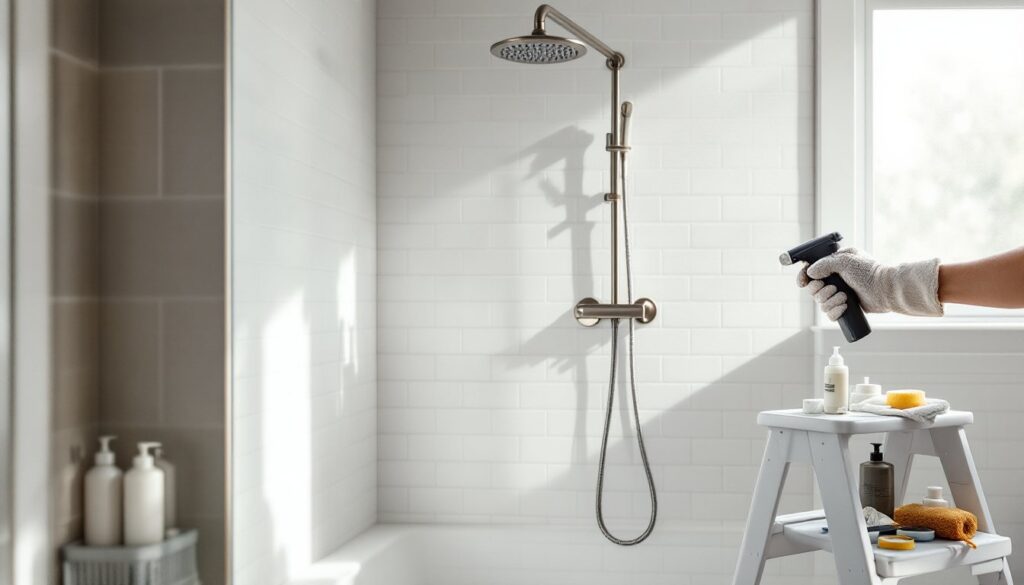
Swapping out a builder-grade showerhead, faucet trim, and drain cover delivers an outsized visual return for minimal cost and effort. Most fixture upgrades require no plumbing changes, just unscrewing the old part and threading on the new one.
Start with the showerhead. A $30–$70 multi-function head with adjustable spray patterns and a brushed nickel or matte black finish instantly modernizes the space. Check the existing shower arm thread size (usually ½-inch NPT) and whether you need a fixed mount, handheld, or dual setup. If the arm itself is corroded, replace it too, they’re under $10. Wrap threads with two layers of Teflon tape (clockwise) before installing to prevent leaks. No need to overtighten: hand-tight plus a quarter turn with pliers is enough.
Next, update the valve trim kit, the escutcheon plate and handle. If you’re keeping the existing valve body (the part inside the wall), buy trim that matches the brand and valve series (Delta, Moen, Kohler, etc.). Mixing brands rarely works due to different stem sizes and mounting systems. Most trim kits cost $40–$100 and install with a single screw behind the handle and a snap-on escutcheon. If you don’t know your valve brand, take a photo of the existing trim to a plumbing supply counter, they can usually ID it.
Replace the drain cover and overflow plate if your shower has a tub. Pop out the old one (usually a single screw under a snap cap), clean any hair or gunk from the drain, and install the new cover. Match finishes across all fixtures, chrome, brushed nickel, oil-rubbed bronze, or matte black, for a cohesive look. Mismatched metals look accidental, not eclectic.
Add a handheld shower wand if the setup allows. Many kits include a slide bar, holder, and hose that mount to the existing shower arm with no permanent modification. This adds functionality for rinsing kids, pets, or the shower itself without major work.
Install Peel-and-Stick Tile or Waterproof Wall Panels
Covering dated tile or a fiberglass surround with new material sounds ambitious, but newer products make it a realistic DIY project, with caveats. Homeowners looking for budget home renovation stories often find success with these surface-level solutions, though it’s important to understand their limitations.
Peel-and-stick tile sheets (often called Smart Tiles or similar) are thin, adhesive-backed panels that mimic subway tile, mosaic, or stone. They install directly over clean, smooth, non-porous surfaces, ceramic tile, acrylic, fiberglass, painted drywall (if outside the wet zone). They will not stick reliably to textured tile, loose grout, or anything damp. Measure the wall area, order 10% extra, and cut sheets with a utility knife and straightedge. Start from the bottom center and work outward, pressing firmly to eliminate air bubbles. Seams are visible up close, so plan layout carefully. These products are water-resistant, not waterproof, use them on surround walls, not inside a shower pan or anywhere that takes direct spray for extended periods.
Waterproof wall panels (PVC, acrylic, or laminate systems) are a step up in durability and cost. Brands like DumaWall, Fibo, and others offer interlocking or adhesive-mounted panels in various finishes (tile-look, stone, solid colors). They install over existing tile or cement board using panel adhesive or a track system. Measure twice, cut with a circular saw or jigsaw, apply adhesive in a zigzag pattern, press into place, and seal seams with matching trim or silicone. Panels typically run $8–$15 per square foot, so a 32-square-foot surround costs roughly $250–$500 in materials.
Do not install panels over crumbling substrate, active leaks, or mold. If moisture has compromised the wall behind the tile, the structure needs repair first. Panels are a cosmetic solution, not a moisture barrier replacement. Always caulk seams at inside corners and where panels meet the tub or pan.
For showers with ceiling access or removable surround panels, consider a full surround replacement. Three-piece fiberglass or acrylic units start around $300 and eliminate grout entirely, but installation requires removing the old surround, possibly adjusting plumbing, and careful shimming, a full weekend project for an experienced DIYer or a professional job.
Add Storage and Functionality on a Dime
Showers rarely have enough flat surfaces for soap, shampoo, razors, and scrubbers. Adding storage without drilling into tile or very costly is easier than it looks.
Tension pole caddies run floor-to-ceiling in a corner and hold multiple baskets. Choose one with a rust-resistant finish (stainless steel or coated aluminum) and rubber end caps to prevent slipping. They adjust from roughly 5 to 9 feet and support 10–20 pounds depending on the model. Installation is literally twisting the pole to length and wedging it into place, no tools required. Cost: $25–$60.
Adhesive shelves and corner caddies stick to tile or acrylic using waterproof adhesive strips or suction cups. The adhesive type (like Command hooks with waterproof strips) holds better long-term than suction, which can fail in humid conditions. Clean the mounting surface with rubbing alcohol, let dry completely, press the mount firmly for 30 seconds, and wait 24 hours before loading. Don’t exceed the stated weight limit, overloading causes failure.
Shower niches built into the wall during construction are ideal, but retrofitting one means cutting into tile and framing, which isn’t budget-friendly. For a similar effect, mount a recessed shelf insert designed to fit between studs. Some models install into an existing tile field with tile adhesive and grout: others require cutting a hole in the surround. This is an intermediate project, measure stud spacing (typically 16 inches on center), mark carefully, use a tile saw or oscillating tool, and waterproof the edges before setting the niche.
Add a fold-down teak bench or corner seat if space and wall structure allow. Wall-mounted benches must hit a stud or blocking, use a stud finder, drill pilot holes, and fasten with stainless steel screws and washers. These cost $40–$150 and add accessibility and comfort without permanent modification.
Enhance Lighting and Accessories
Dim, yellowish lighting makes even a clean shower look dreary. Upgrading the bathroom light fixture or adding task lighting improves both function and ambiance. For broader home renovation cost guides and lighting budgets, research typical spend in your region, but expect a basic vanity fixture swap to run $50–$150 in materials.
If the existing ceiling fixture is outdated, replacing it is straightforward, if you’re comfortable working with electrical. Turn off power at the breaker (verify with a non-contact voltage tester), remove the old fixture, match wire colors (black to black, white to white, ground to ground), secure with wire nuts, mount the new fixture, and restore power. Choose a fixture rated for damp or wet locations (check the UL listing) if it’s inside the shower enclosure or directly above a tub. LED vanity bars with 3000K–4000K color temperature provide bright, neutral light that doesn’t skew color perception.
For showers without overhead lighting, battery-powered LED puck lights or motion-sensor strips can add visibility. Stick-on models with waterproof housings mount to tile or acrylic: some are rechargeable via USB. These won’t replace a proper fixture but help in showers tucked into dark corners.
Swap out the shower curtain and rod if applicable. A curved tension rod adds a few inches of elbow room and costs $20–$40. Pair it with a mildew-resistant fabric curtain and a separate waterproof liner. Weighted hems keep the curtain in place, and grommets or buttonholes prevent tearing. Wash fabric curtains monthly to prevent buildup. If the shower has glass doors, clean tracks and rollers, replace worn sweeps or seals, and consider a clear protective coating (like Rain-X) to shed water and reduce spotting.
Finally, add finishing touches that don’t require installation: a bamboo or teak bath mat instead of a dingy fabric one, matching soap dispensers mounted to the wall or set on a caddy, and a small plant (real or faux) on a shelf outside the spray zone. Design inspiration from sources like Remodelista often highlights how these small material choices add polish without added complexity.
Conclusion
A budget shower remodel isn’t about cutting corners, it’s about putting money where it shows. Focus on clean grout, updated fixtures, and smart surface treatments rather than chasing a full teardown. With a clear plan, the right materials, and a willingness to do the labor, a fresher, more functional shower is within reach for a few hundred dollars and a couple of weekends.